All AI & Compute Infrastructure Articles
The substrate of artificial intelligence—semiconductors, data centers, and software ecosystems—determines who can build, who can scale, and who gets left behind.
31 articles

China's 15th Five-Year Plan Bets the Economy on AI
China's 15th Five-Year Plan, released at the National People's Congress, mentions artificial intelligence 52 times and introduces an AI Plus initiative targeting integration across 90 percent of the economy by 2030. The plan frames AI not as a sector but as an economic form — a structural response to demographic decline, technological rivalry with the United States, and a consumption model Beijing has chosen not to fix.
The First War to Hit the Cloud
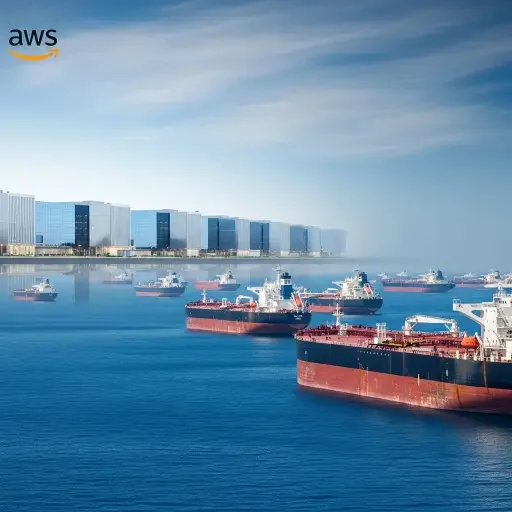
Drone strikes physically damaged AWS data centers in the UAE and Bahrain, knocking 109 cloud services offline and cascading into banking, payments, and logistics across the Gulf. Simultaneously, seven P&I clubs cancelled war risk coverage for the Strait of Hormuz, freezing 20% of global oil transit without a single mine being laid.
The Custom Silicon Wars: Broadcom's Quiet AI Takeover
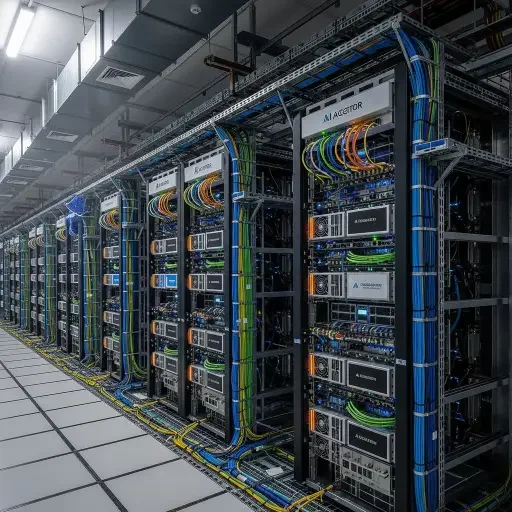
Nvidia dominates the AI narrative, but a structural shift is underway beneath it. Hyperscalers are designing custom chips — and Broadcom is the architect translating those designs into silicon. With AI revenue doubling year-over-year, six major XPU customers, and a line of sight to $100 billion in chip revenue by 2027, Broadcom is becoming the indispensable backbone of AI infrastructure.

Nvidia's Best Quarter Ever. Wall Street Shrugged.
Nvidia posted the largest clean beat in semiconductor history — $68.1 billion in Q4 revenue, 73% year-over-year growth, and guidance that crushed every estimate. The stock fell 5.5%, its worst day in ten months. The paradox reveals a market that no longer rewards AI momentum; it demands proof that the $700 billion capex deluge will ever pay off.

Wall Street Questions $660B AI Infrastructure Bet
After a year celebrating massive AI infrastructure spending, Wall Street abruptly shifted in early February 2026. Alphabet's announcement of $185 billion in annual capex—more than double 2025—forced investors to confront whether the industry's $660 billion buildout represents rational investment or developing bubble.

China's AI Efficiency Revolution Challenges $600B Silicon Valley Bet
While U.S. hyperscalers committed $660 billion to a GPU arms race, Chinese researchers developed algorithmic innovations achieving similar results at a fraction of the cost. DeepSeek's success represents more than competitive threat—it's a fundamental challenge to assumptions underpinning the West's AI development strategy, with implications for capex sustainability, export control effectiveness, and trillion-dollar market valuations.
TSMC Commits $56B to AI Buildout as Supply Stays Tight
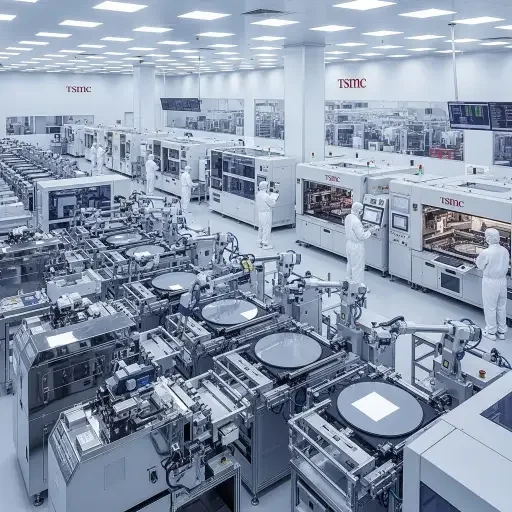
Taiwan Semiconductor Manufacturing Company reported record fourth-quarter earnings Thursday and raised 2026 capital expenditures to as much as $56 billion—a potential 40 percent increase from 2025—as CEO C.C. Wei told investors that supply constraints for AI chips will persist through 2027 despite aggressive expansion. The guidance signals that the world's largest contract chipmaker views artificial intelligence demand as structural rather than cyclical, committing unprecedented capital to fabrication capacity that won't materially contribute to supply until 2028.
Truist’s Northrop Grumman Downgrade Signals Tentative Repricing in Defense Margins
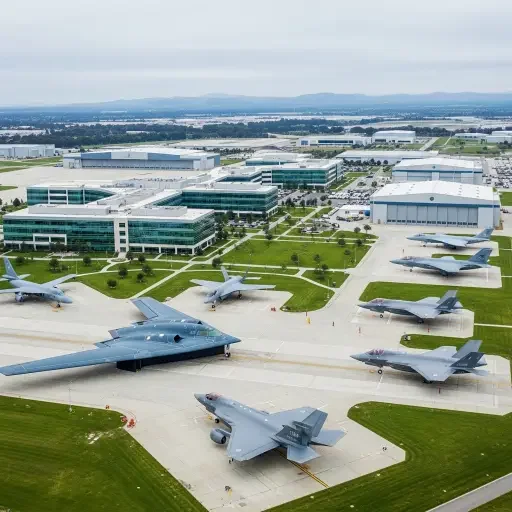
Truist downgraded Northrop Grumman, citing margin risk at a moment when defense contractors face cost inflation, program schedule pressure and increasing prime–subcontractor friction. The move could presage a modest sector-wide repricing if profit deterioration proves persistent rather than idiosyncratic.
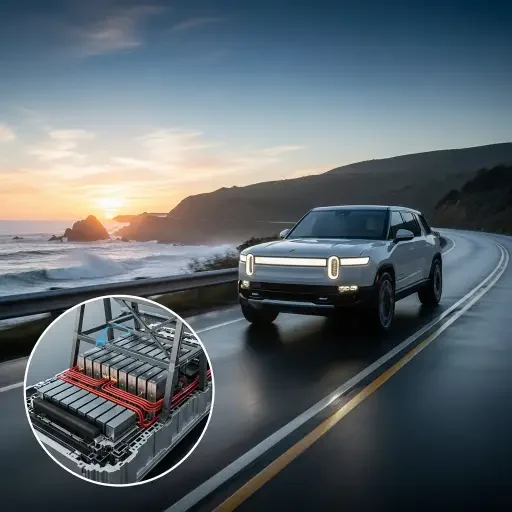
Rivian's R2 Launch Could Re-price Risk If EV Demand and Batteries Align
Rivian's imminent R2 launch arrives at an inflection: rising EV adoption can compress perceived company risk, but only if battery costs fall and critical-material supply holds. The market will re-price Rivian not on excitement alone, but on durable unit economics tied to cathode chemistry, cell form factor and supplier resilience.
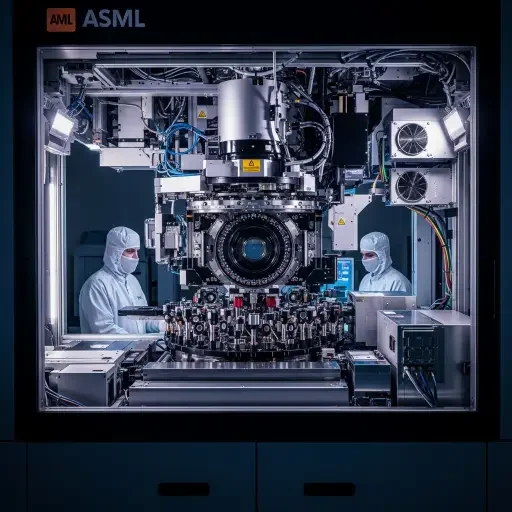
ASML's Next Upside: EUV Demand from DRAM and a Second Wave of TSMC Orders
ASML stands to gain if DRAM makers adopt EUV at scale and TSMC resumes a fresh ordering cadence: the company’s extreme‑ultraviolet tools sit at the intersection of memory cyclical recovery and foundry investment, creating a two‑way upside via supplier cap‑ex cycles that ripple through the semiconductor supply chain.
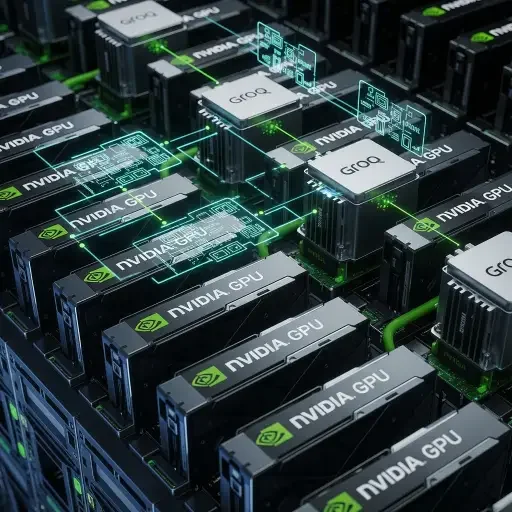
NVIDIA’s Groq Licensing: The Acqui-Hire That Rewires Enterprise AI Budgets
NVIDIA’s licensing agreement with Groq recasts a personnel‑heavy acquisition as a capacity and roadmap play: it buys immediate inference scale, embeds talent and code paths, and forces enterprises and chip cycles to reprice AI‑inference as a delivered service rather than a raw component.

CME Raises Margins on Silver and Gold — Dealers Reprice Risk, Traders Shrink Leverage
The CME’s second successive margin increase on silver and gold futures this month has shrunk permitted leverage, lowered speculative volume and pushed dealer desks to reprice risk. Traders are stripping back positions; liquidity is fragmenting across venues; and hedging costs are rising for miners and jewelers.
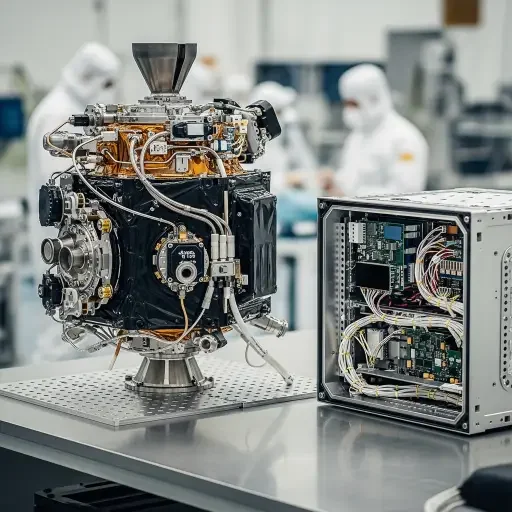
Intuitive Machines-Lanteris Deal Accelerates Path to Prime Space Contracts
Intuitive Machines' strategic purchase of Lanteris' propulsion and avionics business sharpens its offer for NASA and commercial lunar work: faster integration, cleaner margins and a clearer path to prime contractor status that could re-price future mission bids.

Meta’s Manus Deal Locks In Agent Tech—and a Talent Arms Race
Meta's purchase of Manus—an AI agent studio—bundles code, workflows, and people into a package that accelerates agent capabilities across social products. The deal shifts the binding constraint from model scale to platform integration and talent, creating both a moat and a flashpoint for rivals and regulators.

SoftBank’s $3B Bet on Data Centers: Tilting the World Toward AI Infrastructure
SoftBank's $3 billion cash acquisition of DigitalBridge reframes the firm's AI wager: not on models or chips alone, but on the physical racks, power plants and real‑estate contracts that will carry exabyte‑scale workloads. The deal crystallizes a capital-first strategy to privatize the backbone of generative AI.

States Pivot to Nuclear: SMRs Move from Hype to Funded Baseload
Across the United States, state governments are treating nuclear — and especially small modular reactors (SMRs) — as the few dispatchable, carbon-free resources that can anchor 24/7 decarbonization. Policy incentives, regulated utility planning, and nascent project finance are nudging SMRs from rhetorical promise into funded pipeline, reshaping capital allocation and grid planning.

Datadog’s Post‑Peak Optimism Reinforces the AI‑Native Workload Thesis
Datadog reported results that suggest peak-growth worries are overblown: revenue momentum slowed, but management’s confidence about AI‑native workloads and higher‑margin observability services points to a reallocation of enterprise spend rather than a demand collapse.

Velo3D lifts price targets on reshoring tailwinds and defense demand
Velo3D has raised its price target on the back of reshoring incentives and accelerating defense programs, suggesting a longer runway for the company as aerospace and space end markets glow. The upgrade reframes Velo3D not merely as a supplier of hardware, but as a strategic enabler of national resilience, domestic supply chains, and high-precision production for mission-critical programs.
The AI Subsidy Hidden in Your Electric Bill
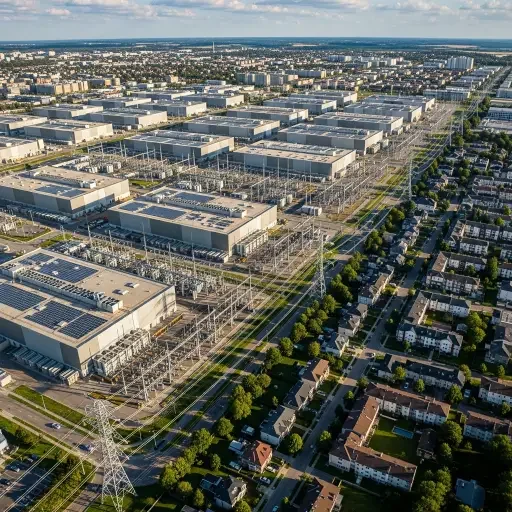
A stark economics problem is emerging in consumer AI: 1.8 billion people use these tools, but only 3% pay for them. Meanwhile, the data centers powering this experiment are driving residential electricity bills up by double digits in states hosting AI infrastructure. The gap between usage and monetization suggests consumers may be subsidizing Big Tech's most speculative bet yet.

AI in Space? The Satellite That Ran an H100 Is Just the Beginning
A commercial satellite just demonstrated GPU-accelerated AI in orbit. The implications extend far beyond space exploration—they redefine where intelligence processing happens.

The Automated Mathematician: FunSearch and Beyond
Large language models have broken through the barrier between computation and creativity, discovering new theorems and algorithms that expand human mathematical knowledge. From FunSearch to AlphaEvolve, AI systems are now partners in mathematical exploration.

The Most Expensive Mistake in Human History
The tech industry's AGI obsession represents a catastrophic misallocation of resources, chasing artificial minds while wasting billions of real ones. An examination of why the most advanced intelligence we know isn't coming from data centers—it's already here.

The CUDA Trap: When Your Moat Becomes Your Prison
NVIDIA's CUDA platform has dominated GPU computing for nearly two decades. But that dominance may be the company's greatest vulnerability as AI-powered compilers threaten to make accumulated expertise irrelevant.

The Clear, Simple, and Wrong: Mapping Mencken’s Complex Problem
A Mencken aphorism is not a throwaway quip; it’s a diagnostic of cognitive bottlenecks. This article revisits the line, unpacking why tidy answers attract us, where they sour, and how leaders and investors can design decision processes that resist the lure of clarity-at-all-costs.

Offshore Armatures: Chinese Giants Train AI at Sea of Jurisdiction—Nvidia, Export Controls, and the New Global Compute Playbook
A quiet global race unfolds on the world’s data-shelves: Chinese tech behemoths push compute offshore to meet the challenge of export curbs, while Nvidia’s ecosystem becomes both accelerant and anchor. The playbook blends risk hedges, legal edge-work, and the primal economics of scale—a cocktail party topic that now drives boardroom tension and national strategy.
Battery Geopolitics and Sangria: How CATL & Stellantis Break Ground on Spain’s Mega Plant
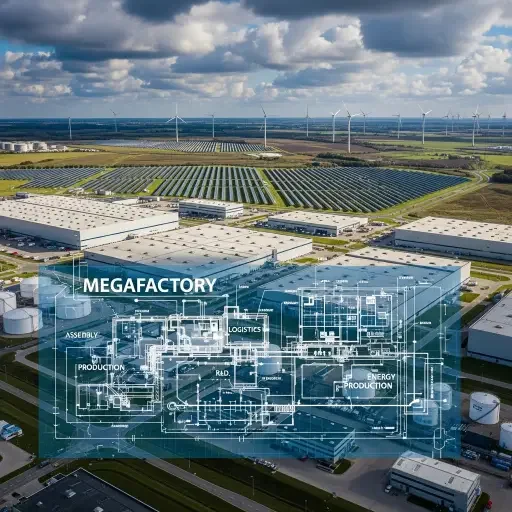
CATL and Stellantis are carving a new axis in the global battery race, choosing Spain for a sprawling megafactory. The deal blends geopolitical leverage, regional economic promises, and a splash of Spanish austerity-era optimism. As gigafactories go, this one aims to rewire supply chains—while tasting the seasonal sweetness of sangria on the journey.

Guardrails, Ghosts, and the Child-Safety Paradox in AI
Character.AI’s safety guardrails are supposed to protect. Instead, they sometimes birth blind spots, workaround strategies, and a new class of user friction. This opinion piece argues that effective child-safety design requires more than blunt filters—it requires a nuanced, entropy-aware governance of risk, capability, and legitimate expression.

The Coronation of Compute: How $30B from Microsoft, Nvidia, and Anthropic Reframes The Future
When a trifecta of tech powerhouses pours $30 billion into a single AI keel, the signal isn’t just capital. It’s governance, ambition, and the slow-marching end of ambiguity in computing’s next era.

The Dubbing Revolution: How AI Lip-Sync Technology Is Remaking Global Cinema
AI-powered lip synchronization technology is transforming foreign content distribution, enabling low-cost productions to reach global audiences while generating billions in new revenue for international studios.

The Neural Network Courts: How AI Became the NBA's Secret Sixth Man
A league once defined by highlight reels now runs on a computational substrate: AWS-powered analytics, Hawk-Eye skeletal tracking, and practice robots are turning the 2025 NBA into a billion-dollar AI platform that optimizes every possession and monetizes every data point.

The Great AI Arms Race: Trillions Flow Into the Infrastructure of Intelligence
A $38 billion AWS–OpenAI pact, Nvidia’s march toward multi-trillion-dollar valuations, and sovereign capital piling into data centers signal that the 2025 AI economy is shifting from algorithms to the infrastructure of intelligence, recasting energy, geopolitics, and capital markets.