
Defining Analysis

SpaceX's Split Comes Before Wall Street Does
SpaceX is processing a 5-for-1 stock split this week, days before a Nasdaq debut targeted for June 12 at a $1.75 trillion valuation. Splits typically follow listings, not precede them. The mechanic — and the $75 billion it raises — reframes who gets to own the IPO.
Most Relevant Right Now

Cruise Ships and Crumbling Confidence
While Western governments burn fiscal ammunition on oil relief and tax waivers, China just undocked a 141,900-tonne cruise ship — its second domestically built vessel in two years. The contrast frames a deeper question for U.S. markets: whether the dollar, the yield curve, and the semiconductor trade still price a future worth betting on.

Private Equity's $880B Liquidity Reckoning
After years of stalled exits, private equity sits on record backlog while dry powder fell from $1.3T to $880B. The fundamental business model is shifting from traditional IPOs and strategic sales to continuation funds, NAV loans, and secondaries—liquidity mechanisms that are controversial, expensive, and potentially artificial.
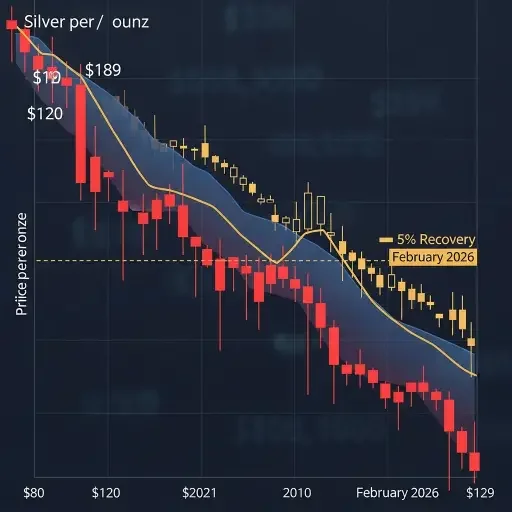
Gold Whipsaws as Safe Haven Calculus Breaks
Silver plunged from $120 to $89 per ounce in days, erasing January's record run. Gold rallied 5% off recent lows. The metal markets are convulsing not from supply shocks but from a more fundamental crisis: investors can't agree on what constitutes a store of value when the Fed holds rates steady under political siege, the dollar strengthens on Venezuela intervention fears, and Treasury yields signal economic confusion.
Senate Delays Crypto Vote as $6B Stablecoin Fight Intensifies
The Senate postponed its January 15 markup of comprehensive crypto legislation, pushing the vote to late January after failing to secure bipartisan support. The delay centers on whether crypto exchanges can offer rewards on stablecoins—a $6 billion question that has fractured the industry coalition built around regulatory clarity. Meanwhile, Wyoming launched the nation's first state-backed stablecoin, and liquidity is returning to markets after December's risk-off period.
Crypto Clarity Bill Momentum: What Republicans, Tim Scott, and Markets Are Watching
A Senate effort to define crypto under securities law has picked up unexpectedly broad attention: Republicans weighing political optics, Senator Tim Scott’s draft as the procedural hinge, and traders pricing regulatory re-risk into exchange listings and venture exits. The outcome will determine who regulates, which tokens survive, and how quickly capital reallocates.
Why Annaly's Yield Is a Beacon for Subordinated REITs
BTIG's recent upgrade of Annaly Capital Management reframes the payout calculus for mortgage REIT investors. With core spreads compressed but book-value resiliency intact, capital is likely to flow into subordinated securities that still trade at meaningful yield premia—tightening credit curves and lifting relative prices across the sector.
California’s Billionaire Tax: Redistribution or Innovation Tax?
California’s proposed billionaire tax would levy a supplemental surcharge on ultra-high-net-worth residents to fund housing, climate and education. Proponents call it corrective redistribution; critics warn it taxes dynamism—raising the cost of failure for founders and possibly shifting wealth and risk offshore.
Veradermics IPO Brings Hair-Regrowth Bets into the Public Market
Veradermics’s IPO opened a public window on hair-regrowth biotech, selling a narrative of durable follicles and scalable clinics while forcing investors to price clinical risk, reimbursement dynamics, and narrow commercial moats into a single ticker. The offering tests whether aesthetic medicine can finance long-term biologic programs outside the traditional oncology and rare-disease corridors.
Rotation to Value-Like Mass-Market Stocks Looks Durable — But Microcap Speculation Is Risky
A noticeable shift is underway: capital is moving from high-multiple growth into large, cash-rich consumer and industrial names that behave like 'value' without being arcane. That rotation may persist while policy uncertainty remains high, but microcaps whose narratives depend on whispered rule changes deserve heightened skepticism.
When the Nasdaq-100 Rewrites Itself, Who's Listening?
The Nasdaq-100’s reconstitution used to be an institutional heartbeat. Today, retail trading apps, index funds and passive ETF flows amplify that pulse. The result: index flows are increasingly both signal and driver, reshaping price discovery and elevating rebalances from mechanical housekeeping to market-moving events.