Friday, July 31, 2026 RSS
AI & Compute Jul 31 PLATFORM

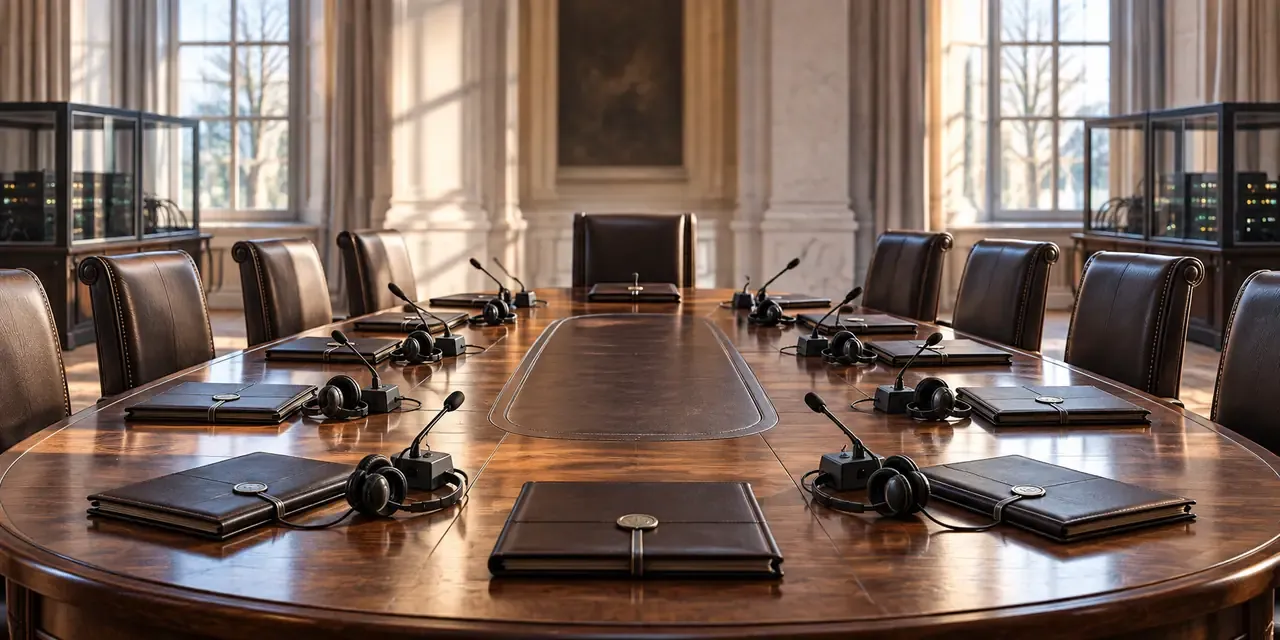
SpaceX Is the Data-Center Bottleneck Markets Miss

Markets still price SpaceX as rockets plus Starlink with an AI narrative attached. The binding constraint sitting under hyperscaler capex is different: gigawatt-scale Colossus capacity, contracted tenants, and a path to orbital compute that terrestrial power queues cannot match.

he market still wants SpaceX to be a launch company that absorbed an AI story. The physical plant says otherwise. Around Memphis and Southaven, SpaceXAI's Colossus campuses now run roughly a gigawatt of nameplate compute — H100s, GB200s, GB300s stacked across clusters built in months, not the multi-year construction calendars that define conventional hyperscale. IPO disclosures and subsequent reporting put Anthropic on the order of $1.25 billion a month for roughly 325,000 GPUs and Google near $920 million a month for about 110,000. Those are not hobbyist rents. They are wholesale capacity contracts sitting inside a company Wall Street still files under aerospace. That is the bottleneck nobody is pricing cleanly. Microsoft and Amazon can race on cloud growth, and…

Continue reading →

Edition · briefing

Upfront

Filed · Fri, Jul 31, 8:16 PM UTC

  • The Kuwait Counterstrike Iran's army claimed Friday that explosive drones struck U.S. fighter hangars, satellite communications, and equipment warehouses at Ahmad al-Jaber Air Base in Kuwait — describing the operation as retaliation for the U.S. "heavy wave" that ended at 10 p.m. ET Wednesday and an alleged strike on a residential home on Qeshm Island that killed three civilians Thursday — as Tehran widened the exchange beyond Iranian soil after the first full day without CENTCOM strikes inside the country since the five-day pause ended; Kuwait's military said Friday it detected hostile drones since dawn, intercepted and destroyed them, and reported material damage from falling debris but no casualties, while CENTCOM denied that any U.S. aircraft were destroyed or damaged in recent attempted Iranian attacks and neither command nor Kuwait publicly confirmed damage to the base as of Friday evening.

  • The Hormuz Escalation Iran's Revolutionary Guard said Friday it struck two tankers attempting to transit the Strait of Hormuz under U.S. military air escort and turned four others back — and Tehran's Persian Gulf Strait Authority declared transit through the waterway "not possible" because of continued U.S. aggression — even as Commonwealth Bank estimates had traffic recovering to roughly 30%–35% of pre-war levels through Thursday and Energy Secretary Chris Wright said about 6.5 million barrels a day exited the Gulf with U.S. Navy support; maritime monitors have not confirmed the tanker strikes, CENTCOM said as of July 30 it had redirected 24 commercial vessels and rejected IRGC claims that the strait is closed, and the Senate on Thursday again rejected an effort to limit President Trump's Iran war powers 49–50 as the conflict entered its sixth month.

  • The Gaza Disarmament President Trump announced Thursday evening that Hamas agreed through mediators to a Board of Peace roadmap for the complete disarmament of Hamas and all other armed groups in Gaza — a phased plan tying weapon surrender and tunnel dismantlement to gradual Israeli withdrawal under an International Stabilization Force — marking the first time the militant group has committed to an actionable disarmament timeline; the Board published the full 15-point text Friday emphasizing Israeli withdrawal obligations, Prime Minister Benjamin Netanyahu's office indicated opposition without a public endorsement, an Israeli source told CBS News Friday there will be "no IDF withdrawal whatsoever" from the current yellow line without genuine disarmament, and Hamas said it will not implement any step unless Israeli forces fulfill their withdrawal obligations as the IDF reported continued operations including a Friday strike on a Kataib al-Mujahideen commander.

  • The Riyadh Entente The United States and Saudi Arabia conducted their first publicly announced joint airstrikes against Iran-backed militias in Iraq on Tuesday and Wednesday — hitting PMF logistics and weapons sites across seven provinces and killing at least twenty fighters, CENTCOM said — marking the first time Riyadh has openly flown alongside Washington in combat and drawing Sunni Saudi Arabia into direct confrontation with Tehran's Shiite proxies on a new front; Iraq condemned the operation as a sovereignty violation and ordered its air defenses raised to maximum readiness Friday, the PMF reported thirty-two wounded and Iran-aligned groups vowed a "heavy price," while Iranian state media said Friday the bodies of five IRGC members killed in the strikes had been returned for burial.

  • The Mediterranean Widening Egypt's cabinet confirmed Thursday that a drone caused the fire that engulfed the U.S.-owned floating LNG storage unit Energos Winter and the gas tanker Gaslog Salem at the Mediterranean port of Damietta on Wednesday — the first strike on Egyptian infrastructure in the five-month war — while two Iranian officials told The New York Times the attack was intended as a warning that Tehran could inflict far greater damage on global energy supplies if the conflict escalates; Cairo reported no casualties, both vessels were moved offshore for assessment, and Prime Minister Mostafa Madbouly said Friday forensic teams had recovered drone remains as a joint task force continued investigating the source.

  • The Oil Whipsaw Brent crude traded near $90 a barrel Friday — up roughly 1.2% on the day after settling at $89.03 Thursday — swinging across an $11 weekly range as Friday tanker strikes in Hormuz collided with partial flow recovery and an upcoming OPEC+ production increase; both Brent and WTI remain on track for roughly 24% monthly gains through July — their steepest since March — even as Exxon Mobil reported Friday that second-quarter profit doubled to $14.5 billion and Chevron nearly quadrupled earnings to $12.1 billion on war-driven prices, while the EIA reported a 7.2 million-barrel U.S. crude draw for the week ending July 24 and commercial stockpiles at their lowest since 2018.

  • The Earnings Divergence Meta reported Q2 revenue of $60.80 billion Wednesday after the close — up 28% year-over-year — but diluted EPS of $6.18 missed the $7.13 estimate as operating margin compressed to 31% from 43% a year ago, quarterly capex hit $31.1 billion, and free cash flow collapsed to $784 million, sending shares down roughly 9% in Thursday trading on an eleventh consecutive losing session; Microsoft reported fiscal Q4 revenue of $90.0 billion and EPS of $4.81 — both ahead of Wall Street — with Azure and other cloud services up 43% and annual cloud revenue surpassing $100 billion for the first time, lifting the stock more than 15%; Apple posted a record June quarter Thursday — $109.4 billion in revenue and EPS of $2.02, up 16% and 29% year-over-year on record iPhone and Services sales — while Amazon reported Q2 net sales of $200.6 billion and AWS revenue up 37% to $42.2 billion, its fastest cloud growth in eighteen quarters, as Samsung Electronics' record Q2 memory results underscored the split between AI infrastructure winners and the capex-heavy platforms funding them.

  • The Fed Hold The FOMC voted 9–3 Wednesday to hold rates at 3.50%–3.75% — a fifth consecutive pause and the most dissents in a single direction since 2016 — with Cleveland's Beth Hammack, Minneapolis's Neel Kashkari, and Dallas's Lorie Logan favoring a quarter-point hike as oil's whipsaw and Iran-war inflation kept price stability in focus; Chair Kevin Warsh told reporters at his 2:30 p.m. ET press conference he "asked for a good family fight and got one," offering no forward guidance beyond a stripped-down statement that declared "The Committee will deliver price stability."

Markets & finance · levels

Markets

Snapshot · Jul 31, 2026, 8:16 PM UTC · ETF board · vs 5-day average · extended prints 18

  • S&P 500 SPY · New York

    747.01

    +0.02% day +1.00% 5d avg
  • Dow DIA · New York

    524.32

    -0.02% day +0.46% 5d avg
  • Nasdaq QQQ · New York

    687.33

    -0.09% day +1.35% 5d avg
  • Canada EWC · Toronto

    59.39

    0.00% day -0.25% 5d avg
  • Mexico EWW · Mexico City

    76.81

    -0.02% day +0.32% 5d avg
  • Brazil EWZ · São Paulo

    36.65

    0.00% day +1.48% 5d avg
  • UK EWU · London

    48.41

    -0.02% day +0.77% 5d avg
  • Germany EWG · Frankfurt

    42.85

    -0.04% day +1.36% 5d avg
  • France EWQ · Paris

    46.55

    0.00% day +1.41% 5d avg
  • Japan EWJ · Tokyo

    92.39

    +0.02% day +1.23% 5d avg
  • Korea EWY · Seoul

    157.17

    -0.11% day +1.35% 5d avg
  • Hong Kong EWH · Hong Kong

    23.08

    -0.04% day +0.33% 5d avg
  • Taiwan EWT · Taipei

    96.55

    +0.03% day +2.34% 5d avg
  • Australia EWA · Sydney

    29.34

    +0.02% day +0.16% 5d avg
  • New Zealand ENZL · Auckland

    46.82

    +0.00% day -0.22% 5d avg
  • India INDA · Mumbai

    49.80

    -0.04% day +0.83% 5d avg
  • Indonesia EIDO · Jakarta

    12.37

    +0.04% day +1.53% 5d avg
  • Malaysia EWM · Kuala Lumpur

    27.83

    -0.88% day -0.66% 5d avg

World desks

Briefing as of Fri, Jul 31, 8:17 PM UTC

  • London, United Kingdom Local 21:17 · Fri · after hours London's Friday close tells a month-end story of records and profit-taking. The FTSE 100 hit a fresh intraday peak of 10,989.45 before settling down 0.3% at 10,868.05 — still on track for its best month since February as energy and defense names extended July gains. NatWest jumped 3% on a profit beat and raised guidance, while BAE Systems rose on the defense bid. Bond yields climbed on both sides of the Atlantic: ten-year gilts reached 5.05% and the U.S. 10-year touched 4.74% as Fed dissenters argued hikes are needed now. Morrisons' plan to cut 5,000 jobs after a £900 million loss underscored retail stress beneath the index headline. From the City, July ends with cyclicals and banks beating platform software.

    The Independent · The Guardian

  • Lagos, Nigeria Local 21:17 · Fri · after hours Lagos enters Friday with NNPC reporting June profit after tax of N535 billion — a 15.8% jump and the highest monthly result in ten months — alongside crude output of 1.56 million barrels per day, the strongest since April 2020. The naira held near N1,366.73 in the official market even as reserves eased about $120 million from a $52.04 billion peak, and the parallel premium widened slightly. From Victoria Island, hydrocarbon revenue is improving faster than household inflation is easing: Gulf shipping risk still feeds imported diesel costs even when indigenous production and state oil company profits look healthier on paper.

    Nairametrics · Businessday

  • Stockholm, Sweden Local 22:17 · Fri · after hours Stockholm's OMX session captures the Nordic AI-hardware bid. Ericsson and the broader tech-hardware complex gained as Asia's semiconductor rebound — led by Seoul's record Kospi snapback — crossed into European trading hours. The krona held steady after Bank of Japan intervention talk moved the yen, reducing immediate FX volatility for Sweden's export-heavy index. From Stureplan, the narrative is cyclical industrials meeting AI infrastructure demand, with Gulf oil near $90 a background input for energy-intensive manufacturing rather than the day's primary driver.

    Dagens Industri · Dagens Nyheter

  • Madrid, Spain Local 22:17 · Fri · after hours Madrid juggles strong macro data with a migration crisis on Europe's southern flank. Spain's second-quarter GDP rose 0.7%, leading the eurozone advance and lifting the IBEX alongside utilities and industrials. Yet the record influx into Ceuta — tens of thousands breaching the enclave from Morocco — dominates the political agenda and could complicate fiscal consolidation that underpins Spain's outperformance. Energy names track Brent's hold near $90 as Gulf shipping risk persists. From the Puerta del Sol, markets are pricing growth; the government is managing border stress.

    El País (EN) · Handelsblatt

  • São Paulo, Brazil Local 17:17 · Fri · working now São Paulo's afternoon belongs to recovery after market plumbing failed. B3 postponed the stock opening until 12:30 after a clearing-house processing delay left equities in auction — only the spot dollar opened on schedule — but by late session the Ibovespa had climbed as trading normalized. The real weakened to R$5.07 as accumulated morning orders hit the tape in a compressed window. Vale's second-quarter results and a Santander buyback offer remain the corporate anchors, while Petrobras still tracks Brent near $90. From Faria Lima, the operational glitch interrupted a risk-on month-end; the macro story — fiscal deficit, Fed hold, Gulf oil — resumes once the clearing chamber catches up.

    G1 · Estadão · InfoMoney

  • Buenos Aires, Argentina Local 17:17 · Fri · working now Buenos Aires opened with the Merval tracking improved emerging-market sentiment after the Fed's hold and Asia's chip rebound. The peso held stable amid ongoing IMF review progress, while the soy and grain complex watched global demand signals more than Gulf headlines directly. Argentina's agri-export engine benefits indirectly from elevated energy prices through terms-of-trade effects on competitors, but freight and fertilizer costs remain sensitive to Hormuz disruption. From Microcentro, the session is EM risk-on with a commodity overlay.

    La Nación · Buenos Aires Times (EN)

  • New York, United States Local 16:17 · Fri · working now New York's July finale is a collision of war economics and platform anxiety. The S&P 500 rose roughly 0.7% Friday after veering all session — a fitting end to a month that lurched on Hormuz oil and AI capex doubts. Exxon reported second-quarter profit of $14.5 billion, doubling year-on-year, while Chevron's $12.1 billion haul was its largest ever; both validated Brent's wartime elevation even as the benchmark held near $90. Amazon surged on AWS growth of 37%; Apple sank on supply-constrained guidance despite record June-quarter revenue. President Trump told a Cabinet meeting he is losing faith in Iran deal talks and promised to hit Tehran hard, while Iran's claimed Kuwait base strike and fresh Hormuz tanker attacks kept geopolitical risk elevated into the weekend. From Wall Street, hydrocarbons and cloud infrastructure won the capex debate.

    Barchart · CNBC · CBS News

  • Toronto, Canada Local 16:17 · Fri · working now Toronto's TSX slipped Friday as gold miners retreated alongside bullion, offsetting firmer U.S. futures on Amazon and Microsoft. First Quantum Minerals reported second-quarter net earnings of US$136 million, up sharply from US$18 million a year ago on stronger copper production, while Intact Financial's profit fell to C$720 million on higher catastrophe claims. Baytex and Vermilion led energy gainers as Canadian producers track Brent's hold near $90. From Bay Street, the cross-border read is resources and insurers diverging — miners and property-casualty names absorbing different sides of the same volatility regime that lifted U.S. oil majors this afternoon.

    Globe and Mail · MoneySense

  • Bogotá, Colombia Local 15:17 · Fri · working now Bogotá's COLCAP rose on emerging-market flows stabilized by the Fed pause and a softer dollar. Ecopetrol tracked Brent's hold near $90 as Colombia's export economy benefits from elevated oil realizations, though Gulf shipping risk keeps freight and insurance costs elevated for Andean trade routes. The peso held steady as regional investors rotated toward commodity exporters over services names hit by AI displacement fears. From the Centro Internacional, the read is EM beta plus hydrocarbon leverage.

    La República · El Tiempo

  • Mexico City, Mexico Local 14:17 · Fri · working now Mexico City's IPC opened up 0.43% at 67,580 points Friday, extending Thursday's 1.22% advance that lifted the benchmark to 67,290. Second-quarter GDP growth of 1.5% underpins the rally alongside a global tech rebound led by Amazon and Microsoft. Televisa, airport operators Asur and GAP, and consumer names led early gains as investors treat nearshoring fundamentals and U.S. earnings as the primary drivers rather than Gulf headlines directly. From Paseo de la Reforma, the session is EM continuity — four positive closes in five days — with energy exposure still implicit through Pemex-linked sentiment and U.S. crude realizations.

    El CEO · El Economista

  • Chicago, United States Local 15:17 · Fri · working now Chicago's derivatives pits are pricing volatility, not direction. CME grain and energy futures tracked Hormuz oil swings as Iran claimed Friday tanker strikes under U.S. escort, while Exxon's doubled second-quarter profit validated the energy complex even as equities digested a split Big Tech earnings week. Kuwait drone intercepts widened the war's geographic footprint beyond Iranian soil, keeping implied vol elevated into the July close. From the Loop, Chicago reads the tape as a war-economics story: commodity spreads and VIX matter more than index levels when horizontal escalation returns on a Friday afternoon.

    CBS News · CNBC

  • Los Angeles, United States Local 13:17 · Fri · working now Los Angeles tracks Silicon Valley's earnings hangover and the Gulf's geographic widening. Apple shares fell on supply-constrained guidance despite record June-quarter revenue, while Amazon's cloud beat lifted the broader AI infrastructure narrative that feeds aerospace and entertainment capex up and down the coast. Exxon and Chevron's war-driven profit surge validates California-adjacent refining and port logistics even as Iran's claimed strike on Kuwait introduces fresh security premiums for transpacific shipping. From downtown, the afternoon is platform guidance versus energy windfalls — two California-adjacent trades moving in opposite directions.

    CNBC · CNN Business · CBS News

Markets & finance · instrument

Flight Deck

Read top to bottom: regime and instruments (risk score, implied sleeve flows, Fed liquidity, breadth, macro gauges), then decision surface (which stories the market is pricing and whether cross-asset relationships are strained). Flow bars estimate the dollar value each sleeve gained or lost on the day (fund assets × return) — not investor deposits or withdrawals.

Snapshot · Jul 31, 2026, 8:18 PM UTC · FMP tape + FRED macro

Risk environment

48 /100

Liquidity

Contracting

−$88.8B impulse

Flows

Inflow

net across board

Breadth

Mixed

64% above 200DMA

Rotation
Capital flow map implied move · AUM × day return · vol vs 20d norm
  • US equities SPY
    +$5.5B 1.2×
  • Nasdaq QQQ
    +$2.8B 1.1×
  • Small caps IWM
    −$377M 1.2×
  • Equal-weight S&P RSP
    −$168M 1.1×
  • Semiconductors SMH
    +$140M 1.0×
  • Energy XLE
    +$387M 0.8×
  • Long Treasuries TLT
    −$277M 1.9×
  • Agg bonds AGG
    −$353M 1.3×
  • Gold GLD
    −$2.0B 1.0×
  • Bitcoin ETFs IBIT
    −$1.4B 1.5×
  • T-bill cash SGOV
    +$26M 1.5×
Liquidity ΔFed BS − ΔTGA − ΔRRP
Contracting Expanding

Contracting −$88.8B impulse

Participation · S&P +0.70% , 64% above 200DMA

  • Mega-cap +0.70%
  • Avg stock -0.17%
Macro tape
  • 10Y treasury

    4.67%

    ↑ +6bp

  • Broad dollar

    120.71

    ↓ -0.20

  • VIX

    16.16

    ↓ -0.93

  • S&P vs 200DMA

    +6.70%

    stretch

Decision surface

Each card is a market story. Fund is belief from news and fundamentals; Tape is what prices are doing; Blend mixes the two. A Fund–Tape gap means story and market disagree. vs Prior marks confirming / fighting bellwethers — not a forecast. Stress scores cross-asset relationship strain, not drawdown size.

narratives · relationship stress · report 2026-07-31, generated Fri, Jul 31, 11:31 AM UTC
  • Composite

    32%

  • Session

    33%

  • Weekly

    32%

  • Structural

    32%

  • AI Capex Supercyclesector

    60%blend

    Fund60%
    Tape60%

    Tape NVDA +2.65%, QQQ +3.30%, SMH +6.88%

    vs Prior Confirming NVDA, QQQ, SMH

  • Reflation / Dollar Debasementmacro

    58%blend

    Fund60%
    Tape56%

    Tape GLD +1.64%, UUP -0.99%, TLT -0.06%

    vs Prior Confirming GLD, UUP, TLT

  • Soft Landingmacro

    34%blend

    Fund15%
    Tape63%

    Tape HYG +0.29%, XLF +0.56%, IWM +1.39%

    vs Prior Confirming HYG, XLF, IWM

  • Energy / Inflation Premiummacro

    78%blend

    Fund92%
    Tape58%

    Tape USO -1.42%, XLE +0.53%, GLD +1.64%

    vs Prior Confirming XLE, GLD · Fighting USO

Business wire

  • July's Split Tape Wall Street's wild July ended with the S&P 500 up roughly 0.7% Friday after veering all session — a month that lurched on Hormuz oil, Fed dissent, and a capex divide between platform funders and infrastructure winners. Amazon's 15% surge on AWS growth validated hyperscaler spending; Apple's nearly 10% drop on supply-constrained guidance punished hardware multiples. Micron and other memory names fell even as Amazon pledged $220 billion in AI investment, signaling rotation within the chip stack rather than exit from the theme.

  • Y'all Street Arrives The Texas Stock Exchange went fully live Friday in Dallas, the first new major U.S. bourse in decades. Whether TXSE can attract listings away from NYSE and Nasdaq remains an open question, but the launch signals continued fragmentation of U.S. equity market structure — and a political appetite for regional financial infrastructure that competes with incumbent exchanges on fees and governance.

  • FX Intervention Watch The U.S. Treasury's alert to banks that it may intervene in the yen market Friday adds a new layer to Tokyo's own intervention talk and the Bank of Japan's hold at 0.5%. Currency markets are pricing a coordinated-or-competing response to yen weakness that could ripple through carry trades and Asian export competitiveness — even as the dollar finds support on rising Treasury yields.

  • Energy Complex Split Shell's CEO warned on gas and diesel supply as Russia extended its export ban through September, keeping middle-distillate markets tight even as Brent held near $90. EasyJet profits dropped 70% on higher fuel costs — a reminder that war-premium oil hits airlines and refiners differently than it rewards producers. The energy tape is bifurcating between upstream windfalls and downstream margin compression.

  • AI Trust and Liability Google pulled its Earth AI feature after one day amid misinformation concerns — a rare public retreat on generative geography. The move sits beside ongoing platform liability questions as enterprise AI adoption scales: who bears responsibility when models fabricate or misrepresent real-world data? Regulators and insurers are watching whether tech giants can contain product risk before the next deployment cycle.

  • Venture Still Deploying Index Ventures raised $2 billion across seed, venture, and growth funds fresh off its Wiz payout — evidence that top-tier venture capital is still writing checks despite platform-multiple anxiety in public markets. The raise underscores a split between public-market capex skepticism and private-market conviction that AI infrastructure and security remain underfunded relative to demand.

Market news

  • Oil Majors Print War Premium Exxon and Chevron reported the quarter's clearest validation of Gulf-war oil economics: Exxon's $14.5 billion profit doubled year-on-year while Chevron's $12.1 billion haul was its largest ever, beating estimates on record U.S. production above 2 million barrels per day. Exxon missed EPS by eight cents despite the windfall; Chevron's CEO warned global energy markets are running out of time as inventories fall and disruption expands beyond Hormuz. The split between headline profit and estimate misses captures how elevated but volatile crude realizations complicate analyst models.

  • Cloud Versus Hardware Amazon exceeded $200 billion in Q2 net sales with AWS up 37%, prompting Wolfe Research to reiterate Outperform as hyperscaler monetization validated capex spending. Apple faced downgrades despite record revenue as supply constraints and AI execution concerns sent shares lower. Alphabet received a downgrade on AI delays and competitive pressure. The platform tape is splitting cleanly: cloud infrastructure winners versus hardware and search names struggling to prove AI returns.

  • Healthcare Bifurcation AbbVie exceeded Q2 forecasts on immunology strength while Replimune surged on an FDA panel win for melanoma — contrasting with Rentokil's plunge on North American residential weakness. The healthcare tape is splitting between pipeline catalysts and services names exposed to consumer discretionary softness, a pattern that favors large-cap pharma over facility-services models tied to housing turnover.

  • Consumer and Payments Resilience Mastercard's strong Q2 prompted Goldman Sachs to raise its price target, validating consumer spending and cross-border transaction volume despite inflation headwinds. Yum! Brands and Yum China posted solid results in fast-food markets on opposite sides of the Pacific. Colgate-Palmolive beat earnings but flagged North American headwinds — a reminder that staples names are not immune to promotional intensity even when volumes hold.

  • Industrials and Logistics C.H. Robinson was upgraded after strong Q2 earnings as logistics demand stabilized and margin recovery exceeded expectations — a counterpoint to trucking stocks hit by legal liability concerns elsewhere. TC Energy and Enbridge reported robust pipeline throughput despite Gulf shipping disruption, underscoring midstream resilience. Lear Corporation exceeded Q2 expectations in auto seating, though the sector remains sensitive to tariff and supply-chain headlines.

  • Platform Gaming Pressure Roblox's Deutsche Bank downgrade and Reddit's earnings beat illustrate diverging fortunes in platform gaming and social media. Reddit's advertising and data-licensing acceleration contrasts with Roblox's user-growth deceleration concerns — a split that favors ad-supported models with AI-licensing optionality over pure-play gaming platforms facing monetization headwinds.

Culture

  • Venice at Mid-Summer Venice Biennale 2026 is past its opening crush and into the long middle run — the period when curators' choices reveal themselves beyond press-week hype. Koyo Kouoh's In Minor Keys, realized by her team after her death, spans 110 invited participants and 100 national pavilions including seven first-time countries. Extended Arsenale hours through September make August the window for unhurried viewing, while collateral exhibitions across Dorsoduro and San Marco extend the program beyond the Giardini gates.

  • Abramović Meets the Renaissance Marina Abramović's Transforming Energy at the Gallerie dell'Accademia marks the first major exhibition by a living female artist at the institution — a deliberate collision between performance art and Venetian heritage. Curated by Shai Baitel in collaboration with the artist, the show unfolds in both permanent collection galleries and temporary spaces, placing quartz and amethyst installations alongside Titian and Veronese. The exhibition asks how contemporary endurance practice dialogues with a city built on transformation — material, spiritual, and political.

  • August Collateral Season Beyond the central exhibition, August visitors can move between Jenny Saville at Ca' Pesaro, Barry X Ball's marble meditations at San Giorgio Maggiore, and Georg Baselitz's free-admission Golden Heroes at the Cini Foundation. The Peggy Guggenheim Collection's London-origin story exhibition adds collector-history depth. Venice in August is less about pavilion openings than about sustained engagement with work that rewards repeat viewing.

  • Community Access Models Brooklyn Children's Museum's Community Access Thursdays and Cleveland's expanded Mandel Community Days represent recurring free-admission windows funded by corporate and foundation partners rather than one-off open days. Each pairs access with programming — STEM makerspaces, docent tours, natural-history engagement — so free entry means pedagogical participation, not empty galleries. These models treat education infrastructure as ongoing public obligation rather than promotional exception.

  • First-Time Pavilion Geography Seven countries debut at Venice 2026 — Guinea, Equatorial Guinea, Nauru, Qatar, Sierra Leone, Somalia, and Vietnam — expanding the Biennale's geographic representation at a moment when the central exhibition's political context has drawn protest and legal dispute. The first-time pavilions matter less as novelty than as evidence that the Biennale remains the primary venue where smaller nations claim cultural sovereignty on a global stage.

01

Kospi, Are You Okay?

02

AI Capex Hits ASML — and the CBDC Blind Spot

03

Relief Rally Without Peace

04

AI's Cash Burn Is a Packaging Problem, Not a Spending One

Advertisement
All →
Jun 29 LABOR

The Utility Gap: Can AI Apps Justify the Buildout?

Artificial intelligence infrastructure is racing ahead of proven consumer willingness to pay. With free-to-paid conversion near six percent and enterprise carrying most revenue, the industry faces a utility test: enough daily engagement and durable subscriptions to justify megawatt-scale buildouts — or a cycle of dark racks, repriced debt, and cascading GPU obsolescence.

All →
Jun 19 STATE

The Court Will Redefine Who Is Born American

The Supreme Court will rule by early July on whether Trump can end birthright citizenship by executive order. The constitutional fight is abstract; the consequences begin in delivery rooms where hospitals assume every newborn is a citizen — and where losing that assumption breaks Medicaid and newborn care.

10 additional stories