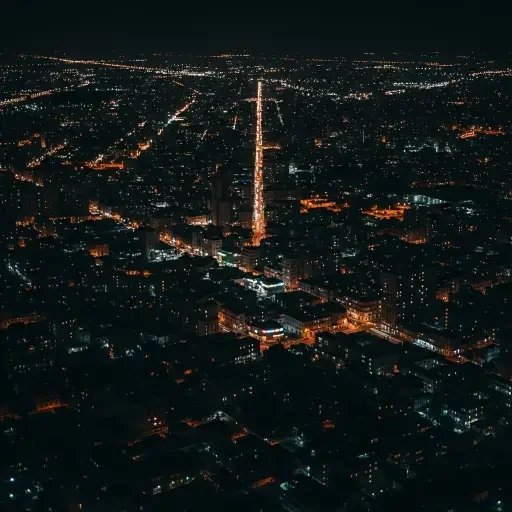

On the evening of March 4, a boiler pipe burst at the Antonio Guiteras thermoelectric plant — Cuba’s largest — and the national grid collapsed from Pinar del Río to Camagüey. Two-thirds of the island went dark. Millions of people lost power for at least sixteen hours. When asked by a journalist whether the blackout was a direct consequence of the American oil blockade, the director of electricity at Cuba’s Ministry of Energy and Mines answered with a single word: “Exactly.”
The mechanical failure was real. But the grid had already been operating at a fraction of its capacity, starved of the fuel needed to keep aging generators running. Cuba’s normal effective generation capacity sits just under 2,000 megawatts. After restoration began, only 590 megawatts were online — enough to prioritize hospitals and water pumping stations, not much else.
The Anatomy of the Blockade
The fuel crisis traces a clean causal chain. In January, U.S. forces captured Venezuelan President Nicolás Maduro, abruptly halting the roughly 35,000 barrels per day that Venezuela had been shipping to Cuba — approximately half the island’s imported oil. On January 29, President Trump signed Executive Order 14380, declaring a national emergency regarding Cuba and authorizing tariffs on any nation that continues to supply the island with fuel. Mexico, which had been providing a secondary lifeline, suspended its planned shipments. The New York Times described the result as the first effective U.S. blockade of Cuba since the 1962 Missile Crisis.
The consequences have cascaded with the mechanical logic of a system stripped of its inputs. Cuba suspended fuel sales in local pesos in early February and limited dollar purchases to twenty liters per vehicle. Jet fuel became unavailable at nine airports through mid-March. Garbage collection trucks in Havana ran out of fuel, and refuse began accumulating in the streets. Black market gasoline prices surged to roughly thirty dollars per gallon — a 400 percent increase since January.

The Human Toll Is Accelerating
Power outages have hit hospital emergency wards and dialysis patients. At Camp East Montana, a tent facility in El Paso housing over 3,000 detained Cuban and other immigrants, at least fourteen measles cases have been detected alongside outbreaks of COVID-19 and tuberculosis. On the island itself, Cuba’s GDP has contracted roughly 15 percent over the past five years, and indicators for life expectancy, infant mortality, education, and public health have all deteriorated. The iconic 1950s American taxis — Havana’s functional transit backbone — have largely vanished from the streets, replaced by Chinese electric tricycles that cannot meet demand.
UN Secretary-General António Guterres said he was “extremely concerned” about Cuba’s humanitarian situation, warning it could collapse entirely without adequate fuel. The U.S. Treasury issued partial licenses on February 26 allowing companies to resell Venezuelan oil to Cuba’s private sector — but the carve-out explicitly bars entities connected to the Cuban military or government, limiting how much fuel actually reaches the grid.
The Quiet Part Is No Longer Quiet
The strategic intent is no longer subtext. Trump said this week that regime change in Havana is a “matter of time” and suggested the island’s communist government was “in its last moments.” At a summit of right-wing Latin American leaders on Saturday, he described Cuba as being “at the end of the line.” The administration’s negotiations, such as they are, have been conducted not with senior Cuban leadership but reportedly with a grandson of Raúl Castro who holds no formal party position.
Ecuador expelled Cuba’s ambassador and diplomatic staff on March 4 without providing a reason — a move that signals the regional pressure campaign extends beyond energy. Cuba’s foreign ministry has described the blockade as an act of economic warfare. The framing is imprecise only in its modesty. What is unfolding is a resource siege against a nation of eleven million people, executed through executive order and naval interdiction, with the explicit goal of governmental collapse. The grid has been reconnected, for now. The fuel that keeps it running has not.
Tags
Related Articles
Sources
Wikipedia 2026 Cuban crisis entry, Al Jazeera field reporting (March 5–7), Democracy Now headlines (March 5), Reuters via Stabroek News, Associated Press via Local10, BBC via Repeating Islands, CiberCuba electrical reporting, Truthout analysis, The Dupree Report synthesis