
Defining Analysis
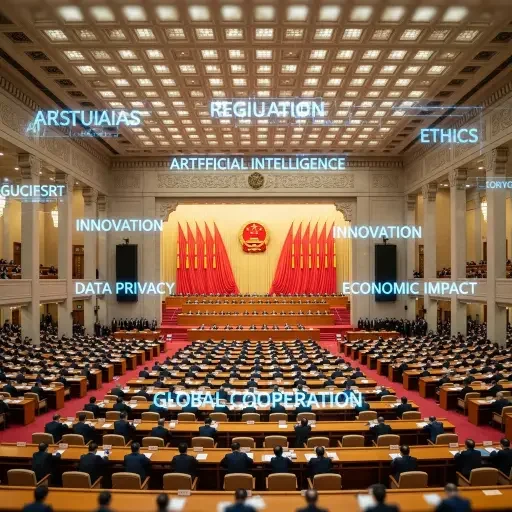
China's 15th Five-Year Plan Bets the Economy on AI
China's 15th Five-Year Plan, released at the National People's Congress, mentions artificial intelligence 52 times and introduces an AI Plus initiative targeting integration across 90 percent of the economy by 2030. The plan frames AI not as a sector but as an economic form — a structural response to demographic decline, technological rivalry with the United States, and a consumption model Beijing has chosen not to fix.
Most Relevant Right Now
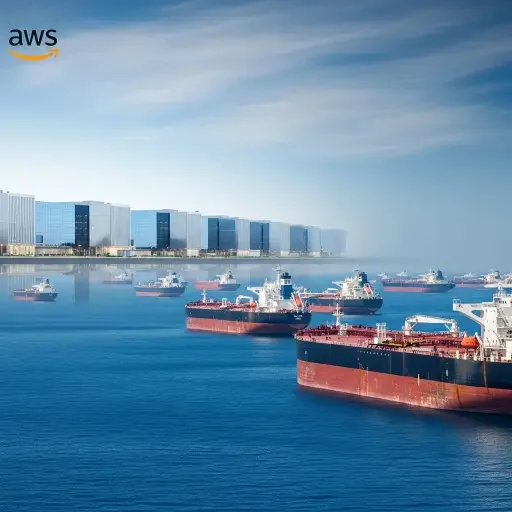
The First War to Hit the Cloud
Drone strikes physically damaged AWS data centers in the UAE and Bahrain, knocking 109 cloud services offline and cascading into banking, payments, and logistics across the Gulf. Simultaneously, seven P&I clubs cancelled war risk coverage for the Strait of Hormuz, freezing 20% of global oil transit without a single mine being laid.
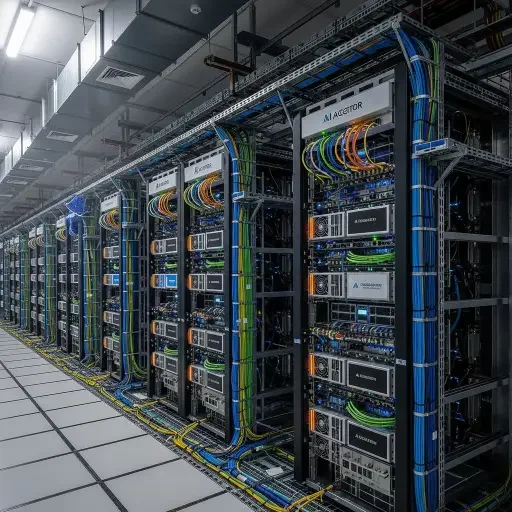
The Custom Silicon Wars: Broadcom's Quiet AI Takeover
Nvidia dominates the AI narrative, but a structural shift is underway beneath it. Hyperscalers are designing custom chips — and Broadcom is the architect translating those designs into silicon. With AI revenue doubling year-over-year, six major XPU customers, and a line of sight to $100 billion in chip revenue by 2027, Broadcom is becoming the indispensable backbone of AI infrastructure.
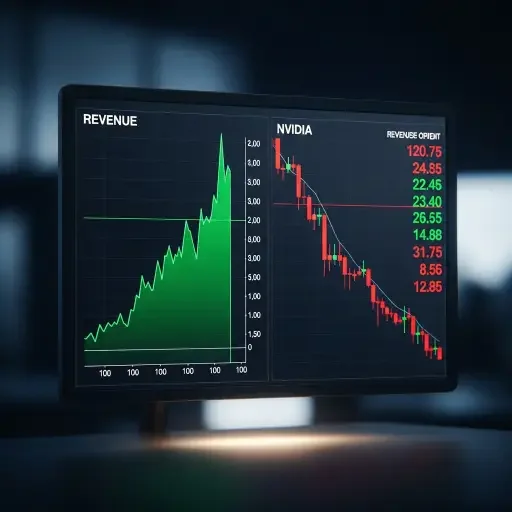
Nvidia's Best Quarter Ever. Wall Street Shrugged.
Nvidia posted the largest clean beat in semiconductor history — $68.1 billion in Q4 revenue, 73% year-over-year growth, and guidance that crushed every estimate. The stock fell 5.5%, its worst day in ten months. The paradox reveals a market that no longer rewards AI momentum; it demands proof that the $700 billion capex deluge will ever pay off.
Wall Street Questions $660B AI Infrastructure Bet
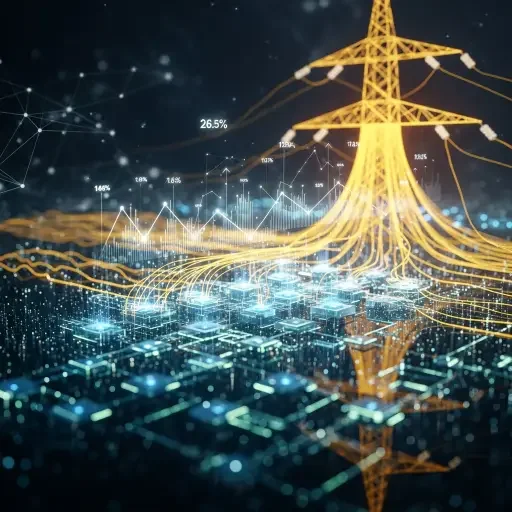
After a year celebrating massive AI infrastructure spending, Wall Street abruptly shifted in early February 2026. Alphabet's announcement of $185 billion in annual capex—more than double 2025—forced investors to confront whether the industry's $660 billion buildout represents rational investment or developing bubble.

China's AI Efficiency Revolution Challenges $600B Silicon Valley Bet
While U.S. hyperscalers committed $660 billion to a GPU arms race, Chinese researchers developed algorithmic innovations achieving similar results at a fraction of the cost. DeepSeek's success represents more than competitive threat—it's a fundamental challenge to assumptions underpinning the West's AI development strategy, with implications for capex sustainability, export control effectiveness, and trillion-dollar market valuations.
TSMC Commits $56B to AI Buildout as Supply Stays Tight
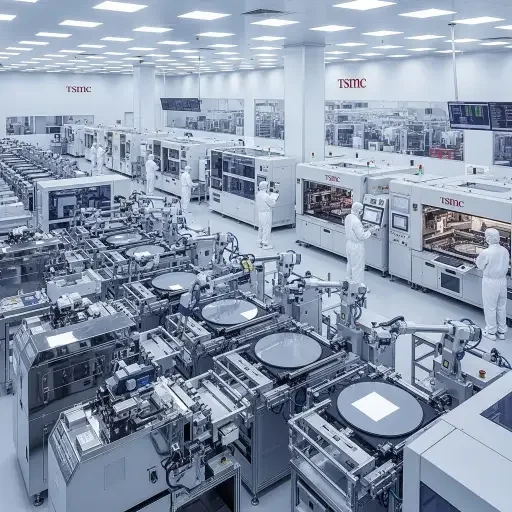
Taiwan Semiconductor Manufacturing Company reported record fourth-quarter earnings Thursday and raised 2026 capital expenditures to as much as $56 billion—a potential 40 percent increase from 2025—as CEO C.C. Wei told investors that supply constraints for AI chips will persist through 2027 despite aggressive expansion. The guidance signals that the world's largest contract chipmaker views artificial intelligence demand as structural rather than cyclical, committing unprecedented capital to fabrication capacity that won't materially contribute to supply until 2028.
Truist’s Northrop Grumman Downgrade Signals Tentative Repricing in Defense Margins
Truist downgraded Northrop Grumman, citing margin risk at a moment when defense contractors face cost inflation, program schedule pressure and increasing prime–subcontractor friction. The move could presage a modest sector-wide repricing if profit deterioration proves persistent rather than idiosyncratic.
Rivian's R2 Launch Could Re-price Risk If EV Demand and Batteries Align
Rivian's imminent R2 launch arrives at an inflection: rising EV adoption can compress perceived company risk, but only if battery costs fall and critical-material supply holds. The market will re-price Rivian not on excitement alone, but on durable unit economics tied to cathode chemistry, cell form factor and supplier resilience.
ASML's Next Upside: EUV Demand from DRAM and a Second Wave of TSMC Orders
ASML stands to gain if DRAM makers adopt EUV at scale and TSMC resumes a fresh ordering cadence: the company’s extreme‑ultraviolet tools sit at the intersection of memory cyclical recovery and foundry investment, creating a two‑way upside via supplier cap‑ex cycles that ripple through the semiconductor supply chain.
NVIDIA’s Groq Licensing: The Acqui-Hire That Rewires Enterprise AI Budgets
NVIDIA’s licensing agreement with Groq recasts a personnel‑heavy acquisition as a capacity and roadmap play: it buys immediate inference scale, embeds talent and code paths, and forces enterprises and chip cycles to reprice AI‑inference as a delivered service rather than a raw component.