

Treasury on October 1 authorized sanctions against actors operating in Iran's automotive and rail sectors and designated major companies in both. The measure does not stop every domestic transaction. It makes the two sectors new liability zones for foreign suppliers, financiers, insurers, and logistics partners.
The Treasury Department has added Iran’s automotive and rail sectors to the industrial terrain where it can impose sanctions. The October 1 action under Executive Order 13902 pairs two sectoral determinations with designations of major carmakers, rail entities, and related companies. It is a meaningful expansion of exposure, but not an instant halt to every Iranian factory or train.
That distinction is the point. A sectoral determination authorizes Treasury to target people and companies operating in, or materially supporting, a named sector. It does not itself designate every participant. The practical effect arrives through counterparties: a foreign supplier deciding whether to ship parts, an insurer pricing a rail consignment, or a bank asking what sits behind an otherwise ordinary payment.
The target is the industrial plumbing
Treasury named Iran Khodro, SAIPA, Iran Khodro Diesel, and Zamyad among the automotive entities, and designated the Islamic Republic of Iran Railway Company, Raja Passenger Trains, and Railway Transportation Company in rail. The release called autos Iran’s largest economic sector outside oil and gas, while also describing it as a source of more than $1 billion in annual losses. That contradiction is revealing. A loss-making sector can still distribute patronage, absorb imported inputs, provide military-adjacent capacity, and move money through nominally commercial channels.
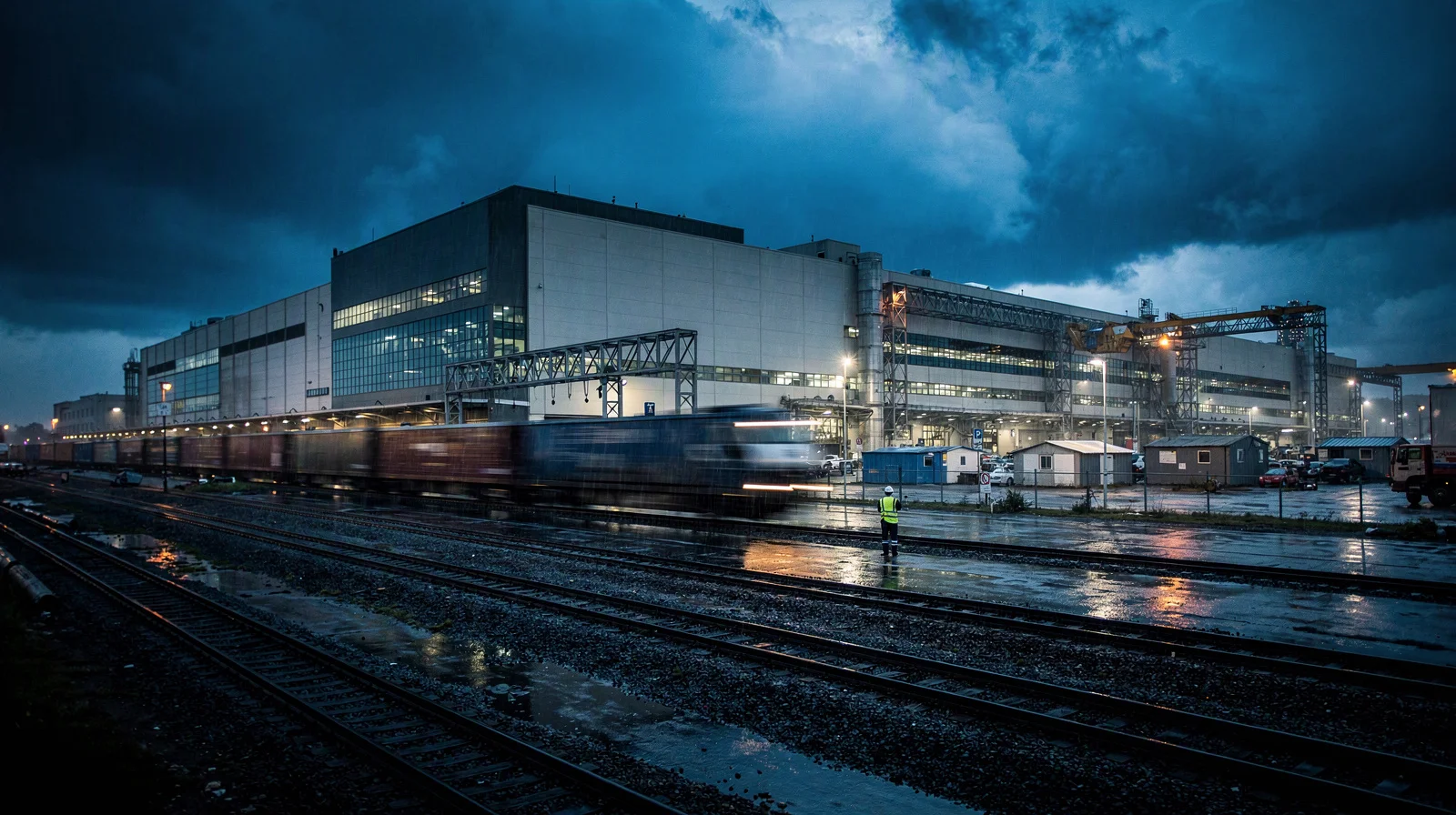
Rail serves a parallel function. It is not simply passenger transport. A state rail network links industrial centers, ports, border crossings, maintenance providers, and freight customers. A designation on a national rail entity therefore creates a diligence problem for companies that never view themselves as dealing with Iran’s security apparatus. Forwarders, insurers, lessors, repair firms, and financial intermediaries have to trace the operating chain, not just the cargo.
That is how this action differs from a headline about oil barrels. Oil sanctions concentrate attention on tankers, traders, and payments. Automotive and rail restrictions reach the mundane systems that make industrial production reproducible: components, rolling stock, warehousing, freight documents, and credit. The compliance perimeter gets wider because the commercial vocabulary gets more ordinary.
A determination widens the option set; it is not a blockade
The restraint matters for readers assessing policy rather than merely repeating it. Treasury did not announce a blanket embargo on every domestic auto sale or rail journey. It created legal authority that lets OFAC identify new targets and makes foreign participation more costly to evaluate. Whether that authority becomes operational pressure depends on follow-on designations, enforcement, licensing choices, and the risk tolerance of firms outside the United States.
Iran has spent years adapting commercial networks to pressure on oil, metals, shipping, and banking. As Culled noted in its coverage of sanctions re-pricing across Asian technology and energy, the impact is often transmitted through financing and logistics before it appears in aggregate trade numbers. The new determinations turn industrial service providers into the next set of nodes where that transmission can occur.
The move also complements the broader policy architecture described in the administration’s Monday sanctions push: make participation in selected Iranian sectors costly enough that foreign intermediaries retreat before a transaction reaches a U.S. clearing system. That strategy is powerful precisely because it does not require Washington to physically stop each shipment.
The new constraint is not whether Iran can assemble a car or dispatch a train tomorrow. It is whether the external services that keep those systems repairable, financeable, and connected can remain available.
Watch the secondary effects, not a single announcement
The next evidence will be prosaic: changes in supplier terms, insurance exclusions, rail equipment procurement, letters of credit, and cross-border freight routing. A new designation of a third-country intermediary would show the authority is being used to press beyond named Iranian enterprises. A lack of such follow-through would leave the action as a warning with limited additional bite.
For trade desks, the story is not that the U.S. has suddenly discovered Iran’s industrial economy. It is that Treasury has moved the compliance frontier from the export commodity everyone already watches to the less visible infrastructure that allows the commodity economy—and the domestic one around it—to function.
More in Geopolitics


Sources
U.S. Treasury's October 1, 2026 Operation Economic Outcast release and OFAC sectoral determinations under Executive Order 13902; prior Culled coverage of Iranian sanctions and trade disruption.
