

On 25 September the Government of Canada signed a non-binding term sheet with Saab toward a possible fleet of six GlobalEye airborne early-warning aircraft. The platform pairs Saab's Erieye ER surveillance stack with a Bombardier Global 6500 business jet built in Canada. The headline counts six tails. The binding work is mission-system integration, support, and sovereign control over the data they produce.
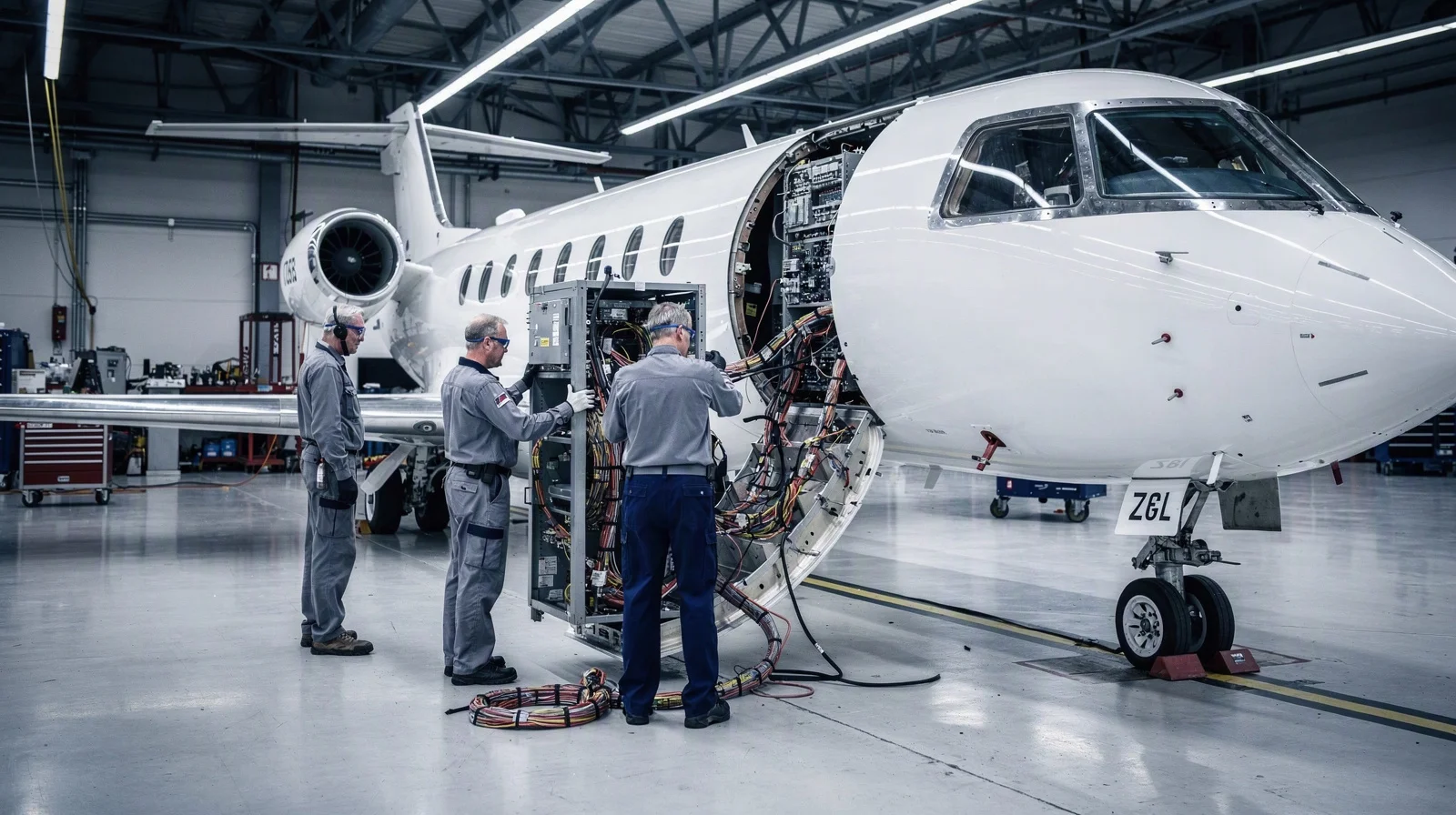
The object on the ramp is a business jet. The capability is the fairing.
GlobalEye is marketed as a single platform, but the photograph splits it in two: a Global-class fuselage that could carry executives, and a dorsal Erieye ER array that turns altitude and endurance into a persistent radar picture. On 25 September Ottawa and Saab said they had signed a non-binding term sheet toward a possible Royal Canadian Air Force fleet of six such aircraft, with associated systems and training. Neither release disclosed a contract price, a firm delivery schedule, or a binding procurement commitment. Treat the announcement as authorization to negotiate — not as six completed orders on a production line.
What changed on the calendar
The Government of Canada framed the step as delivering a mission-critical airborne early-warning capability. Saab’s parallel release described Canada moving toward future GlobalEye capacity built around Saab’s surveillance system integrated on the Bombardier Global 6500 — a Canadian airframe in a sector where Ottawa has been defending domestic aerospace under U.S. trade pressure on Bombardier. CBC reported the arrangement as a preliminary agreement, consistent with language short of a signed contract.
That distinction matters for readers tracking defence budgets and industrial policy. A term sheet can align requirements, industrial participation, and export-control assumptions before ministers commit public money. It cannot, by itself, answer how many hours the radar will fly per month, who owns the software keys for upgrades, or where deep maintenance will sit when the fleet ages out of warranty.
The shell and the aircraft inside it
Cold-war airborne warning often meant bespoke military transports with rotodomes bolted on top. GlobalEye inverts part of the economics: start from a high-end civil platform with global support networks, then fuse a packaged mission system — radar, electronic support measures, command-and-control links — into the airframe. Saab supplies the integrated surveillance stack; Bombardier supplies a Canadian-built host jet. The RCAF would fly one product, but the value chain runs through two industrial ecosystems plus whichever integrators, trainers, and data handlers Ottawa selects.
The inference is straightforward. A civil-derived platform can carry strategic defence missions if a state is willing to pay for integration over the full life cycle, not just the takeoff weight on contract signing day. The counterevidence is equally plain. Workshare, sovereign data rights, and the final procurement decision remain open. Until those are contracted, the six-aircraft number is a planning figure, not an inventory count.
Where the money actually goes
Headline fleet counts move stock tickers for a day. Sustainment moves budgets for twenty years. GlobalEye’s operating logic — long endurance, wide-area sensor coverage, links into national and allied networks — implies recurring spending on upgrades, simulators, spare modules, and cleared personnel. Saab, Bombardier, and their tier suppliers are the relevant industrial map; the investable detail will be contracted Canadian content and funded milestones, not the press-release airframe total alone.
Three questions will separate signal from ceremony. Where will mission-system integration, depot maintenance, and aircrew training occur — Canada, Sweden, or a split that looks local on paper? What price, delivery guarantees, and penalty structure attach if radar or link upgrades slip? Who controls the mission data, software updates, and export of derived intelligence inside Five Eyes and NATO sharing rules?
Until those answers are in a signed contract, the elongated array above the business-jet fuselage is the right object to study. The jet is the visible shell. The aircraft inside the aircraft is the surveillance stack Ottawa has only begun to price.
Continue reading


Sources
Government of Canada and Saab releases 25 September 2026 on a non-binding GlobalEye term sheet; CBC reporting on preliminary agreement scope; prior Culled coverage of Bombardier in Canada–U.S. trade pressure.


