

Brent crude fell more than six percent on Monday as U.S. and Iranian officials signaled openness to diplomacy and markets priced a faster Hormuz reopening. Equities recovered part of last week's tech-led selloff. The binding force is still state-controlled shipping access: even with Brent near $106, Gulf speakers said wartime disruptions have drained strategic buffers that a headline fade cannot refill overnight.
Monday's tape looks like relief: crude down, Nasdaq futures up, diplomats talking. The residual is inventory — nearly a billion barrels already pulled from visible stocks while Hormuz stayed contested, and a two-day reopening counteroffer that prices implementation, not optimism.
New York, Nov. 2 — U.S. stocks rose Monday and recovered part of last week’s tech-led selloff as Brent crude fell sharply on renewed Iran–United States diplomacy. The S&P 500 was up about 0.8% in late-morning trading, the Dow Jones Industrial Average roughly 1.1%, and the Nasdaq Composite about 1%, according to AP News. The move tracked a 6% slide in Brent to about $106.20 a barrel and a similar drop in West Texas Intermediate toward $97, CNBC reported, as traders weighed whether a Qatar-mediated channel can reopen the Strait of Hormuz faster than the seven-day timetable Culled tracked in September’s Senate calendar story.
Secretary of State Marco Rubio said President Donald Trump prefers diplomacy and has not decided on new military strikes. Foreign Minister Abbas Araghchi told state media an agreement is possible if Washington shows goodwill, while reiterating Tehran’s demands on sanctions, military presence, and the blockade. Supreme Leader Mojtaba Khamenei separately warned of an immediate, geographically unrestricted response to new attacks — a reminder that STATE still sets the chokepoint price even when CAPITAL bids risk lower.
The market’s timing lens is political as much as physical. Petroleum Economist noted negotiators in Doha spent a third day Sunday on a U.S. letter passed through Qatar, with Iran floating reopening Hormuz within two days of a deal — down from earlier seven- and five-day counters — while Trump said talks were “going fine” but that he was not in a hurry and linked escalation optionality to Tuesday’s U.S. midterm elections, a calendar Culled already mapped in why Iran may wait for November. Diplomacy that sounds constructive has repeatedly outrun verification; Monday’s crude fade prices that gap again.
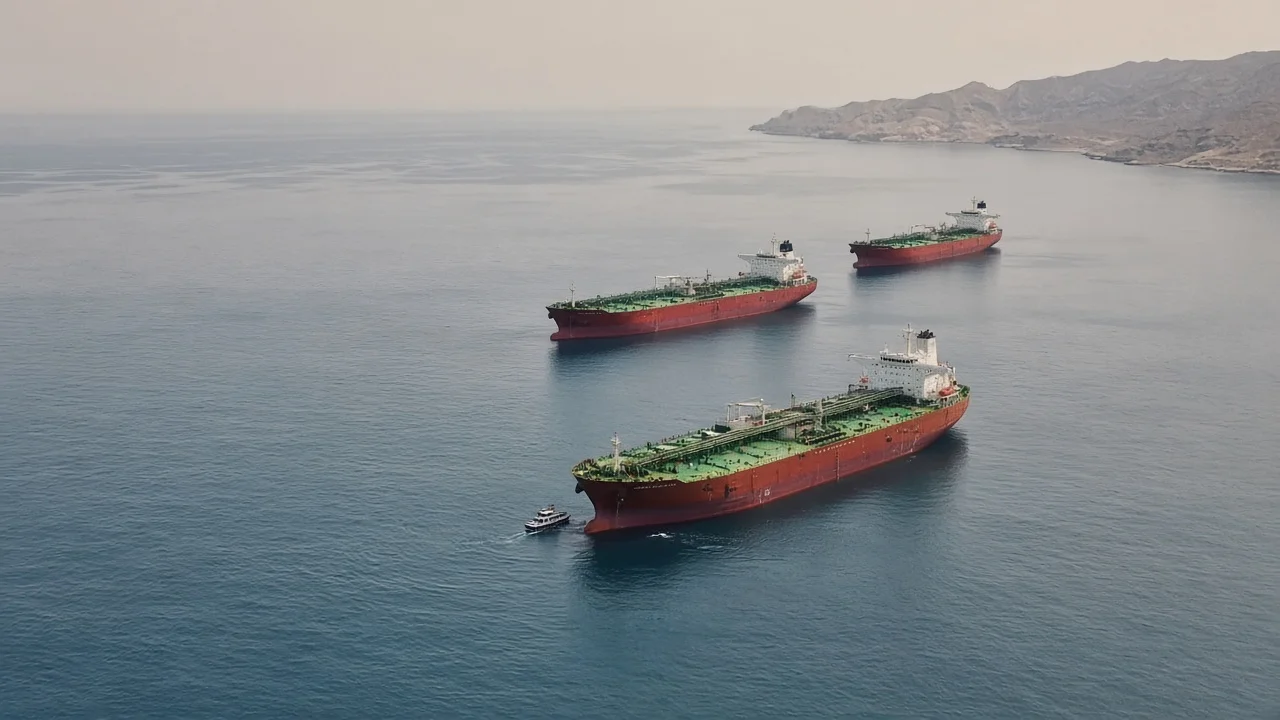
Relief in the front month does not restore invisible stocks. Opening ADIPEC in Abu Dhabi, ADNOC chief Dr. Sultan Al Jaber said global oil inventories have fallen by nearly one billion barrels since Hormuz shipping was disrupted, with logistics costs rising from less than 5% to more than 30% of the cost of a barrel, The National reported. That is the inventory hole beneath Brent’s yo-yo: buffers absorbed while escorts, toll doctrine, and insurance repriced Gulf barrels. When crude touched wartime highs near $118 on Friday, investors were still underwriting AI capex anxiety from megacap earnings; Monday’s equity bounce borrows from both channels — cheaper oil and a pause in the Nasdaq air pocket Culled covered in last week’s AI premium repricing.
UBS’s desk argued the earnings season confirms AI demand but shifts debate toward financing and cannibalization, with hyperscaler capex forecasts now above $1 trillion for 2026. That cross-current matters for how long equity relief lasts if Hormuz headlines slip. Long bonds did not fully celebrate oil’s fade in prior sessions when duration kept repricing fiscal supply — the global duration wave split oil and yields even on mediation days.
What would change this read? Verified tanker transits at pre-war cadence with independent inventory builds in OECD and China commercial stocks, not just a Brent print below $110. Until then, diplomacy trims the premium; it does not refill the billion-barrel gap Al Jaber put on the record.
Continue reading


Sources
AP News and CNBC live market coverage (Nov. 2, 2026); Petroleum Economist Hormuz timeline; The National on Dr. Sultan Al Jaber ADIPEC remarks; prior Culled Hormuz diplomacy coverage.


