

On Thursday, Iran's foreign minister said mediators delivered a seven-day proposal to reopen the Strait of Hormuz if Washington meets conditions tied to June's memorandum of understanding, and U.S. equities recovered from deeper intraday losses even as the Senate rejected a House-passed withdrawal resolution 49–50. The White House has not accepted the plan; it describes mediated talks as constructive while saying it is not in a rush.
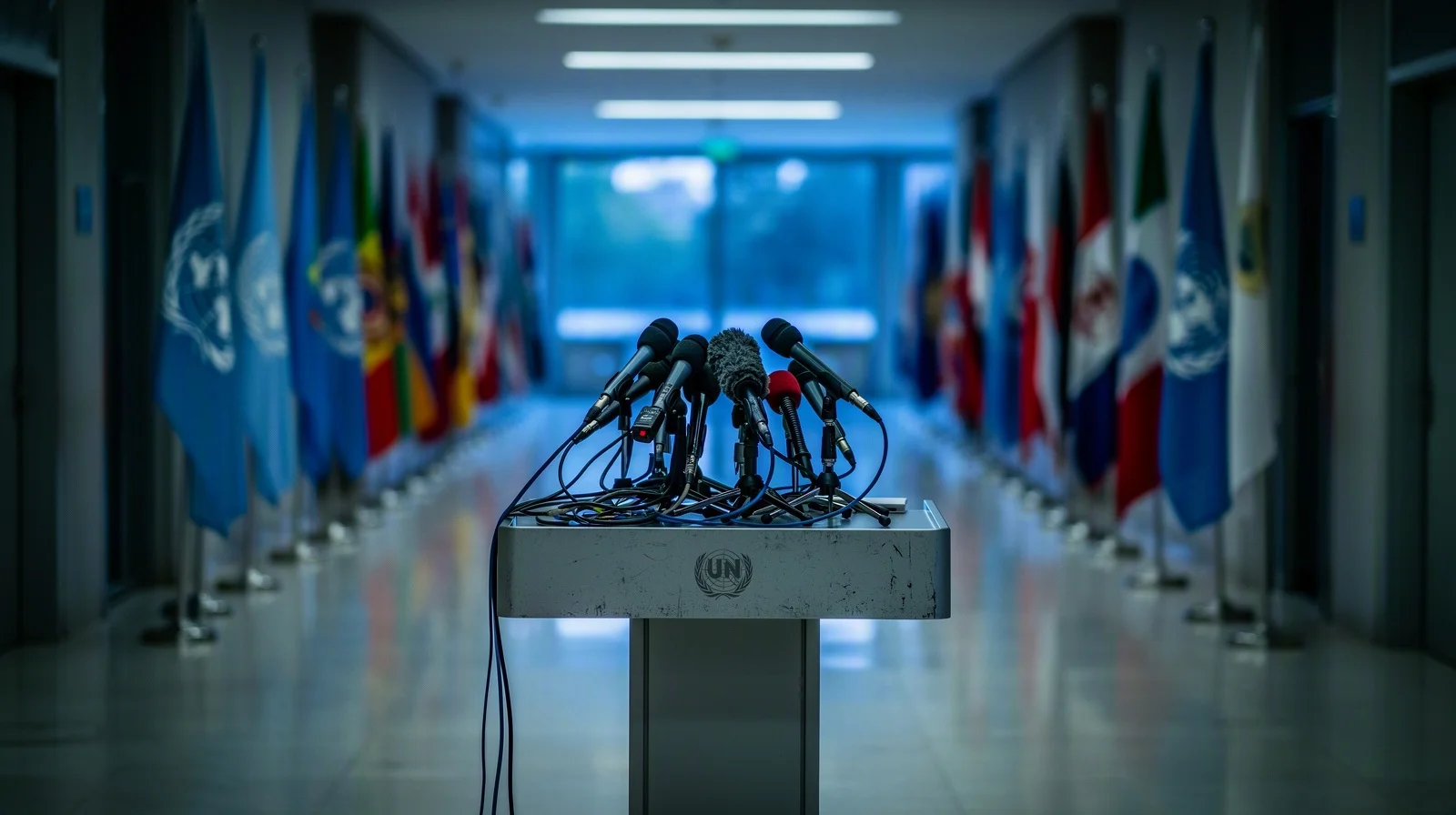
Foreign Minister Abbas Araghchi told reporters at the United Nations on Thursday that Iran had sent the United States, through intermediaries, a plan to reopen the Strait of Hormuz on the seventh day of a phased timetable—if Washington meets conditions Iran says are rooted in the June memorandum of understanding between the two governments. “We have introduced a plan to the United States through the intermediators,” Araghchi said, according to accounts of the briefing; Tehran’s version would halt hostilities across fronts that include Lebanon, ease sanctions on Iranian oil, release frozen assets Araghchi put at no less than $12 billion, and lift the U.S. naval blockade before comprehensive nuclear talks resume.
That is an Iranian offer, not a signed accord. A White House official told CNN and the Financial Times that mediated discussions were “positive and constructive” but declined to endorse Araghchi’s specifics, adding that the United States controls the strait militarily and is “not in a rush.” Culled treats U.S. acceptance as developing until the administration states terms it will implement.
How the Tape Read Hope—and Fear
U.S. indexes finished Thursday far calmer than the morning suggested, but “calm” is not the same as a rally. The Dow Jones Industrial Average fell 161.61 points, or 0.31%, to 51,349.98; the S&P 500 slipped 1.90 points, or 0.02%, to 7,704.13; and the Nasdaq Composite rose 3.34 points, or 0.01%, to 26,939.37, according to AP figures. Earlier, all three had been down more sharply as Brent crude climbed and long-dated Treasury yields pushed higher; reports of a phased U.S.–Iran path—including reopening Hormuz in exchange for lifting the economic blockade—helped trim those losses by the close.
The contrast with Asia is the expertise signal. Shanghai’s composite closed down 1.22% at 3,888.37 and Hong Kong’s Hang Seng fell 0.29% to 24,761.13 on the same calendar day, per AFP. Those sessions had already ended before New York’s late recovery, and they were pricing a different stack of risks: skepticism around the Trump–Xi summit, a two-month trade-truce extension that struck some investors as thin, and rising U.S. yields that punish growth multiples in export-heavy markets. Middle East diplomacy mattered in Shanghai and Hong Kong mainly through oil and dollar funding stress—not through a live bet on Araghchi’s seven-day clock.
Bonds reinforced the split. Treasury yields rose again Thursday, with the 30-year yield touching its highest level since 2004 in several accounts, even as equities steadied. Higher yields compete with stocks for capital and keep mortgage and corporate borrowing costs elevated—exactly the channel that has slowed the S&P 500’s push toward record highs this week.
Congress Stays One Vote Short
While diplomats traded timelines in New York, the Senate voted 49–50 to reject a House-passed concurrent resolution that would direct President Donald Trump to remove U.S. forces from unauthorized hostilities against Iran. Four Republicans—Rand Paul, Susan Collins, Lisa Murkowski, and Thom Tillis—joined most Democrats in favor; Sen. John Fetterman, D-Pa., voted no, and Sen. Angela Alsobrooks, D-Md., did not vote, according to roll-call reporting. The measure had passed the House in July 214–208; as a concurrent resolution it would not have forced a presidential signature, but it would have recorded Congress’s dissent.
The vote lands less than six weeks before the midterms, with diesel and gasoline prices elevated after months of Hormuz disruption. Some Republicans in competitive races have begun to distance themselves rhetorically from an open-ended war—Michigan Senate candidate Mike Rogers and Iowa Rep. Ashley Hinson have called for ending the conflict in recent days, per NBC—but the war-powers tally shows how few are willing to break with Trump on a recorded vote. Sen. Jon Husted, R-Ohio, told reporters the war should end quickly to relieve pump prices, then voted against the resolution Thursday, a pattern ABC highlighted.
What Still Needs Confirmation
Five items should move on your checklist before treating this story as closed:
- U.S. acceptance — Mediators are talking; Washington has not publicly agreed to Araghchi’s seven-day sequence or the June MOU linkage he cited.
- Failure mode — Neither capital has spelled out what happens if day seven arrives without compliance; Culled has no primary sourcing on automatic re-closure.
- MOU identity — Araghchi framed the plan as implementing the June memorandum; confirm it is the same instrument markets have priced since summer, not a parallel text.
- Republican fracture — Name-level defections on messaging are clearer than defections on war powers; treat “distancing” as quote-specific, not party-wide.
- Physical Hormuz — Until transit and insurance normalize, equity relief remains a headline trade. Institutional readers should still watch fixtures and P&I cover, not only UNGA sound bites.
If the White House adopts the timetable, the next compression layer is operational: which sanctions waivers move on day one, who verifies ceasefires in Lebanon, and whether reopening on day seven is reversible. If it does not, Thursday’s tape already showed the alternative—oil and yields leading, equities following, and Congress unable to convert war weariness into a majority.
Continue reading


Sources
Araghchi UNGA briefing via Al Jazeera, Indian Express, Jerusalem Post (Sept. 24–25, 2026); Senate roll call and NBC, ABC, Washington Post on 49–50 vote (Sept. 24); AP/WTOP and Business Times on U.S. index closes; AFP on Asian session


