

Nvidia's rally has made artificial intelligence look like an industrial investment cycle. Xi Jinping's arrival in Washington is a reminder that the cycle rests on geopolitics: Taiwan remains central to advanced chip production just as Beijing has again declared the island a red line.
Nvidia’s AI Rally Meets Xi’s Taiwan Red Line in Washington
Wall Street is pricing an extraordinary expansion of AI infrastructure. Washington is receiving the Chinese leader whose government regards the island at the center of that infrastructure as unfinished sovereign business.
There are two versions of the artificial-intelligence boom arriving in Washington this week.
The first is the one markets know well. Nvidia has been riding a fresh burst of enthusiasm for AI infrastructure, and the broader thesis is familiar: hyperscalers keep spending, models consume more compute, and the factories that manufacture intelligence require more GPUs, networking hardware, memory and electricity. The second is the one arriving with the Chinese leader: Beijing has again framed Taiwan as an issue beyond compromise, and the United States is receiving Xi just as that dispute sits beneath the supply chain that makes AI possible.
Those stories look different on paper. In practice, they are part of the same system.
The AI boom still runs through Taiwan
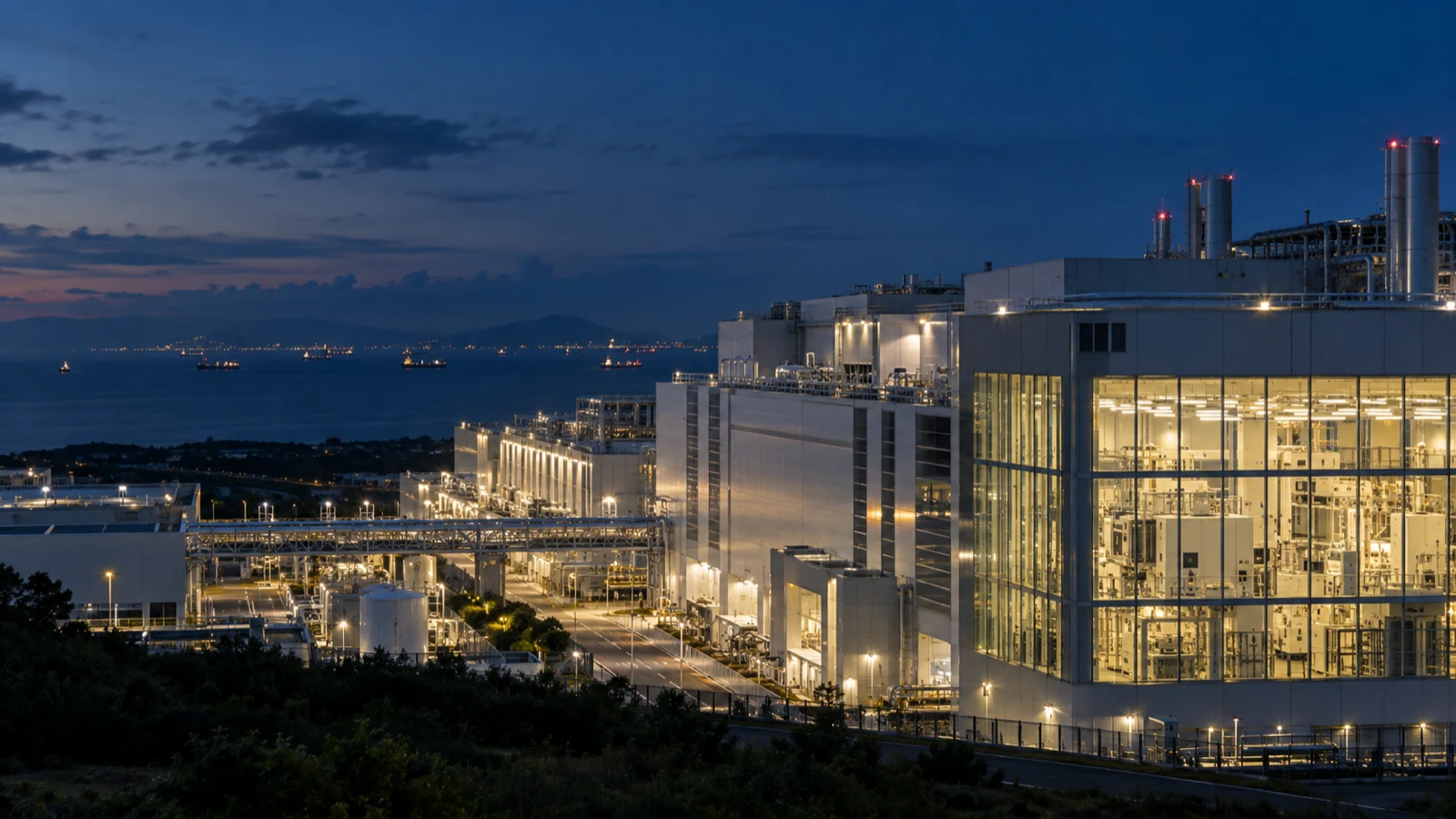
Nvidia is the emblem of the AI investment cycle, but the company does not make its most advanced silicon in the United States. The physical architecture behind the boom reaches deeply into Taiwan.
TSMC manufactures advanced processors for Nvidia and other chip designers. Around it sits a broader Taiwanese ecosystem of packaging, test, assembly and server manufacturing. Nvidia has said that Taiwanese suppliers are deeply embedded in the production of its AI systems, and TSMC has repeatedly described AI-chip demand as strong and multi-year while expanding packaging and production capacity both in Taiwan and beyond. The company is also investing in Arizona, but that does not reduce Taiwan’s centrality to the current fab footprint.
That makes Taiwan more than a geopolitical tail risk attached to the AI trade. It is part of the trade’s physical architecture.
The anxiety is not theoretical. A system built on advanced foundry production and interlocking global supply chains can survive many shocks, but not a full rupture across the Taiwan Strait. The assumptions behind the capex boom presume that the machinery keeps being manufactured, moved and assembled at enormous scale. That assumption sits on top of one of the world’s most sensitive sovereignty disputes.
Beijing is putting sovereignty beside technology
Xi’s timing matters. Even before the summit, Beijing’s ambassador to the United States repeated the line that Taiwan is a red line that cannot be challenged. China claims the island as part of its territory; Taiwan’s government rejects that claim, and the United States maintains unofficial ties while arming Taipei.
This is not just diplomatic theater. It is a reminder that the strategic stakes of AI are not limited to compute, exports or software access. They include the geographic concentration of fabrication capacity, control over shipping lanes and the degree to which decision-makers in Washington and Beijing view the island as a political boundary rather than a market variable.
At the same time, AI has become part of the U.S.-China negotiating architecture. Treasury Secretary Scott Bessent and Chinese Vice Premier He Lifeng held talks this week on AI, tariffs and critical minerals, while the broader technology relationship remains split between commercial ambition and strategic friction. The result is a familiar pattern: both sides want to preserve the benefits of the AI boom while managing the risks of dependence and contestation.
Nvidia is becoming a geopolitical instrument without choosing to be one
This is where the Nvidia trade becomes harder to separate from statecraft.
The company sits at an unusual intersection: American chip design, Taiwanese fabrication, global hyperscaler capital spending and Chinese demand constrained by U.S. technology policy. Its competitive position against custom accelerators, alternative silicon and domestic Chinese projects is only one layer of the risk. The other is jurisdiction.
Washington can tighten restrictions on advanced chips. Beijing can accelerate domestic substitutes. TSMC can add capacity in Arizona, but Taiwan remains central to the current AI manufacturing system. And across the strait sits a sovereignty dispute that Beijing has again chosen, on the eve of a state visit, to place explicitly beyond compromise.
That does not mean a confrontation is imminent. It does mean the market is pricing a technological supercycle while the underlying geography of production remains entangled in a political red line.
The real bottleneck is not only chips
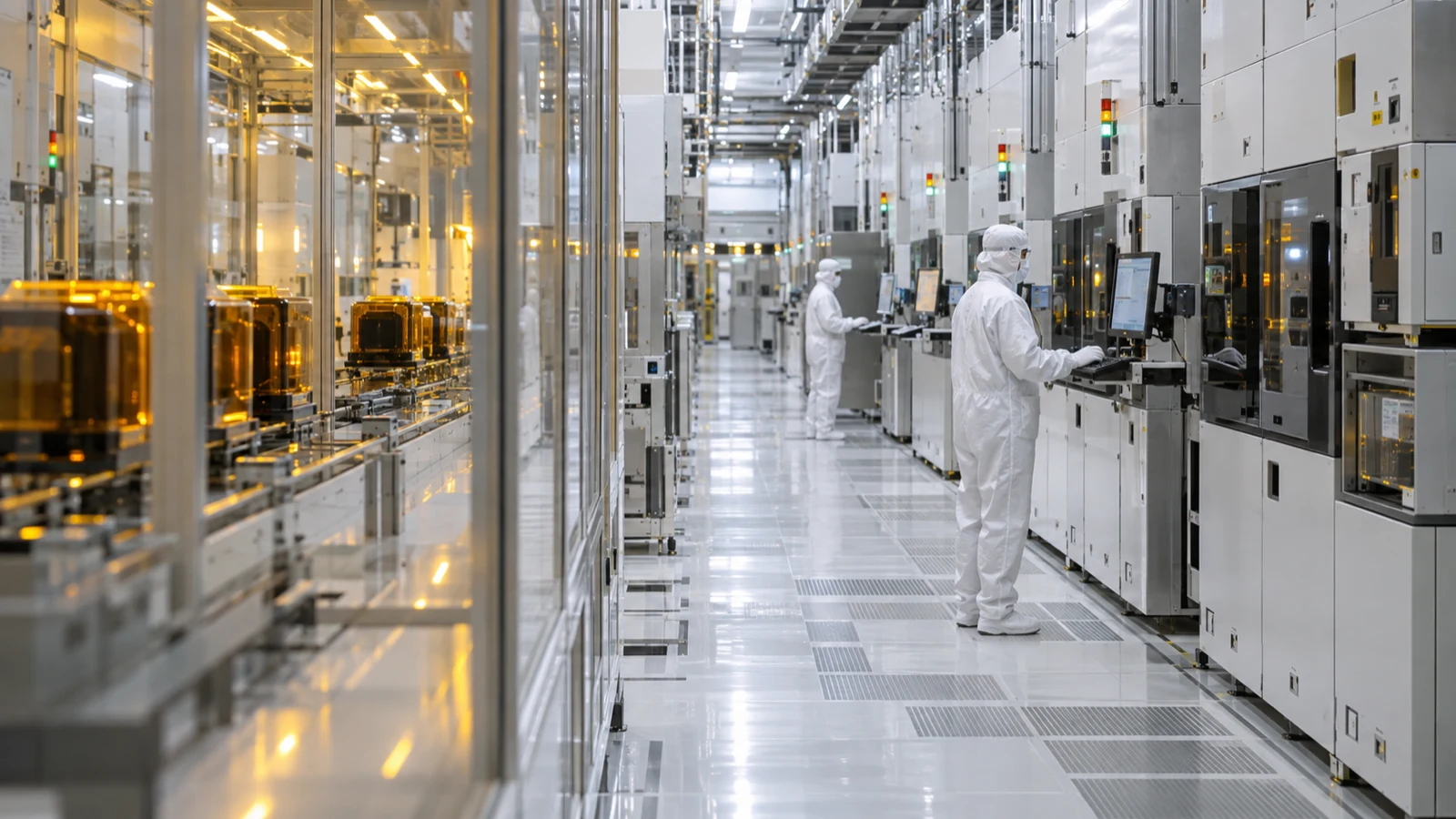
The most important point is that AI infrastructure is not abstract. It is a physical system. The compute stack is built from chips, packaging, network fabrics, power distribution and cooling. Those systems are connected to industrial planning, shipping schedules and power grids. They are also tied to fragile assumptions about cross-border governance.
In other words, the market is counting on a very stable version of the world: open supply chains, predictable policy, and uninterrupted fabrication. That is exactly what geopolitics often refuses to supply.
The price of AI ambition, then, is not simply capex. It is operational resilience in a world where one island could become the hinge point between growth and disruption.
A difficult truth for markets
Markets are valuing AI as though compute were becoming a new industrial utility. The logic is powerful: infrastructure spending compounds, revenue follows usage, and frontier models look like the next productivity wave. But industrial utilities are not just financial assets. They are anchored in geography, law and supply continuity.
That is why the Washington summit matters even if the immediate talks focus on trade, tariffs or political messaging. The underlying issue is not a single shipment or a single export license. It is whether the world can keep building the machinery of AI while treating the supply chain at its core as politically non-negotiable.
Nvidia’s rally is a story about product demand, market structure and earnings. Xi’s visit is a reminder that the system sits on a strategic fault line. The two are now inseparable.
The AI supercycle is being built in data centers measured in gigawatts and budgets measured in hundreds of billions. Its narrowest passage may still be a stretch of water off the coast of Taiwan.
Continue reading


Sources
White House, Reuters, AP, Nvidia and TSMC reporting and corporate disclosures.


