

The week ending Friday did not produce one story; it moved five binding systems at once. Iran pitched a seven-day Hormuz reopening while Brent still settled above $104. U.S. and Japanese long yields broke decades-old reference points even as oil eased. Xi left Washington with a Jan. 10 trade truce and no public Taiwan or Iran wins. Gulf states froze Iranian airline access. And Washington floated UAE-hosted Ukraine energy talks without a date.
Financial media trains readers to pick a lead asset: oil, yields, or equities. Policy weeks rarely cooperate. The seven days through Friday, September 26, 2026, repriced five state-constrained systems that do not share a single clearing price — yet they share households, freight lanes, and sovereign borrowing calendars.
The Culled synthesis is not another recap of six upfront bullets. It is a map of which clock moved and which clock lagged, so the same reader who saw Hormuz optionality and duration decoupled from oil can place those moves inside one planning frame.
System 1 — Gulf Energy and the Seven-Day Clock
Iran’s mediated proposal to reopen the Strait of Hormuz on a seven-day timetable — conditional on blockade relief, sanctions easing, and asset releases — kept Brent elevated even when diplomacy sounded constructive. Friday’s settle near $104.32 after a $106.60 Thursday close tells you the market prices implementation risk, not UNGA tone.
Physical premium still floors Saudi routes under Houthi pressure. Until transit and insurance normalize, the energy system boundary is strait access, not communique warmth. Culled’s read unchanged: equities can fade headline volatility while distillate and Q4 freight surcharges still digest earlier rack peaks.
System 2 — Global Duration Without Oil’s Permission
The same week, U.S. 10-year yields touched about 5.23% — a 2007 zone — and the 30-year neared 5.50%, a 2004-high band, while oil eased on Hormuz talk. Japan’s 10-year JGB hit 3.115%, a level not seen since 1996; gilts held near 5.35–5.40%.
That pattern defines the second boundary shift: sovereign time repriced globally even as commodity war premium softened. New York Fed President John Williams kept a year-end hike live from London — a reminder that the short end and the long end are answering different questions. Portfolio readers should treat duration as a global asset class, not a Hormuz derivative.
System 3 — U.S.–China Calendar to Jan. 10
Xi Jinping’s Washington exit capped a visit whose durable public output was a trade-truce extension to Jan. 10, not Taiwan or Iran breakthroughs on the record. Culled covered the Archives close and open questions; the synthesis point is narrower.
Beijing and Washington moved the tariff and export-control clock, not the security clock. Supply chains get a dated pause; chip and magnet chokepoints do not disappear. APEC and Miami G20 on the calendar mean January is both deadline and runway — two different planning errors if conflated.
System 4 — Aviation Access as Sanctions Geometry
Parallel to Hormuz diplomacy, the UAE and several neighbors kept Iranian airline access frozen under Washington’s secondary-sanctions pressure. Tehran’s warning that regional airspace should be “free for all or for no one” is a routing boundary, not a tanker boundary.
Culled’s aviation squeeze piece stressed the legal and operational squeeze without closing Gulf airspace entirely. This week confirmed the policy: constrain carriers and feeders before you constrain the strait. Passengers and air cargo add a second volatility surface atop oil.
System 5 — Ukraine Energy Talks Without a Table Date
Witkoff and Kushner met Putin’s envoy in New York; Zelensky said Washington proposed technical trilateral talks in the UAE toward a mutual energy-strike halt and Black Sea grain corridor — without a scheduled date. That is a boundary move from “no channel” to “channel named, clock empty.”
Energy ceasefires are not oil ceasefires: they reprice power-grid risk in Europe and Black Sea logistics separately from Brent. Until a table date prints, this system belongs in watch, not trade — but it belongs on the same weekly map as Hormuz because both are STATE timetables markets keep mis-syncing.
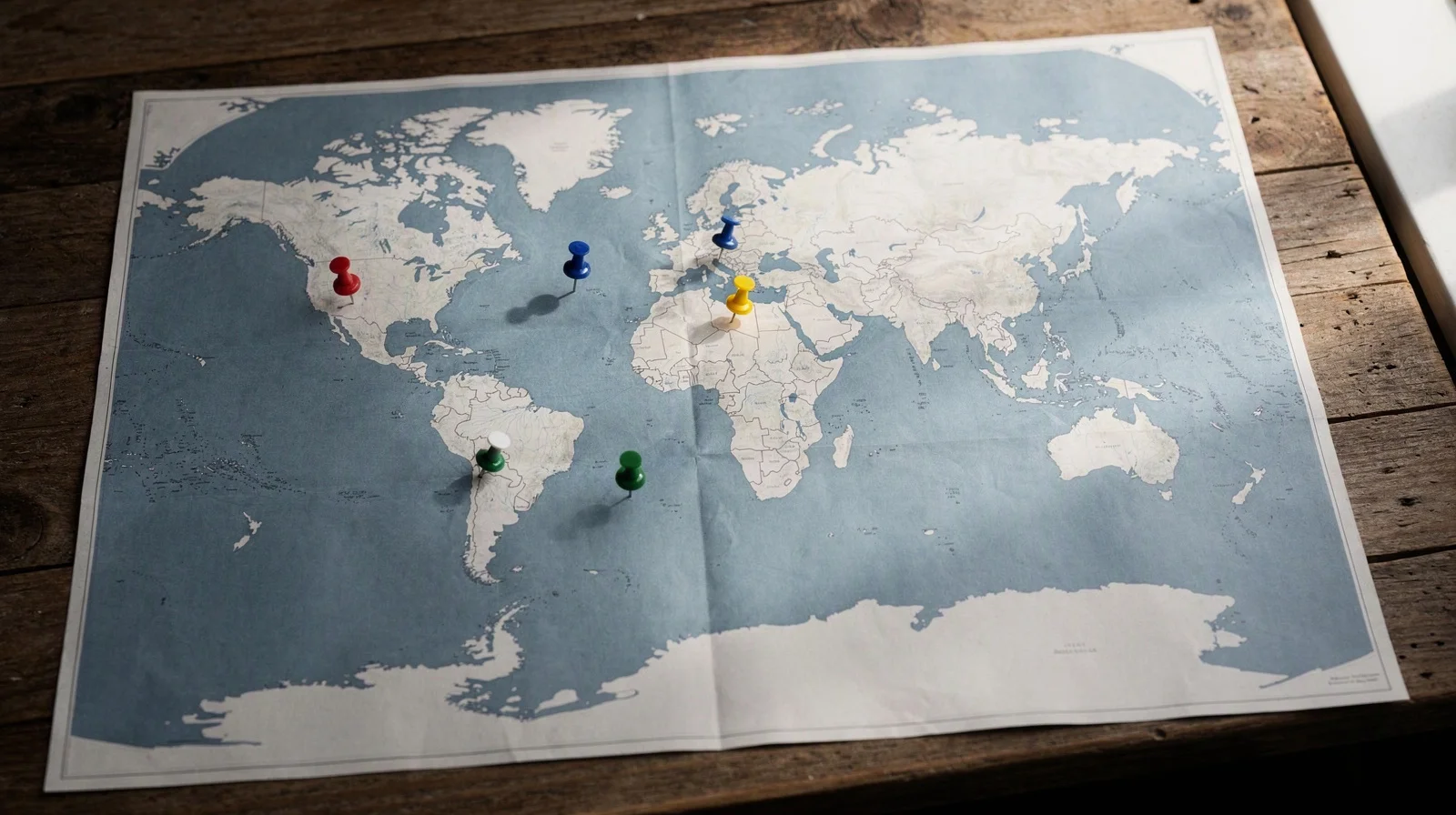
How the Five Clocks Stack
None of these systems clears through a single ETF. A family CFO faces:
- Pump and grocery — Hormuz and diesel lag (Q4 pass-through).
- Mortgage and auto — duration highs even if Brent slips.
- Imported goods and chips — Jan. 10 trade risk separate from Friday’s warm Archives imagery.
- Travel and air freight — aviation sanctions geometry.
- European power and grain — Ukraine energy channel optionalities.
The residual for the week is not pessimism; it is desynchronization. Diplomacy can improve one clock while another keeps ticking. Planners who anchor on “the week felt quieter at the close” ignore invoices, surcharge tables, and January calendars still running.
One Falsifier
This frame weakens if, within two weeks, three of the five systems converge: Hormuz transit normalizes with verified flows, global long yields fall with oil, and Jan. 10 is superseded by a published U.S.–China pact that includes enforceable tech and security annexes. Until then, treat September’s week as a boundary reset, not a resolution — five systems, five clocks, one household budget they all reach on different lags.
Continue reading


Sources
Culled upfront tape Sept. 25–26, 2026; shipped Culled pieces on Hormuz seven-day offer, global duration wave, Xi Jan. 10 truce, Iran aviation squeeze, and Q4 freight fuel lag


