

InnoTrans ended in Berlin on 25 September with hardware on order, not only on display. On 23 September Railpool signed for 80 Siemens Vectron X locomotives, including 50 dual-mode units, with options for 20 more. Lessors are buying route flexibility and bundled maintenance while Europe's wire still has gaps.
Berlin — InnoTrans ran 22–25 September on the Messe Berlin campus, the rail industry’s quadrennial inventory of what can be built and what can be sold. The useful signal this year was not another demonstration lap around the outdoor track. It was a leasing company’s signature on locomotives that can switch between overhead current and onboard diesel power.
On 23 September, Siemens Mobility announced that Railpool had placed its first major order for the Vectron X platform: 30 purely electric units and 50 dual-mode machines, with options for another 20. Siemens said initial deliveries are planned for 2027 and did not disclose a contract value. Railway Gazette’s InnoTrans wrap treated the deal as one of several Vectron X awards at the show, including smaller operator commitments alongside Railpool’s scale.
The dual-mode share matters. A locomotive that can run under wires and continue on diesel is not a compromise for enthusiasts; it is a hedge against a network where electrification projects advance unevenly across member states, yards, and border approaches. Operators and lessors can assign the same asset to corridors that are wired today and branches that may stay diesel for years.
Lessors buy availability, not novelty
Railpool’s business is not to admire propulsion charts. It is to keep traction available for freight customers who pay for kilometres, not for infrastructure theory. A firm order from a lessor therefore carries a different weight than a manufacturer’s concept tour: someone is booking residual-value risk, maintenance intervals, and the probability that a tenant railway will still want the unit in the late 2030s.
That framing also clarifies what the order does not do. New locomotives do not create path capacity on congested lines, and they do not shorten terminal dwell times by themselves. If the binding constraint on European freight is slots and nodes rather than motive power, even a large Vectron X fleet only shifts the bottleneck downstream.
Counterevidence is worth keeping in view. Option tranches and framework headlines at trade fairs often outrun firm backlog. Siemens published the Railpool split between electric and dual-mode units; the economic story still depends on which routes and tenants underpin the lease pipeline — detail the public release does not spell out.
Maintenance bundles are part of the product
The same week, Alstom announced a launch order from Northrail for its Traxx Shunter platform, valued at just under €100 million including ten years of maintenance, with a wider framework that could reach €700 million if exercised. Not all of that framework is booked revenue; the distinction matters for anyone tracking industrial backlogs.
Still, the packaging is the pattern. Customers are buying operational packages — locomotive plus long-cycle service — while capital allocators decide how much uneven electrification they are willing to absorb. Dual-mode equipment monetises the gap: run clean where the wire exists, run anyway where it does not, and let contracts allocate fuel, energy, and upkeep across manufacturer, lessor, and operator.
What to watch next
Three questions will test whether Berlin’s orders are structure or theatre.
Lease utilisation. Which corridors and anchor customers make dual-mode units economic versus pure electric or straight diesel? Without route disclosure, the order is capacity on paper.
Cost allocation. How are maintenance, energy, and residual-value risk split between Siemens, Railpool, and the railways that ultimately move the trains? Long maintenance attachments, like Alstom’s Northrail deal, shift margin from metal to service over a decade.
Infrastructure timing. European electrification plans can slip while locomotive deliveries are dated. Dual-mode buys time; it does not remove the political work of finishing wires.
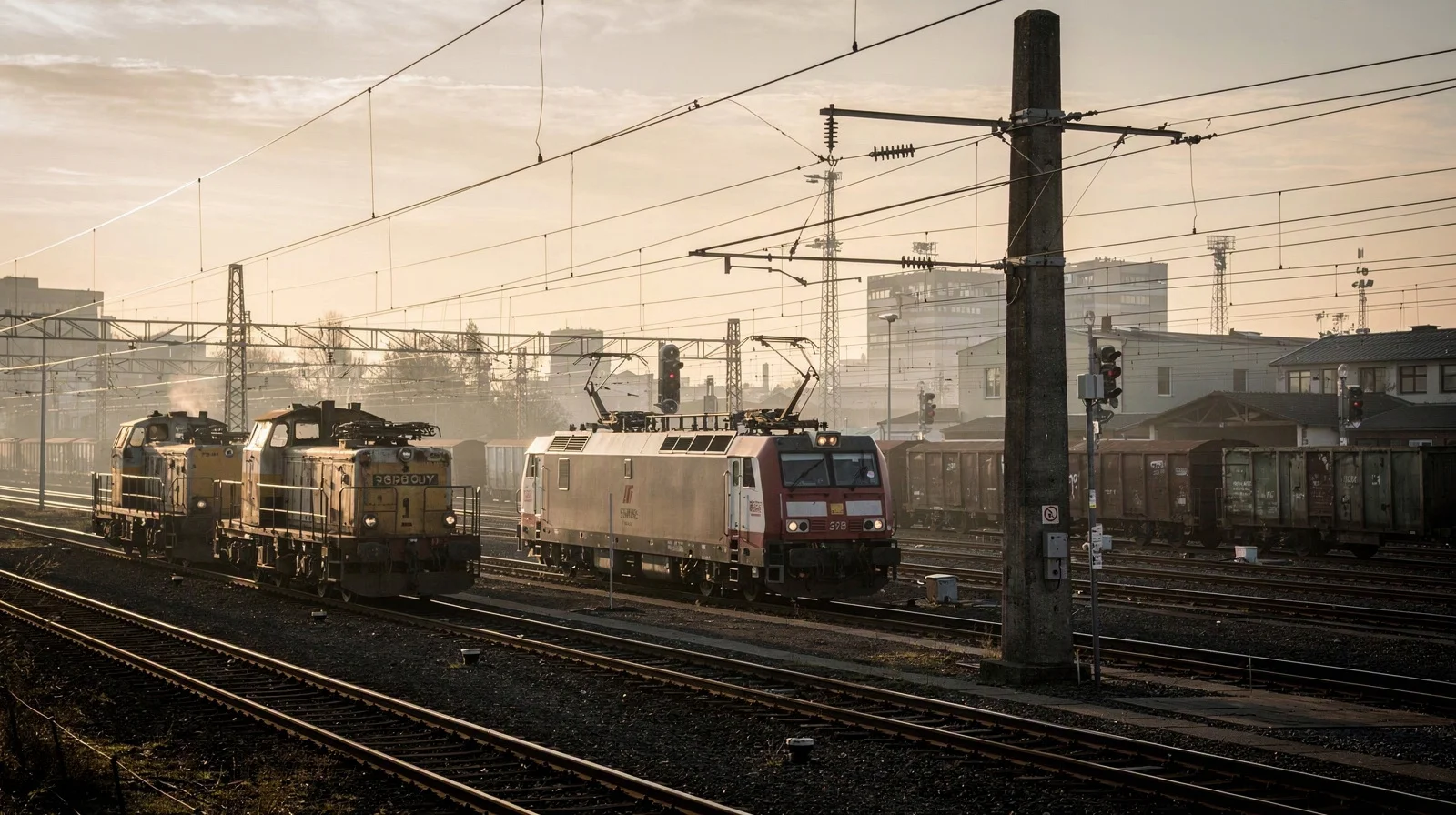
InnoTrans will publish plenty of photographs of gleaming carbodies. The harder picture is the engine bay and the pantograph on the same frame — hardware admitting that the network is not finished yet, and capital willing to run on that fact.
Continue reading


Sources
Siemens Mobility press release 23 Sept. 2026 on Railpool Vectron X order (30 electric, 50 dual-mode, options for 20, deliveries from 2027); Alstom press release 23 Sept. 2026 on Northrail Traxx Shunter launch order; Railway Gazette InnoTrans coverage 25 Sept. 2026; InnoTrans official calendar 22–25 Sept. 2026.


