

UAE developer Eagle Hills announced a roughly $12 billion, 550-hectare mixed-use project in the Maldives on 21 September 2026. Its chairman told Reuters construction could begin in the first quarter of 2027. The figure frames national ambition; the ledger that matters tracks land and infrastructure obligations, permits, financing commitments, and actual construction starts — because the announced investment is not capital already deployed, and the start date remains prospective.
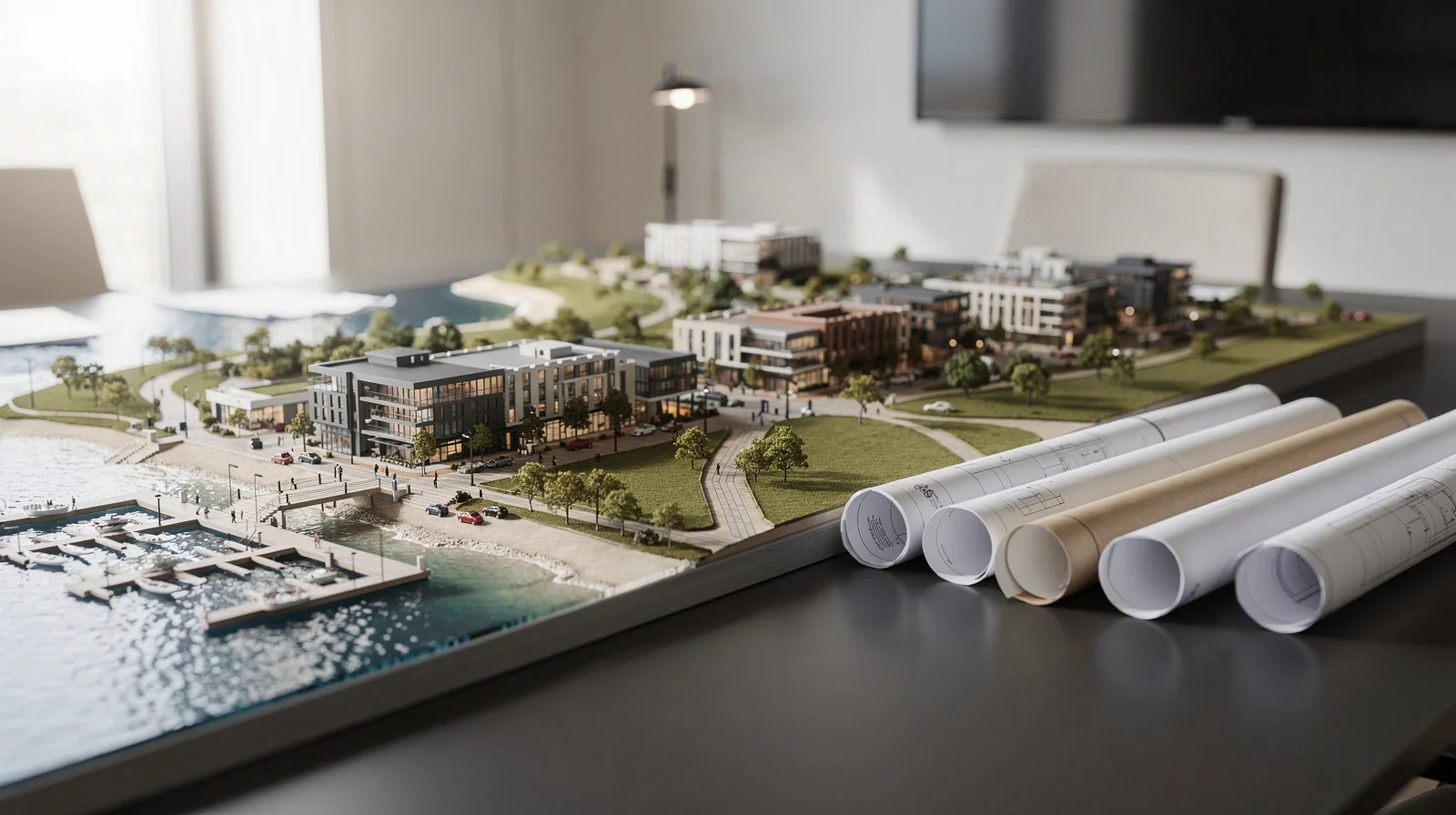
UAE developer Eagle Hills announced a roughly $12 billion, 550-hectare mixed-use project in the Maldives on 21 September 2026. Its chairman told Reuters construction could begin in the first quarter of 2027. At that scale, the announcement reads less like a single resort expansion and more like a waterfront proposition sized to a national footprint — hotels, housing, commercial space, and supporting infrastructure bundled into one Gulf-backed vision for the archipelago.
Announcement vs. Deployment
Mega-project headlines trade in round numbers. Markets and diplomats absorb them quickly; auditors and contractors do not. The $12 billion figure describes intended investment over the life of the development, not a balance already transferred or committed in binding financial instruments on announcement day.
That distinction matters because the Maldives project sits at the intersection of three slow processes:
Land and infrastructure obligations. A 550-hectare footprint implies reclamation, utilities, transport links, and environmental review — each with its own timeline and counterparties. Until those obligations are defined and contracted, the hectare count is a planning boundary, not an asset on anyone’s books.
Permits and sovereign consent. Mixed-use development at national scale requires host-government approvals that can outlast the press cycle. A chairman’s Q1 2027 construction target is a schedule statement, not a permit stack.
Financing commitments and groundbreakings. Banks, export credit agencies, and equity partners typically attach capital to milestones — land secured, designs approved, offtake or pre-sales in place. The gap between “announced” and “financed” is where Gulf-backed projects most often stall or rescale.
Why Gulf Capital Shows Up Here
Eagle Hills is part of a broader pattern: Abu Dhabi-linked developers projecting capital and master-planning capacity into coastal jurisdictions where land, tourism, and geopolitical visibility intersect. The Maldives offers high-end tourism demand, Indian Ocean positioning, and a host state that has repeatedly welcomed foreign-backed island development — but also finite land, environmental scrutiny, and debt sensitivity that make execution riskier than the render.
For Culled readers, the useful read is not whether $12 billion sounds large — it does — but whether the next filings show financed infrastructure starts rather than another revision to the brochure.
What to Watch Next
Reuters sourced the announcement and the chairman’s Q1 2027 construction comment; the forward path runs through items that rarely make the first-day headline:
- Signed land or lease agreements with defined hectarage and reclamation scope
- Environmental and zoning approvals from Maldivian authorities
- Documented financing closes or credit lines tied to phase-one works
- Actual groundbreakings with contracted EPC partners, not ceremonial launches
Until those appear, the project belongs in the same category as other Gulf-scale waterfront proposals: strategically visible, commercially plausible, and prospectively transformative — with the shovel date still on the calendar, not in the ground.
Continue reading


Sources
Reuters reporting (21 September 2026) on Eagle Hills Maldives project announcement, scale, and chairman comments on prospective Q1 2027 construction start


