

The Monaco Yacht Show ends Saturday at Port Hercule after four days of brokered spectacle. Its fleet list names 43 yachts delivering in 2026 while leading yards hold slots into 2028–29. BOAT International's September 2025 order-book snapshot counts 1,093 projects of at least 24 metres — down 3.95% — yet aggregate gross tonnage rose about 4% and average tonnage climbed 8.7% to 551. Fewer hulls, more metal per hull.
The Monaco Yacht Show closes Saturday, 26 September, after four days at Port Hercule — the annual theatre where brokers, yards, and family offices negotiate what counts as seaworthy wealth. The official fleet announcement highlights 43 yachts delivering in 2026 and describes leading-yard construction slots as committed into 2028–29. That is the show’s inventory of spectacle: polished hulls, champagne corridors, the social proof that trophy capital still floats.
BOAT International’s 2026 Global Order Book, built on a 1 September 2025 snapshot, tells a colder story. It counted 1,093 projects of at least 24 metres — down 3.95% in project count — while aggregate gross tonnage nevertheless rose about 4% and average gross tonnage climbed 8.7% to 551. These are not orders signed on the quay this weekend. They are the industry’s forward ledger as it stood a month before the gates opened.
The harbour looks crowded; the book looks concentrated
The inference is straightforward: the upper end is routing more production capacity into fewer, larger, more complex hulls. A shrinking project count can coexist with a growing industrial workload. Berth length, engine-room volume, interior joinery, stabilisers, tenders, and classification paperwork all scale faster than LOA. The more revealing measure is tonnage and complexity, not how many masts you can count from the Monte Carlo breakwater.
Counterevidence matters. A backlog is not the same as fresh demand. The show’s advertised fleet is marketing inventory, not proof that every hull on the list cleared a non-refundable deposit yesterday. Some projects in any order book are speculative slots, yard-owned options, or builds awaiting a buyer’s signature at the eleventh hour. Treat the Monaco roster as signal, not settlement.
The interesting exposure is execution capacity at yards and specialist suppliers — not an undifferentiated bet that luxury appetite is infinite.
That framing matches how trophy capital already behaves elsewhere: fewer transactions, heavier objects, more balance-sheet engineering around the asset itself. Sotheby’s finances paintings; Feadship and Lürssen finance years of steel. The K-shaped economy that compresses median household leisure does not necessarily compress the cohort that can still fund a three-deck helipad. This weekend’s Laver Cup hospitality sell-through in London is the same calendar’s inland echo — access priced for households whose discretionary bucket never went away.
What actually binds delivery
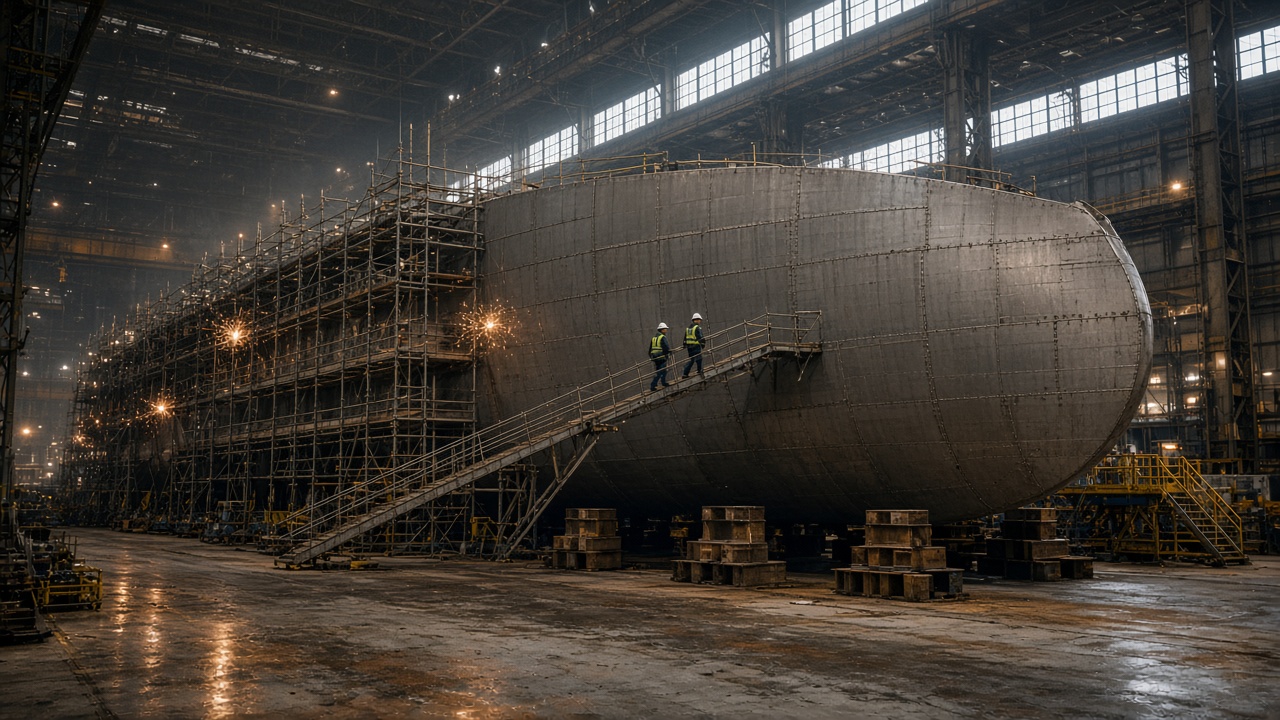
If capital is the force allocating tonnage upward, platform is the force that decides whether the tonnage arrives on schedule. Berth dimensions at refit yards, dry-dock availability, naval-architect bandwidth, and the pool of skilled interior fit-out labour are the bottlenecks that turn an order book into a delivery schedule — or a queue.
Two questions cut through broker narrative:
- How much of the forward backlog is secured by non-refundable customer deposits? Deposit-backed work is industrial demand. Speculative inventory is a yard’s bet on the next UHNW buyer.
- Where are berth dimensions, engineering capacity, or skilled fit-out labour actually constraining delivery? The answer is rarely Monaco’s floating row. It is in the shed — the same scarcity logic Toyosu applies to certified bluefin: biology, ceremony, and paperwork are different constraints, and only one of them clears at the auction block.
What would change the read
This concentration thesis weakens if:
- 2027 project counts rebound while average tonnage flatlines — capital would be diversifying down-fleet, not up-fleet.
- Leading yards report empty 2027–28 slots despite the order-book headline — that would mean backlog overstated demand, not constrained supply.
- Deposit-forfeiture rates spike — owners walking away from staged payments would mark demand rolling over even if hulls still photograph well in harbour light.
Until then, Port Hercule is doing what it always does: making scale legible. The tender beside the superyacht is the chart. Fewer yachts, more yacht — and the bind is who can actually build them.
Continue reading


Sources
Monaco Yacht Show 2026 fleet announcement and show dates; BOAT International Global Order Book 2026 report and methodology (1 September 2025 snapshot); Culled trophy-asset and luxury-capital coverage


