

Conservation is minting a new scarcity layer in seafood markets. Biological recovery, New Year ceremony, and MSC certification are different constraints, and Toyosu has priced all three. The hard problem is no longer only stock rebound. It is keeping a fish's certified identity intact through every handoff.
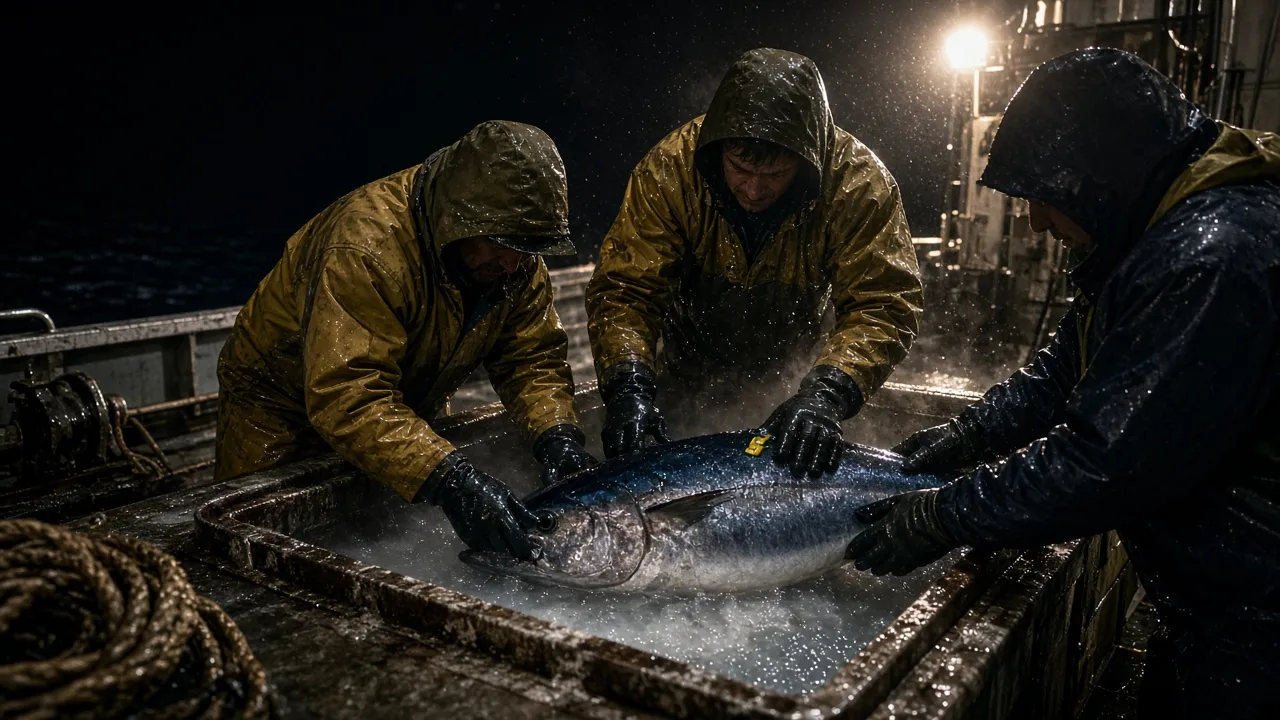
Tokyo’s Toyosu market keeps teaching the same species in different currencies. On 1 September, after Usufuku Honten’s Northeast Atlantic longline fishery received MSC certification on 10 August 2020, the first MSC-certified Atlantic bluefin sold at Toyosu: a single frozen fish of 142 kilograms, caught the prior October by the Canary Islands longliner Shofukumaru. SeafoodSource reported the per-kilogram price cleared 61 percent above the previous day’s high. Daiichi Suisan entered it; intermediate dealer Ohana bought it for Tokyo sushi restaurant Matsunozushi. That was certified scarcity printing a number. Beside it sits ceremonial scarcity: on January 5, 2026, a 243-kilogram Pacific bluefin from Oma fetched ¥510.3 million, about $3.2 million, at the New Year opening auction. Biological scarcity underwrites both — an IUCN “endangered” poster child that ICCAT quotas and juvenile protections pushed back toward “near-threatened,” enough for labels and January theater to share a market.
The finance-textbook catch arrived in the same SeafoodSource dispatch. Chris Loew noted the sale may have been a promotional staging: the product could not be retailed under the MSC label because the buyers lacked chain-of-custody certification. An MSC fishery certificate does not travel with the meat. To wear the blue logo at the plate, every firm that takes legal ownership needs CoC — segregation, documentation, audit. Lose one link and the 61 percent premium becomes a story about “sustainable bluefin” that the restaurant cannot legally claim. The fish can be certified in the water and still fail as a certified product in the city.
Three Scarcities, One Carcass
Biological scarcity is the ocean’s inventory: spawning biomass, quotas, ICCAT recoveries, the possibility that tomorrow’s catch simply is not there. The Usufuku assessment itself was contested — WWF and Pew objected to Control Union’s reading of recovery and to virtual-population analysis vulnerable to underreporting — before an adjudicator let certification proceed with a year-five stock condition. Ceremonial scarcity is calendar and brand — Oma fish, first auction of the year, the Sushi Zanmai spectacle that prices taste the way auction houses price provenance. Certified scarcity is bureaucratic and real: a third-party standard that rations who may claim sustainability in commerce. Markets will pay for all three. They do not pay for them equally, and they do not settle them on the same clock.
The Audit Is the Product
What conservationists and buyers increasingly fight over is identity continuity. Electronic tags at catch, freeze logs, wholesale lots, restaurant invoices — each handoff is a chance for the certified claim to vanish even when the protein does not. Loew’s Toyosu scene is the clean demonstration: Ohana and Matsunozushi could pay a sustainability premium and still be unable to put the MSC mark on the menu. That is the same class of break Culled has watched in holiday food chains that price the gap between field and shelf: the physical good arrives; the attribute that justified the premium does not. Climate shocks already force awkward participation in energy systems; seafood’s version is quieter — forced into ledgers of who caught what, where, and under whose certificate.
The difficult part is no longer merely proving that a fish population recovered. It is maintaining an auditable identity for that fish from ocean to plate.
The premium therefore behaves like a call option that expires at each uncertified handoff. Capital notices. A New Year bid of half a billion yen buys publicity that does not require an ecolabel. An MSC print buys a claim that dies without CoC plumbing — or becomes, as Loew suggested, a staged demonstration that conservation can clear a bid even when the label cannot clear the last mile. Both are Toyosu prices. Only one is trying to make conservation liquid through the full supply chain. The precedent matters: once one Atlantic bluefin fishery wears MSC, others enter assessment, and the same CoC bottleneck will decide whether those certificates become retail products or auction anecdotes.
The actionable principle is blunt. When you see a sustainability premium in a commodity market, ask which scarcity cleared — biology, ceremony, or certification — and whether the audit trail can survive the last mile. If it cannot, you are not looking at a green product. You are looking at a green auction print.
Continue reading


Sources
Chris Loew / SeafoodSource on first MSC Atlantic bluefin at Toyosu (1 Sept, 142 kg, 61% above prior-day high; Ohana–Matsunozushi; CoC gap); Japan Times / AP on Jan. 5, 2026 ¥510.3M New Year auction; MSC CoC rules; ICCAT recovery and WWF/Pew objection context; Culled supply-chain and auction coverage


