

The Bureau of Labor Statistics printed 162,000 August payrolls Friday morning. Unemployment held 4.1 percent, wage growth cooled to 3.1 percent, and July's supposed job loss was revised into a 21,000 gain. Two-year yields jumped; stock futures dipped then recovered; Micron ran on memory, not hiring.
The Bureau of Labor Statistics reported 162,000 August payrolls at 8:30 a.m. Eastern, more than double the 65,000 consensus. Unemployment stayed at 4.1 percent. Average hourly earnings slowed to 3.1 percent year over year, a five-year low still below inflation. July’s 23,000-job loss was revised to a 21,000 gain; June moved to 31,000 from 20,000. The two-year Treasury yield jumped. Dow futures dropped about 150 points, S&P 500 futures slipped 0.2 percent, Nasdaq 100 futures held a thin plus — then the cash open began stitching the dip back.
Three stories printed in the same hour.
The Payroll Rebound Was Payback, Then Concentration
Thursday’s ISM Services print already framed Friday as an exam: activity and orders in the sixties, prices paid at 72.6, employment still contracting at 47.8. The establishment survey did not suddenly show a broad hiring boom. Leisure and hospitality added 62,000 jobs after losses of 21,000 in July and 54,000 in June; restaurants and bars accounted for 59,200 of that. Local government education added 41,900 after a 57,500 July drop. Health care and social assistance contributed 28,400. Pantheon Macroeconomics called the pickup payback after two weak months plus a seasonal distortion in education, not a faster trend.
July retail sales already showed households spending less while oil stayed in the CPI. Friday’s restaurant rebound is a pendulum, not a new consumer cycle. Unemployment held because participation has been shrinking. The labor market still works in health care, school calendars, and the brunch shift: low fire, lumpy hire, wages that cannot outrun the basket.
The establishment survey paid back a seasonal hole. The two-year paid a hike. Micron paid for HBM.
Warsh Still Owns September. Wages Bought a Pause in the Panic.
Bonds did the first trade. A 162,000 print, the strongest since March, with unemployment unmoved, is enough for a hiking committee to say the labor market can take another 25 basis points. Christopher Waller spent Thursday talking markets down from a near-certain hike toward a coin flip. Friday undid some of that relief. Warsh had already kept a hawkish September path live while Gulf strikes lifted breakevens. This print does not reopen Hormuz. It tells the Committee that payroll demand did not collapse in August.
The wage line is why the equity dip did not become a rout. Earnings at 3.1 percent are not a labor-cost shock on top of 72.6 ISM prices paid. Indexes sold the two-year, then bought September 11’s CPI and the FOMC on September 15–16 still having to digest oil, not just NFP. The tape recovered because the print was hot on heads and cool on unit labor cost — hike odds reopen without a wage-price spiral.
Micron Was Not Trading Payrolls
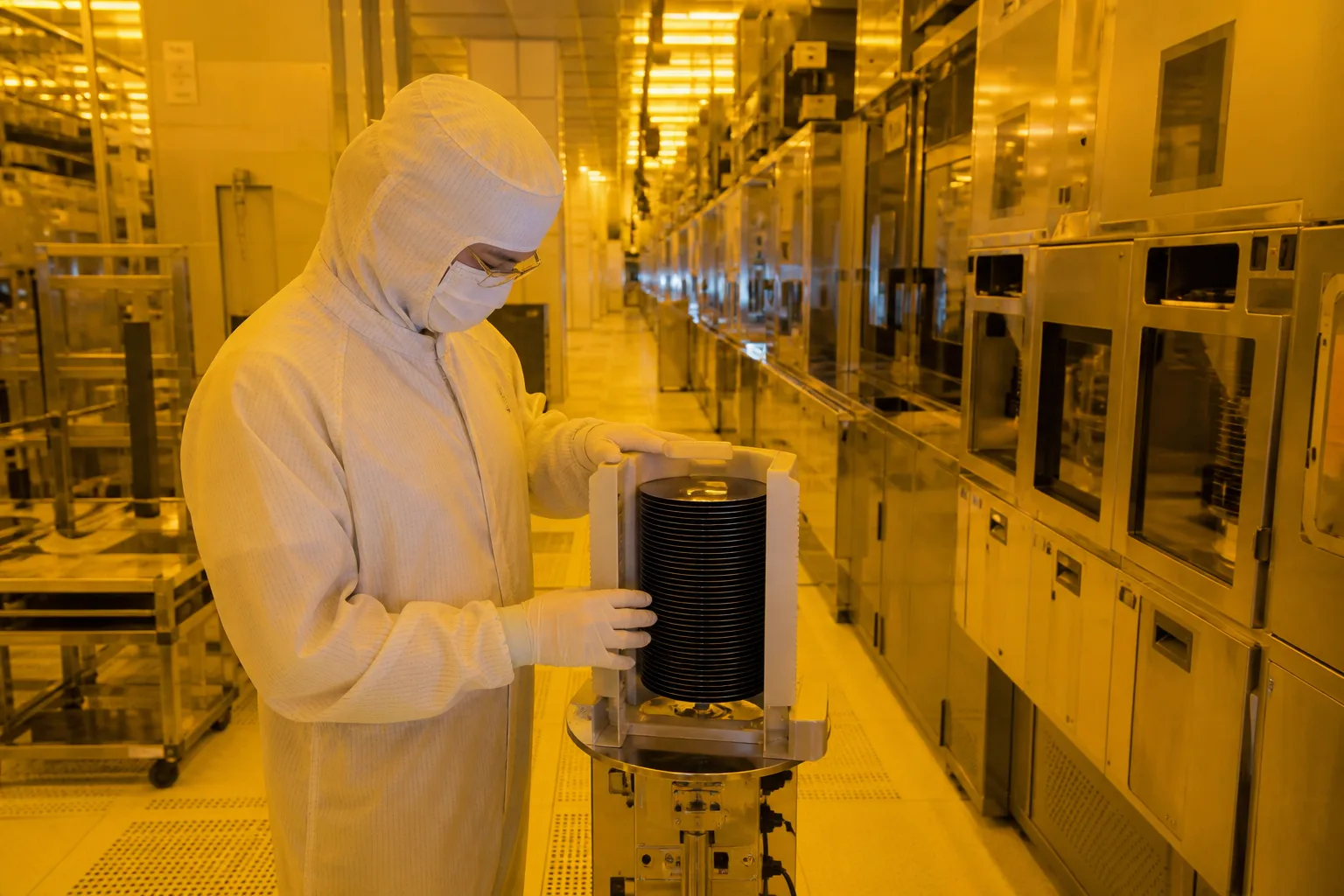
Micron Technology was the morning’s other object. Shares, already north of $950 Thursday, pushed toward $990 and tagged a high near $1,000 while the Dow was still digesting the two-year. That is not a jobs-beta pop. Industry reporting Friday said Micron aims to roughly double high-bandwidth memory capacity toward about 100,000 wafers a month by year-end, with 12-high HBM4 taking a larger share for Nvidia’s Vera Rubin platform. Nvidia’s last 10-Q already priced a 300-basis-point memory reset and a 30-point supply cap. Colette Kress named Micron among the vendors she is pressing. The stock is collecting that bottleneck.
Friday’s drop-and-rebound in the averages was a rates session. Micron’s tape was a capacity session that coincided with BLS. If August was mostly education calendars and restaurant payback, the next prints should cool without a collapse. If 162,000 was a new hiring slope on top of 72.6 prices paid and $95 Brent, Warsh does not need a wage spike to hike. Treat Micron as a separate ledger either way: a labor report that looked strong because it reversed a hole, a bond market that priced a firmer Fed, an equity market that sold then remembered wages, and a memory name that never joined the argument.
Continue reading


Sources
CNN Business Sept. 4, 2026 coverage of BLS August Employment Situation (+162,000 payrolls, unemployment 4.1%, wages 3.1% y/y; July revised to +21,000 from −23,000; June to +31,000; leisure and hospitality +62,000, restaurants and bars +59,200; local government education +41,900 after July −57,500; health care and social assistance +28,400); Pantheon Macroeconomics note on seasonal payback; CNN on two-year yield jump and mixed futures (Dow −0.28%, S&P −0.2%, Nasdaq 100 +0.15%); Reuters/CNN consensus ~56,000–65,000; Waller comments Thursday cooling hike odds; ETNews/Digitimes Sept. 4 Micron HBM capacity toward ~100,000 wafers/month; MU tape near $990, +3% range; Culled ISM Services, Nvidia memory, Warsh/Hormuz, and retail-sales coverage.


