

LVMH's sixth Journées Particulières run 16–18 October across 71 venues in 13 countries, from Louis Vuitton's Asnières trunk workshop to first-time openings at Celine on Rue Vivienne. The spectacle is public craftsmanship; the investment question is whether volume growth and open doors erode the scarcity that supports 34 percent margins in Fashion and Leather Goods.
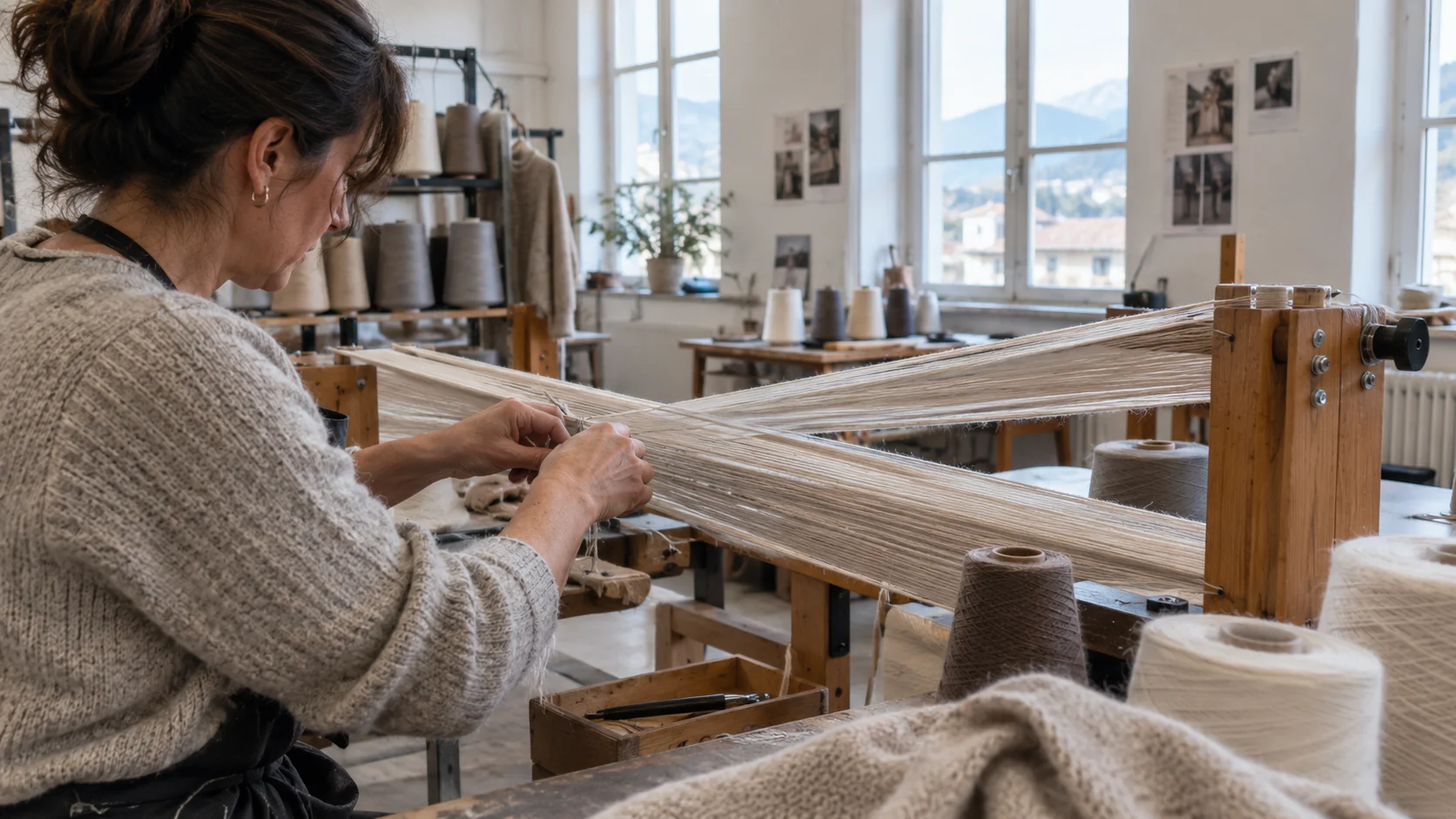
Les Journées Particulières 2026 began Thursday: for three days, 45 maisons invite the public into 71 sites across 13 countries, from Hennessy’s Cognac cooperage to Tiffany’s Bird on a Rock workshop in New York. LVMH’s day-one dispatch reads like a heritage festival—trunk painting at Maison LVMH, Dior couture ateliers on Avenue Montaigne, Loro Piana’s linking and mending rooms in light-filled Italian mills.
The programming is deliberately intimate theatre. Several locations, including Celine’s ready-to-wear workshops on Rue Vivienne, open for the first time; others accept walk-ins without reservations, subject to capacity. That accessibility is the hook—and the paradox. The group that sells waiting lists and appointment-only flagships is also staging open-house weekends that display how many skilled hands it employs.
Scarcity is still the balance sheet
Luxury conglomerates need revenue growth, store openings, and leather-goods volume. Each incremental bag or sneaker risks diluting the story of irreplaceable craft—unless production itself becomes the moat.
LVMH’s first-half report to 30 June 2026 shows the tension in numbers. Group revenue reached €38.6 billion, up 2% on a constant consolidation scope and currency basis. Fashion and Leather Goods contributed €18.1 billion but fell 1% organically for the half (-5% as reported), even as the division returned to organic growth in the second quarter, with management citing a sharp U.S. acceleration at Louis Vuitton and an strong start for Jonathan Anderson’s Dior collections. Loro Piana and Rimowa were called out as standouts; Gucci is not in this portfolio—the weakness lives at Kering instead.
At group level, profit from recurring operations was €8.7 billion (-4% reported, hit by exchange rates) on a 22.5% operating margin—stable year on year. Within Fashion and Leather Goods, however, the margin remained 34.1%, with €6.2 billion of recurring operating profit. That is the line investors are really buying: not the weekend tours, but whether industrial scale still clears ultra-luxury spreads.
Hermès, the scarcity benchmark, reported the same June half-year with €8.2 billion of revenue (+6.1% at constant exchange rates) and 41.0% recurring operating profitability. Its Leather Goods & Saddlery division grew 10%, even as management detailed new capacity— a 25th leather workshop opened in Loupes in April, with three more slated through 2030. Hermès is expanding production while keeping wait lists long; the market rewards that combination.
Kering’s first-half 2026 figures tell the aspirational-consumer story. Group revenue was €7.2 billion (+1% comparable), with Gucci down 5% comparable in Fashion and Leather Goods even as recurring operating margin in that segment edged up to 14.3% on cost cuts. Recovery is possible—Q2 comparable growth turned positive—but the distance to LVMH’s leather-goods margin is measured in multiples, not basis points.
The weekend opens workshops; the filing season opens the spreadsheet. Both ask the same question: who still has pricing power when volumes rise?
H1 2026: four houses, one June cut-off
The table below aligns the three Paris-listed groups on revenue and profitability for the six months ended 30 June 2026 (LVMH, Hermès, Kering). Richemont’s latest interim covers the six months to 30 September 2025—a different fiscal cut-off—but is included because investors routinely trade the set.
| Group | Revenue (reported) | Revenue growth (constant / comparable) | Operating or recurring margin | Fashion / leather headline |
|---|---|---|---|---|
| LVMH | €38.6bn | +2% (group, CC scope) | 22.5% group; 34.1% Fashion & Leather | FLG -1% organic H1; +organic Q2; LV U.S. acceleration |
| Hermès | €8.2bn | +6.1% (CC) | 41.0% recurring operating | Leather goods +10%; new French ateliers |
| Kering | €7.2bn | +1% comparable | 14.3% recurring (Fashion & Leather) | Gucci -5% comparable; Q2 group +2% |
| Richemont† | €10.6bn | +10% (CC, H1 to Sept 2025) | 22.2% operating | Jewellery maisons +14% CC; watches stabilizing |
†Richemont interim period ends 30 September 2025 (FY26 first half).
Two patterns stand out. First, margin leaders are also capacity expanders—Hermès openly adds workshops; LVMH highlights Loro Piana textile craft and Louis Vuitton’s historic Asnières site while rolling out megastore experiences in Beijing and Seoul. Second, growth dispersion is widening: LVMH’s conglomerate mix (watches and jewelry +9% organic, Tiffany and Bvlgari strong; Sephora sustaining selective retail) cushions a flat half in perfumes and a still-delicate wines recovery, whereas Kering remains a single-name turnaround trade.
Craftsmanship as capex, not only marketing
Les Journées Particulières are not charitable tours. They display métiers—coopering, high watchmaking benches, cashmere linking—that require decade-long training pipelines, supplier control, and geographic clusters (Cognac river, Vendôme watchmaking, Mongolian fibre sorting at Loro Piana’s Ulaanbaatar mill on the program). Those assets are difficult for a digital-native brand to replicate quickly, even if it can buy influencers overnight.
That is why the event pairs awkwardly with mass reach. Letting thousands file through ateliers humanizes the product—but also makes visible how industrial the “handmade” story has become. Investors should watch whether price increases continue to stick after such openness. Richemont’s earlier interim already flagged measured price increases to offset gold and FX pressure on jewellery margins; LVMH’s report likewise blamed currency for much of the Fashion and Leather profit decline despite “very high” margins.
Which customer is carrying the valuation?
LVMH does not publish a clean split between aspirational and ultrahigh-net-worth buyers, but the regional commentary is suggestive: U.S. momentum at Louis Vuitton, Asian growth ex-China volatility, and resilience at Loro Piana—a house whose price points skew to the genuinely wealthy—while Kering’s weakness in Gucci tracks footfall and tourist flows in China. The K-shaped consumer frame is not metaphor; it is segment reporting.
Selective Retailing (chiefly Sephora) posted €8.4 billion of revenue with 5% organic growth—mass beauty with luxury margins (10.6% operating). That division funds the dream but is not the scarcity engine. The engine remains leather goods and hard luxury where appointment traffic and limited supply meet clients who treat price as secondary.
What the open doors do not prove
Les Journées Particulières will produce superb photography and earnest artisan interviews. They will not, by themselves, prove that LVMH’s largest brands can raise prices faster than volumes without eroding mystique—any more than a factory tour proves a carmaker’s pricing power.
The verifiable test is in the June accounts already on file: stable group margins, 34% in Fashion and Leather Goods, and a second-quarter organic rebound led by the Americas. Hermès still operates at 41% with double-digit leather growth. Kering shows that when desirability slips, margins can be defended only by shrinking costs and closing stores.
LVMH’s weekend gesture is transparency as marketing. The billion-dollar question is whether its installed base of ateliers, trainers, and supplier contracts remains a barrier—or becomes the visible infrastructure of a business that can no longer pretend scarcity.
Continue reading


Sources
LVMH Journées Particulières 2026 program and day-one release; LVMH 2026 first-half financial report; Hermès half-year report June 2026; Kering first-half report 2026; Richemont FY26 interim results (six months to 30 September 2025).


