

The Formula 1 Singapore Grand Prix opens October 9–11 as the year's densest concentration of ultra-wealth hospitality—Marina Bay Sands is charging S$100,000 for a five-night Scuderia Ferrari package for two, and the official promoter reports most premium tiers sold out online—while transboundary smoke has pushed Singapore's Pollutant Standards Index above 180 and forced the FIA to monitor air quality alongside heat and humidity. Organizers insist the race will run; the open question is whether outdoor concerts and corporate after-parties survive the same air the Paddock Club cannot filter.
Marina Bay this weekend is two economies stacked on the same asphalt.
Above the track sits the consumption layer Formula 1 has perfected: corporate suites, driver meet-and-greets, and hospitality priced per guest rather than per seat. Marina Bay Sands is selling a S$100,000 Scuderia Ferrari package—about S$50,000 per person for two guests—that bundles five nights in a Paiza Grand Suite, three-day Paddock Club access, dining credits, a private Ferrari event, and priority entry to VIP after-parties during the October 9–11 race window. Sprint qualifying runs Saturday; the grand prix starts 8 p.m. Singapore time on Sunday under floodlights.
The official Singapore GP hospitality desk says it is sold out on most categories online, with only occasional ticket returns. Third-party listings show Paddock Club inventory as nearly exhausted. That is not a soft launch; it is a city-state turning itself into a luxury tradeshow while expecting another 300,000-plus weekend attendance on the order of 2025’s record crowd.
Below the hospitality tier, the air itself has turned hostile.
When the ticket is climate-controlled but the city is not
Smoke from Indonesian wildfires pushed Singapore’s Pollutant Standards Index into unhealthy territory on October 9, with the central region hitting 184 on the 24-hour reading and hourly PM2.5 in the elevated band, according to the Straits Times. Haze was visible around Marina Bay; IQAir ranked Singapore among the world’s most polluted major cities at points during the week. International wires and the South China Morning Post quoted the FIA saying the smog did not currently threaten the grand prix itself, while warning that worsening pollution could restrict outdoor entertainment more than the paddock or circuit.
The split is the business story. Paddock Club air is managed; concert lawns and waterfront promenades are not. A S$100,000 package buys proximity to Lewis Hamilton and Charles Leclerc, not immunity from particulates between the hotel lobby and the turn-one grandstand. Luxury consumption here intersects with corporate networking precisely because the guest list is mobile—dinners at Marina Bay Sands, pop-ups at The Shoppes, Ferrari-red light shows on the resort towers. Each hop is an outdoor exposure the promoter cannot fully engineer away.
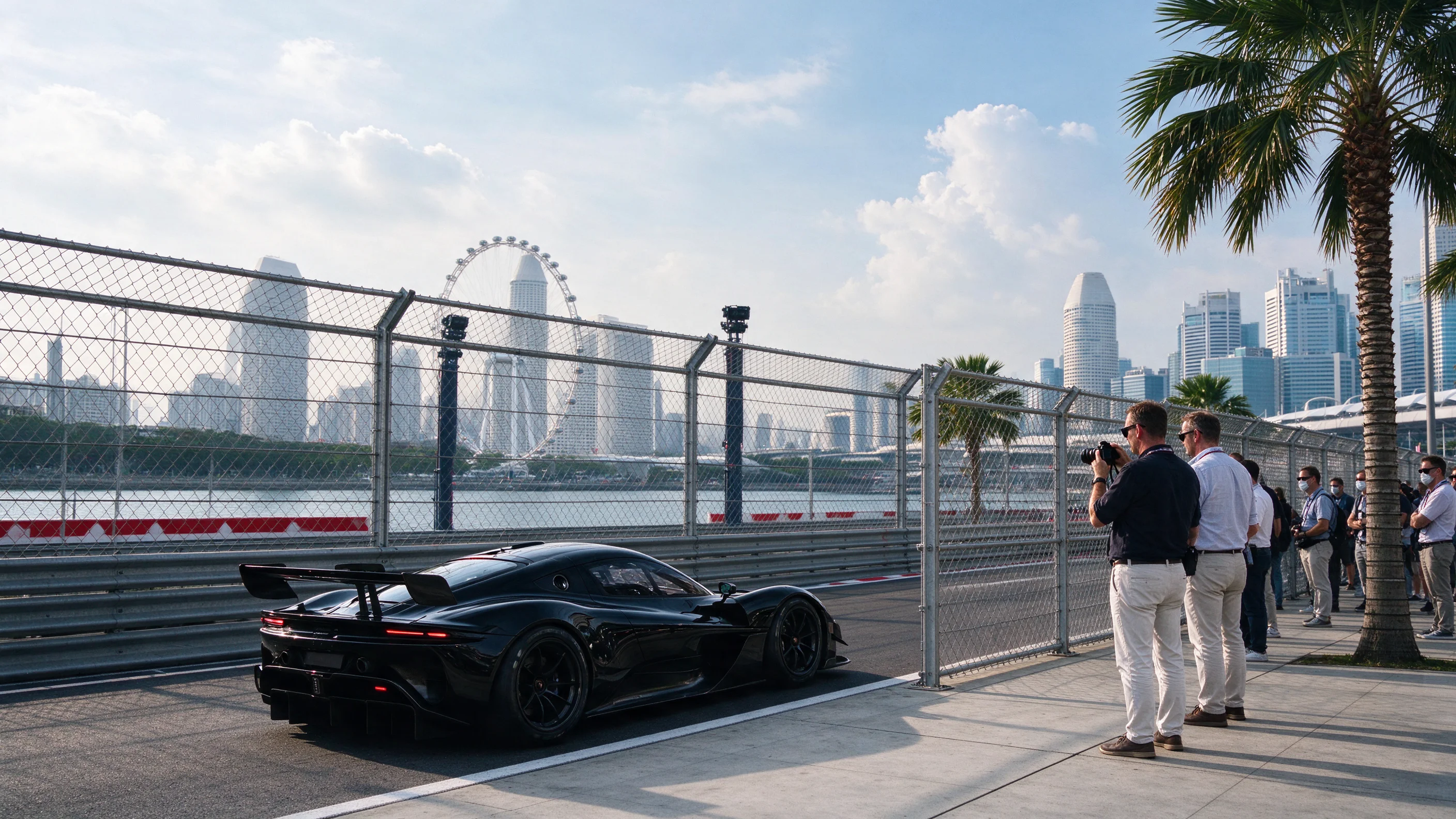
Race promoters pushed back on speculation that entertainment would be curtailed. Commercial director Adam Firth said on October 9 there were no plans to modify entertainment activities, contrary to some press reports, while promising updates through official channels. A contingency plan—including on-site N95 masks if needed—was already in place with government agencies. GrandPrix.com noted the FIA is monitoring air quality alongside a declared heat hazard for the sprint and race, with driver-cooling kit mandated in every car. Humidity and cockpit temperatures remain the familiar Singapore torture test; in 2026 the exam includes what drivers breathe before they seal the helmet.
What money buys—and what it bids for
The Ferrari package is extreme but not aberrant. It is the top of a ladder that starts with grandstand tickets and ends with three-day hospitality suites that double as boardrooms. Sold-out premium inventory signals that ultra-high-net-worth demand cleared supply before the first practice session—not despite global macro noise, but as a parallel venue for dealmaking dressed as sport.
The haze introduces a constraint capital cannot arbitrage. Indonesia’s fire season is a regional governance problem; Singapore’s response is measurement, health advisories, and selective limits on outdoor spectacle. If PSI climbs further, the first casualties are likely free-roaming fans and concertgoers, not the paying few behind Paddock glass. That is a K-shaped weekend in physical form: filtered air for the top tier, advisory text messages for everyone else.
For readers tracking luxury and labor together, the parallel is not Monaco’s tax façade but mega-event civic math—hospitality invoices that assume perfect weather until the atmosphere refuses to cooperate.
Watch list through Sunday night
PSI trajectory and entertainment schedules. Any change will land on Singapore GP’s official channels before hotel concierge desks.
Corporate after-parties. Marquee and waterfront events are the haze-sensitive margin; the race clock is not.
Tourism spillover. Hotels and F&B built for 300,000 bodies still need foot traffic; haze shifts spending indoors, where Marina Bay Sands already captured the highest-margin packages.
Singapore’s grand prix remains the weekend’s strongest billionaire spectacle. The environmental overlay is the reminder that spectacle still breathes the same air as the street—and that the most expensive ticket does not purchase a different sky.
Continue reading


Sources
Singapore GP hospitality listings; Marina Bay Sands and CNA on the S$100,000 Ferrari package; Straits Times on PSI readings and promoter statements; SCMP/AFP on FIA contingency guidance; GrandPrix.com on air-quality monitoring.


