

RM Sotheby's Zurich auction at the Park Hyatt on Saturday, 26 September, catalogued a 1991 Ferrari F40 beside a 2024 Mercedes-AMG ONE. Pre-sale estimates placed the F40 at CHF3.2 million–CHF3.5 million and the AMG ONE at CHF2.3 million–CHF2.5 million — particular cars, not model-wide indices. By Sunday the F40 had sold for CHF3,323,750; the AMG ONE carried no published hammer on RM's lot page.
RM Sotheby’s returned to Zurich on 26 September with a compact, high-spec catalogue — twenty-three motor cars RM estimated at roughly CHF20.8 million in aggregate. For collectors tracking how trophy capital prices analogue scarcity against factory-halo technology, the pairing that mattered was not abstract: Lot 106, a 1991 Ferrari F40, and Lot 116, a 2024 Mercedes-AMG ONE. Same saleroom, same weekend, different decades of engineering mythology.
The F40 arrived with a CHF3.2 million–CHF3.5 million estimate. RM’s catalogue described a Swiss-delivered, matching-numbers “cat, non-adjust” example in Rosso Corsa over Stoffa Vigogna wool — the gated shifter and cloth seats that read as racing austerity rather than concierge luxury. Ferrari Classiche certification in October 2018 supplied the “Red Book” paperwork collectors use when provenance is part of the asset, not a footnote. Service history ran through Swiss workshops, including Niki Hasler AG, with a 40,000-kilometre interval logged in 2024; the odometer stood at 38,725 kilometres at cataloguing.
The AMG ONE carried a CHF2.3 million–CHF2.5 million band — lower on paper, but not a clean performance comparison. Mercedes-AMG built 275 examples of a 1.6-litre turbo hybrid V-6 descended from the 2016 championship-winning F1 power unit, rated at 1,063 horsepower and capped by a Nürburgring production-car lap record. RM’s car was a single-owner Swiss delivery from August 2024, shown at 507 kilometres, with dealer servicing at Mercedes-Benz Schlieren-Zürich documented on file. VAT treatment on Swiss sales adds friction absent from the F40’s Swiss-tax-paid status — another reason hammer comparisons are estimates, not indices.
What the estimates implied — and what one hammer cleared
Before bidding opened, the catalogue’s ordering was the story: the older car carried the higher estimate despite the ONE’s newer spec sheet. That fits an inference trophy markets keep testing — documented history and cultural recognition can trade at a premium to peak engineering, at least when the history is verifiable and the object is finite. RM built the F40 narrative around Swiss continuity, anniversary-event appearances, and Classiche paperwork; the ONE narrative leaned on low mileage, single ownership, and the impossibility of repeating an F1-homologation programme.
Counterevidence is built into any two-lot sample. Estimates are marketing ranges, not realised returns; reserves can block a sale entirely; condition, timing, and buyer premium move the all-in number away from the podium figure. A rotation toward analogue cars would need breadth — repeat sales, model indices, cross-house comps — not one Swiss evening.
By 27 September, RM’s website listed the F40 as sold for CHF3,323,750 — inside the published estimate band, closer to the midpoint than a blow-off top. The AMG ONE lot, by contrast, showed “Price Upon Request” without a public hammer at the time of publication — which may mean private negotiation, a reserve outcome, or a lag in results posting. Treating either car as a category signal requires waiting for a disclosed price on the ONE and for the house’s full results tape, not the headline pairing alone.
For collections financed against collateral value, the certificate and the service invoice often matter as much as the estimate spread on the catalogue page.
The bill after the bid
The investable question here is not whether every F40 automatically appreciates. It is whether specialist maintenance, certification renewals, and documented components create durable service demand around an ageing fleet — the same operational layer that makes auction-house lending sensitive to collateral quality rather than catalogue photography.
The F40’s open tool roll, spare tanks, and original exhaust noted in the catalogue are reminders that ownership is inventory management: tyres, belts, turbo cycles, and marque-authorised labour at Swiss rates. The AMG ONE shifts that liability toward factory dealer networks and hybrid complexity — fewer kilometres on the clock, but a powertrain architecture with no casual independent backup.
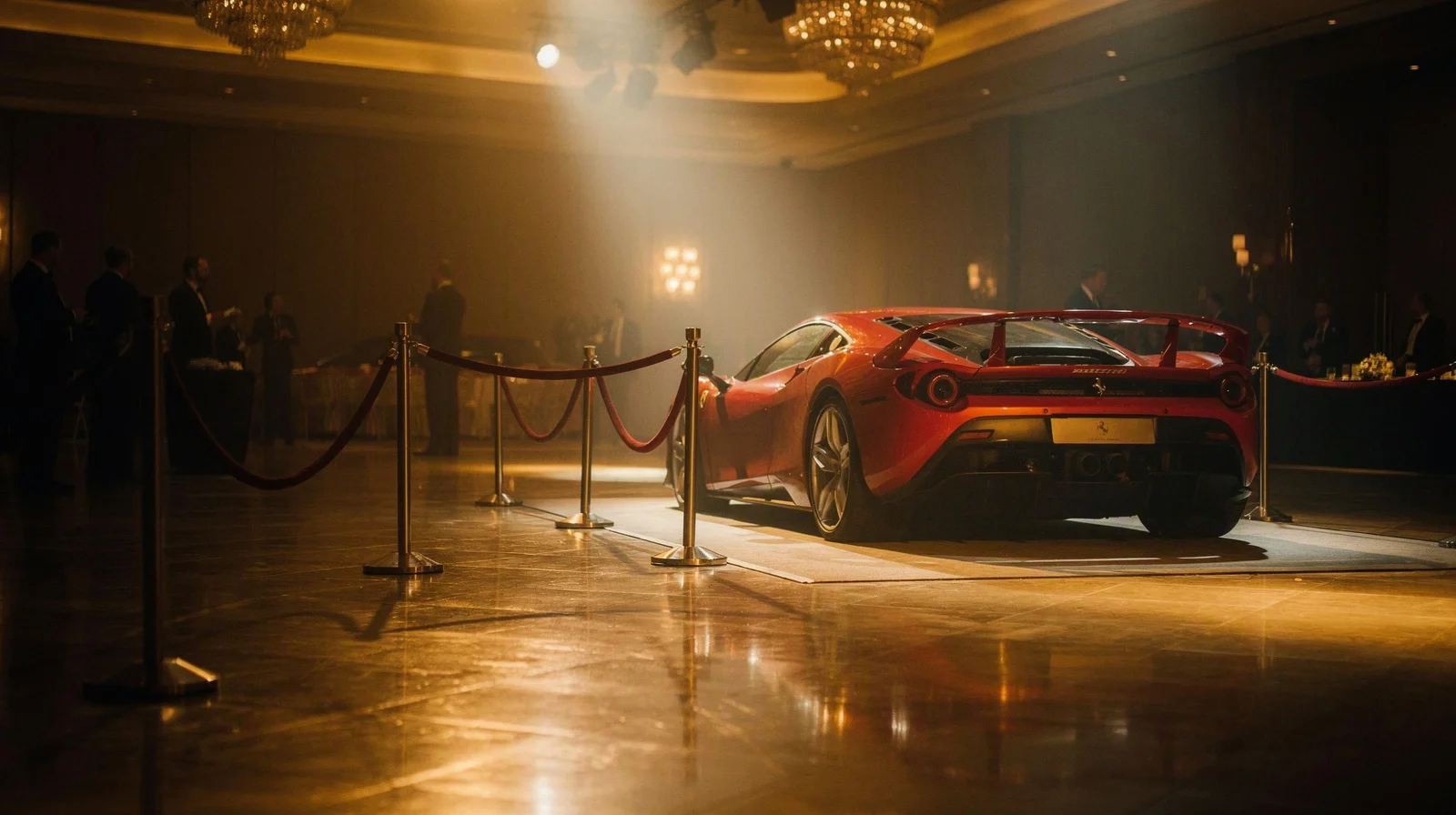
Zurich’s room asked whether history can outrun new technology on the estimate sheet. One answer arrived with the F40 hammer. The sharper falsifiers are still open: Does the AMG ONE print a public price? Where do both cars land after buyer’s premium, tax, and export? What maintenance and parts liabilities does the next owner inherit? Until those are answered, the pairing is a useful inquiry into authenticity premiums — not a market-wide verdict.
Continue reading


Sources
RM Sotheby's The Zurich Auction (zu26) overview and lot pages for the 1991 Ferrari F40 (Lot 106) and 2024 Mercedes-AMG ONE (Lot 116); pre-sale estimates and post-sale F40 result as listed on rmsothebys.com, 27 September 2026


