

OpenAI released GPT-6 Astra on September 3 as a computer-use model, not a chatbot. Greg Brockman said it can zip through spreadsheets, fill forms, and navigate software as a person would. Bay Area tech WARN filings already exceed all of 2025, with firms citing AI for the same desk work.
OpenAI shipped GPT-6 Astra on Thursday as what it calls the world’s best computer-use model. The point is not a better answer box. The point is a system that is supposed to drive the machine the way a junior analyst does: open the browser, hop the spreadsheet, fill the form, export the deck. Greg Brockman told reporters it can do that “often at superhuman speed,” then closed with “Welcome to the AGI era.” Seats start in a gated enterprise program, Daybreak, then Plus, Pro, Business, and Enterprise, plus the API and AWS.
The Bay Area did not wait for the demo. A Mercury News tally of California Employment Development Department notices shows 12,947 Bay Area tech cuts through the start of September — 27 percent above the 10,170 the industry reported for all of 2025. Meta accounts for 3,715 of the regional total; Amazon, Cisco, Oracle, and LinkedIn fill the next ranks. Oracle’s June 10-K stated that “the adoption and deployment of AI technologies across our operations have resulted, and may continue to result, in reductions to our workforce.” HP’s Fiscal 2026 Plan aims to cut 4,000 to 6,000 jobs by fiscal 2028, naming internal operations and customer support among the targets.
In February we argued that mid-level cuts were a bet on agentic software that did not yet exist. Astra is the vendor’s attempt to close that gap in public. Coding agents had already changed the production unit of software, as we mapped when the software team started looking like an economic artifact. Computer use is a different claim. It does not need an API into Salesforce or Excel. It uses the same surface a person uses.
WARN Already Listed the Tasks. It Did Not Have to Name the Cause.
The test is in the notices, not in Brockman’s valence. California WARN packets are blunt — site, headcount, date, sometimes a job-title dump — and they still leak a pattern. Oracle’s April Bay Area filings were heavy with software developers, applications developers, product managers, and QA. PayPal’s August 31 San Jose notice mixed more than 100 engineering-related roles with nearly 50 directors and more than 40 senior managers, while CEO Enrique Lores told investors he wanted more “AI adoption and automation” and fewer duplicated layers. Salesforce’s Mission Street round bundled tech, admin, and sales.
That mix is the map. Developer titles overlap the coding-agent story already in motion. The rest — analysts, ops, support, the people whose job is to click through other companies’ software and emit a finished artifact — is what computer use is selling this week. The next WARN dump can be scored against that sentence: how many titles describe a human driving a browser, a workbook, or a case-management screen?
Employers spent 2026 deleting the person. Astra’s pitch is that the person was the interface.
Do not confuse the mapping with a causal proof. Astra did not file those notices. The notices filed first. What Thursday changed is the product description that now sits on top of a year of prepaid headcount. Firms that cited “AI efficiency” were buying an option on a capability. OpenAI has now listed that option as a feature.
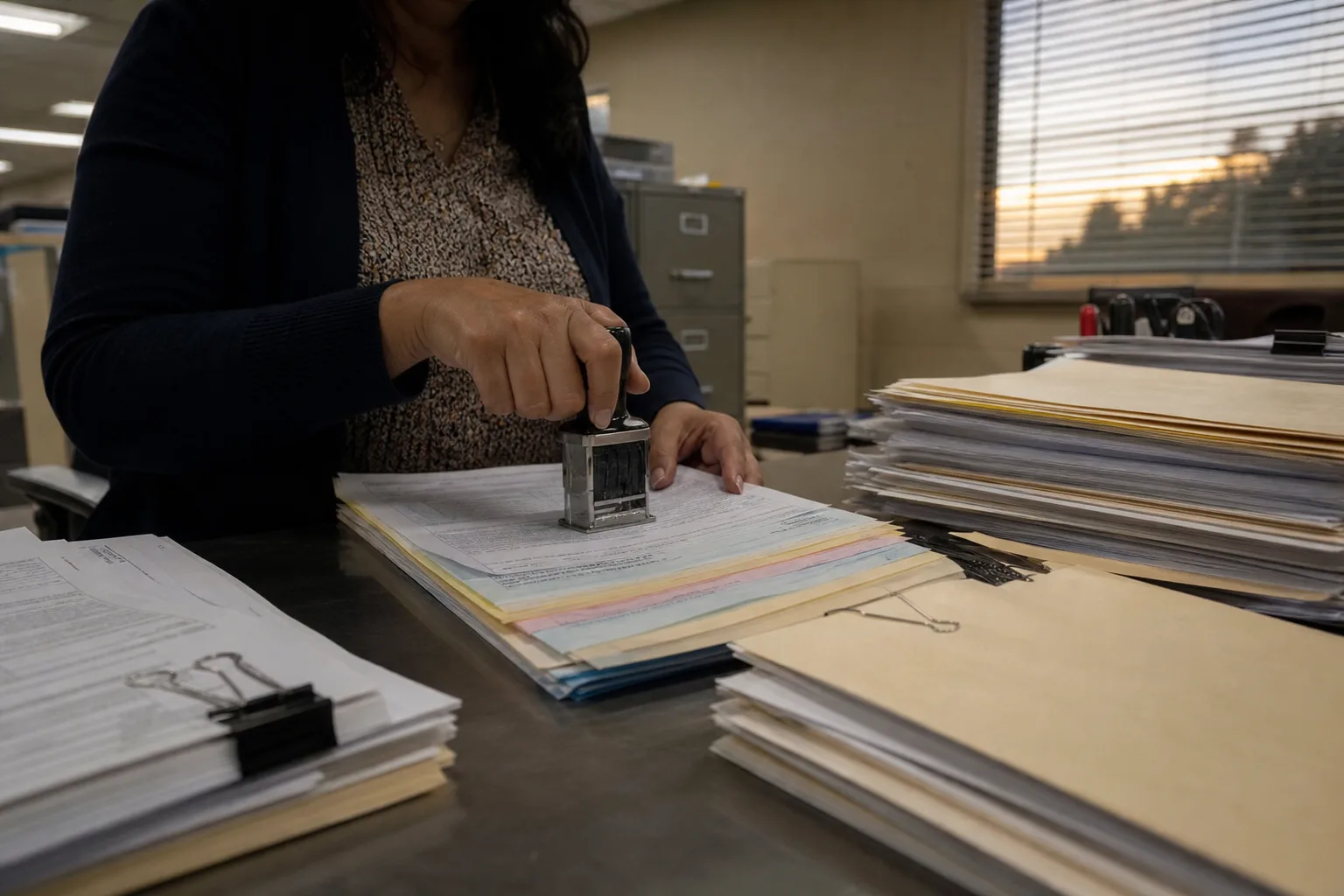
Sacramento Is Still Counting Heads, Not Clicks
The governance lag is the undercovered half. On May 21, Governor Gavin Newsom signed Executive Order N-6-26, directing the Labor and Workforce Development Agency to recommend WARN Act revisions within 180 days so the statute can serve as “early warning data” for AI disruption. That clock runs into mid-November. The order also asked for a sector dashboard and a look at severance models. It still does not require a private employer to write “computer-use agent” on a layoff notice.
Until that reason code exists, the public tape will mix genuine substitution with ordinary cost-cutting dressed in AI. Filings can already be read for function. They cannot yet be read for mechanism. The live question is whether the state that hosts the industry can tell a spreadsheet-operator cut from a failed-product cut.
The capex ledger is not innocent. Oracle is funding a Stargate-scale build while its 10-K records the payroll shrinkage. Hyperscaler spend still has to clear the utility test against ghost racks and thin conversion, and the Street has already shrugged at a record Nvidia quarter when the payoff stayed a slide. China’s efficiency path and the generative-versus-dot-com cash-flow gap cut the same way: if computer-use agents replace the interface worker, the buildout finally has a labor offset. If they stall in compliance, the offset was taken anyway.
Astra is not a paradox. It is a job description published after the requisition was cancelled. Treat computer-use as a task family, match it to WARN titles, and refuse the AGI slogan until the filings and the feature sheet name the same work.
Continue reading


Sources
OpenAI GPT-6 Astra launch briefings (Sept. 3, 2026); Mercury News review of California EDD WARN notices through early September 2026; Oracle FY2026 10-K AI workforce language; HP Fiscal 2026 Plan disclosures; Governor Newsom Executive Order N-6-26 (May 21, 2026)


