

Asian indices held near unchanged Monday as Brent eased to $93.43 ahead of Scott Bessent's Iran sanctions briefing, but sector tape told a different story. Hanwha Aerospace, HD Hyundai Heavy Industries, and LG Energy Solution gained while Samsung Electronics plunged more than 6 percent. Markets are repricing corridor risk before Treasury releases a designation list.
Monday in Asia looked like patience. It was sorting.
The Nikkei opened near unchanged after falling almost 4 percent last week. MSCI Asia-Pacific ex-Japan eased 0.2 percent. Brent slipped 1.0 percent to $93.43 and WTI 1.1 percent to $86.14 — profit-taking after Bessent’s “toughest sanctions in history” line sent crude up 6.6 percent last week. Treasury’s 2 p.m. Eastern briefing still had no designation list, no secondary-sanctions mechanism, no start date. The tape was trading the date, not the file.
Under the flat index, tech and energy diverged sharply. That is the story wire copy buried under “markets await details.”
What the Headlines Already Said
The dominant frame is caution: investors are waiting for Bessent before repositioning. Iran has not relinquished Hormuz. China buys more than 80 percent of Iran’s seaborne crude and has rejected Washington’s demand to cooperate. Bessent has pointed at Chinese teapot refineries without naming a counterparty markets can verify. Tehran has threatened to halt all Gulf exports if the package tries to isolate it completely — a retaliation that would hit barrels, not bank accounts.
That summary is accurate. It is also incomplete. Peace was priced long before fixtures cleared the Gulf. MOU language moved crude faster than tankers. Swiss talks survived strain and still jolted oil whenever implementation lagged the headline. Saturday’s shift to offensive doctrine attached a calendar to the corridor. Markets did not need Monday’s text to begin repricing who wins if the strait stays a toll booth with a navy.
If Sanctions Pressure Tehran, Why Reprice Before Enforcement?
The residual is straightforward: economic sanctions are slow instruments. Freight, insurance, and Asian import bills reprice on what might close, not what Treasury has already closed.
Shipowners have been voting with hulls for months. War-risk underwriters cancelled coverage and raised Gulf premia while AIS transits stayed a fraction of pre-war traffic. A sanctions press conference does not reopen a lane; it changes the probability that secondary actors — Chinese buyers, shadow-fleet insurers, payment rails — face a harder choice between cheap Iranian barrels and dollar finance. Traders lean long or flat on a guess until names appear on a list.
Asia repriced corridor risk in the sector tape before Bessent read the annex aloud.
That is why Brent can fall on a Monday morning even after a hawkish week: the market paid for the calendar slot and is now deciding whether the text exceeds the bid.
The Sector Sort Beneath the Flat Open
Korea showed the split most clearly. Samsung Electronics fell more than 6 percent despite unveiling a record 90 trillion-to-110 trillion won shareholder-return plan — the market had priced above 110 trillion, and only 30 trillion in immediate cash dividends was confirmed. Samsung Life and Samsung C&T fell with it. Foreign investors were net sellers of about 1.2 trillion won on the KOSPI by mid-morning.
SK hynix, by contrast, held gains after a return plan the market read as generous. The semiconductor complex is not one trade this week; it is AI-capex winners versus idiosyncratic payout disappointments, with Nvidia’s Wednesday print still the sector’s macro event.
The energy-and-corridor basket moved the other way. Hanwha Aerospace rose more than 3 percent. HD Hyundai Heavy Industries gained. LG Energy Solution added 3.6 percent. Insurance, retail, and electricals led sector decliners; defense-adjacent and battery names led gainers. Taiwan dipped 0.5 percent on the same macro overlay with less Samsung noise.
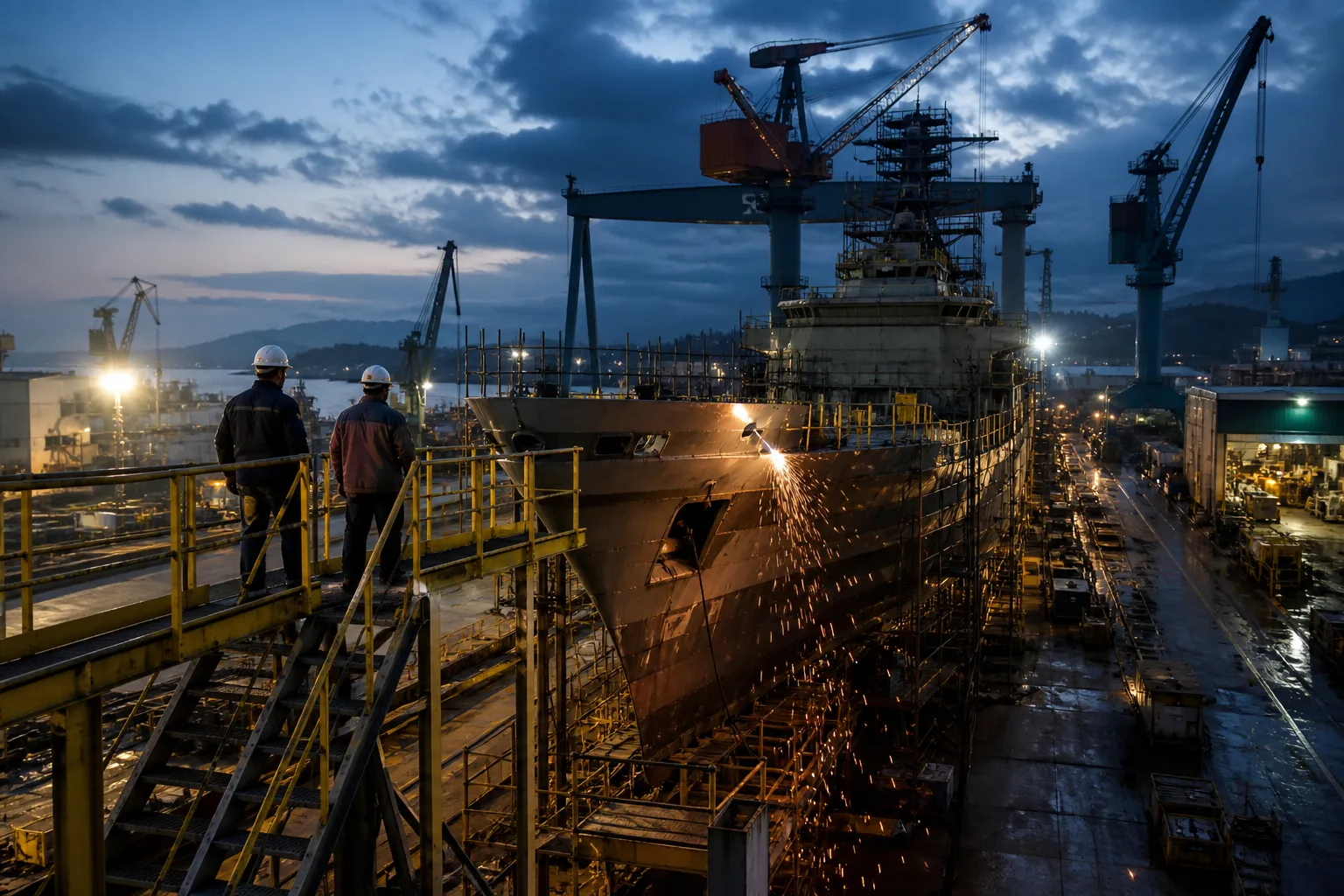
That rotation is not random. It is Asia pricing who benefits when Hormuz stays contested and who bleeds when import costs and rates stay elevated — a forced-efficiency shock nobody voted for but everyone must trade. The world reordered itself in February when the air war started; six months later the sector map finally matches the choke.
What Still Misprices
Portfolios still treat a flat Asia open as proof that sanctions are “priced.” Unchanged at the index level is a composite of two forces: payout math in Seoul and corridor math in the Gulf. They do not cancel.
Watch three tests after Bessent speaks. First, whether the package names Chinese teapots, shadow-fleet insurers, or payment rails — designations markets can check, not adjectives they cannot. Second, whether Brent re-bids above last week’s $93.78 close if Iran repeats the Gulf-export halt threat. Third, whether Korea’s defense-and-shipyard complex keeps outperforming memory names even if Nvidia beats on Wednesday.
If Monday produces only another round of “toughest” without text, the anchorage stays paused and the sector sort reverts. If it produces checkable counterparties, CL and KOSPI energy will reprice together — and the flat open will look, in hindsight, like the last moment the market could pretend sanctions and the strait were separate problems.
Continue reading


Sources
Reuters (Wayne Cole, Sydney, Aug. 24, 2026) on Asia opens, Brent/WTI, Bessent briefing; CNBC Aug. 20 Bessent interview on blockade and sanctions; Asia Business Daily on KOSPI, Samsung shareholder return, SK hynix; prior Culled coverage of MOU peace-pricing, Bürgenstock talks, Hormuz insurance, and Iran's offensive doctrine ahead of Monday.


