

A Camp David meeting on Iran and Yemen, new Patriot batteries guarding Gulf energy facilities, Saudi planning in Yemen, and reported Syria-Hezbollah contacts trace the places a renewed Iran war could reach. They do not establish a coordinated campaign. They reveal preparations for escalation pathways.
Before Washington has publicly decided whether to resume major combat operations against Iran, it is placing defenses where an Iranian answer might land. Axios reported this week that the U.S. military had sent one additional Patriot battery to protect a Saudi oil facility and another to protect a Qatari gas facility. On Friday, senior national-security officials met at Camp David to discuss Iran and the Saudi-Houthi conflict in Yemen.
Those facts do not establish that a wider war has been chosen, or that Tehran would target Gulf infrastructure. They describe something more concrete and more useful: the region is positioning around the routes through which a renewed U.S.-Iran confrontation could travel.
Saudi Arabia is considering a major campaign against the Houthis. The United States is making Gulf energy sites harder to hit. And Reuters reported that Syrian officials and Hezbollah representatives held secret talks in Turkey to contain their own security disputes — a report both the Syrian government and Turkey later denied. Different capitals, different risks, different degrees of certainty. Together, they make a map.
Camp David is the decision point, not the whole battlefield
The Camp David meeting belongs at the center because it concerns the decision that could connect the others. Axios, citing three U.S. officials, reported that Vice President J.D. Vance led a meeting with Secretary of State Marco Rubio, Defense Secretary Pete Hegseth, senior intelligence officials, and others to discuss next steps in the Iran war and Saudi options in Yemen. The White House declined comment.
President Donald Trump has said he is considering renewed bombing in the coming weeks if Iran does not agree to a deal. That remains a conditional public posture, not an announced campaign plan. But Washington’s choice is no longer only whether to strike Iran. It is whether it can absorb, deter, or limit the reactions a strike might set in motion elsewhere.
Iran’s regional influence has long rested partly on relationships with armed partners rather than on conventional occupation. The important analytical distinction is command. Alignment, weapons flows, and strategic coordination do not prove that Tehran can start and stop every Houthi, Hezbollah, or Iraqi militia operation on command. As Culled has argued, a faster Iranian response is not a proxy joystick. That uncertainty is a military problem in its own right.
The Gulf defenses reveal the retaliation planners take seriously
The Patriots are the most tangible item in this week’s reporting. Axios said Saudi and Qatari leaders had previously warned Trump that attacks on Iranian energy infrastructure could invite retaliation against their own oil and gas sites. The batteries were then deployed as reassurance before any new major U.S. operation was announced.
That does not predict a strike on an oil terminal or LNG plant. It shows that American planners regard the possibility as serious enough to allocate scarce missile-defense capacity. The practical consequence is also political: Axios reported that Saudi permission to use its airspace for a renewed campaign would be less likely without credible protection for its oil facilities.
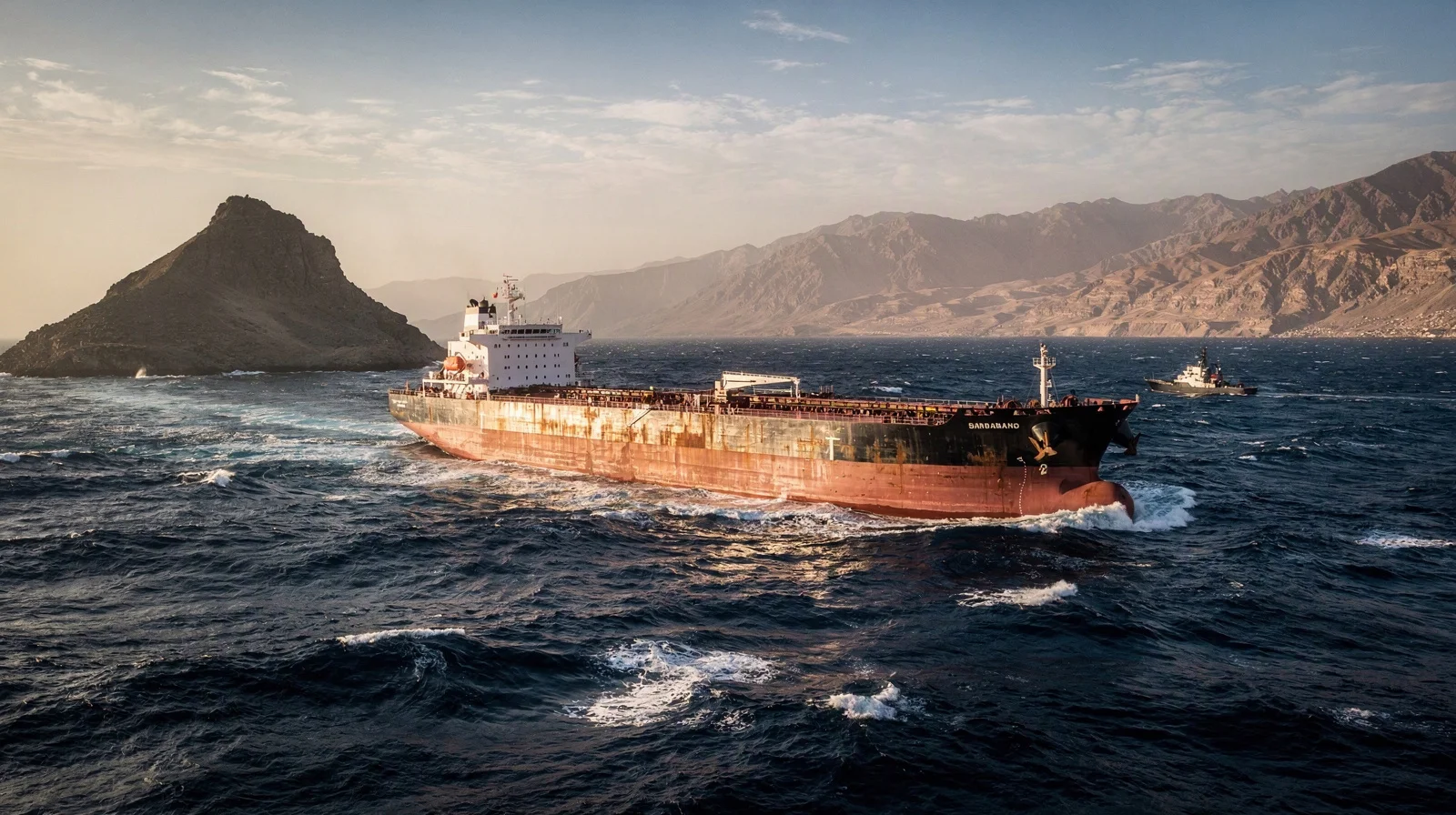
The Gulf is therefore not simply a rear area from which the United States operates. It is a potential retaliation theater and the home of infrastructure that shapes oil, LNG, shipping insurance, airspace access, and the availability of Patriot interceptors. A defensive deployment is not a headline accessory. It is part of the policy’s operating condition.
Yemen is the southern route into global trade
Reuters reporting carried by Dawn says Saudi Arabia is considering a Yemen offensive led by Riyadh-backed Yemeni forces and supported by Saudi air power. The reported options range from a focused push near Bab el-Mandeb to synchronized operations across several fronts; officials said more than 100,000 Yemeni troops could be mobilized, depending on the plan.
The campaign has its own local logic. Yet it also sits directly beside the southern gate linking the Red Sea, the Gulf of Aden, and the Indian Ocean. Bab el-Mandeb is not merely terrain on Yemen’s west coast. It is a global trade passage that has become more consequential as traffic through Hormuz has been disrupted.
The strait is already carrying substitute energy flows, which makes a Houthi-held coastline more than a local military problem. The U.S. decision to provide or withhold direct participation in a Saudi operation would therefore shape not only Yemen’s battlefield but the risk attached to an already stressed shipping route. Iran need not control that route directly for a confrontation with Tehran to make it more expensive.
Syria and Lebanon show the opposite impulse: limit the spillover
The Reuters account of Syrian-Hezbollah talks is the least settled report and should be treated that way. Six sources, including Syrian officials, a U.S. official, and a Lebanese security source close to Hezbollah, said representatives met in Turkey to discuss cross-border smuggling, Hezbollah cells in Syria, and assurances that Syrian forces would not enter Lebanon to disarm the group. Syria and Turkey publicly denied that the meeting happened; Hezbollah did not comment.
If the account is accurate, it represents the opposite of mobilization. Syria’s new government and Hezbollah — adversaries since the fall of Bashar al-Assad — would be testing whether they can prevent their bilateral security dispute from becoming another front. Turkey, a key backer of Damascus, would be acting as an intermediary. Iran, Reuters reported, was absent.
That possibility should not be inflated into a regional settlement. No agreement was reported, and the meeting itself is contested. Still, deconfliction is strategically meaningful precisely because the alternative is not abstract. A local incident, smuggling dispute, or intervention across the Lebanon-Syria boundary could widen the map at the same moment other actors are trying to secure the Gulf and Red Sea.
The region is not lining up behind one war plan. It is building defenses, preparing campaigns, and testing off-ramps around the same uncertainty.
The test now is not a prophecy about which arrow will fire first. Watch whether the Patriots are joined by further air-defense transfers; whether Saudi planning becomes a published operation with a defined U.S. role; whether commercial traffic and war-risk pricing worsen at Bab el-Mandeb; and whether the Syria-Hezbollah account gains corroboration or remains a disputed report. The next Iran crisis may begin with a decision in Washington. Its real scale will be determined by how many of these routes open afterward.
Continue reading


Sources
Axios reporting on an Oct. 2 U.S. deployment of Patriot batteries to Saudi and Qatari energy facilities and an Oct. 3 Camp David meeting on Iran and Yemen; Reuters reporting, carried by Dawn, on Saudi Yemen-offensive options; Reuters reporting, carried by Al-Monitor, on alleged Syria-Hezbollah talks in Turkey and subsequent Syrian and Turkish denials; prior Culled reporting on Bab el-Mandeb and Iranian proxy command.


