

Russia's July 6 barrage killed seventeen in Kyiv while Ukraine's air force downed zero of twenty-three ballistic missiles. Patriot launchers remain operational; PAC-3 magazines do not. NATO convenes in Ankara July 7–8 with €70 billion for Ukraine — a ledger that funds platforms, not the interceptors whose shortage Moscow now exploits.
Russia launched another combined strike against Kyiv overnight on July 6. Ukrainian air defenses intercepted cruise missiles and more than ninety percent of attacking Shahed drones. Of twenty-three ballistic missiles, the count was zero. Nine-storey residential buildings burned. At least seventeen people died.
The failure was not tactical. Colonel Yurii Ihnat, Ukrainian Air Force spokesman, was explicit on national television: Ukraine has enough Patriot systems. It does not have a steady supply of PAC-2 and PAC-3 interceptors. “To shoot down ballistic missiles, you need the assets to do so,” he said. Russia knows the arithmetic.
The Magazine, Not the Launcher
Patriot remains Ukraine’s only credible defense against Iskander and Kinzhal-class ballistic trajectories. Launchers can be repositioned, crews retrained, radars networked. Interceptors are consumables — fired once, gone forever, replaced on a production schedule measured in months.
Defense Minister Mykhailo Fedorov said on July 6 he would hold urgent talks with counterparts holding Patriot stocks, proposing a swap: allies transfer interceptors from existing inventories now; Ukraine’s contracted deliveries — scheduled to begin next year, some not until 2027 — backfill later. President Volodymyr Zelenskyy echoed the appeal ahead of his Wednesday meeting with Donald Trump, framing the NATO summit in Ankara as the moment to approve emergency transfers.
The enemy has learned the pattern. Across four combined long-range Kyiv attacks since June 2 — June 16, July 2, and July 6 — Russia has launched roughly 114 ballistic missiles and two dozen Zircon or Onyx anti-ship variants against the capital alone. On July 2, Ukraine intercepted four of twenty-four ballistics — a 16.7 percent success rate that evidently signaled Moscow to repeat the tactic before magazines could refill. Monday’s zero-for-twenty-three is what rationing looks like when the adversary optimizes for your empty slots.
Ankara’s €70 Billion Ledger
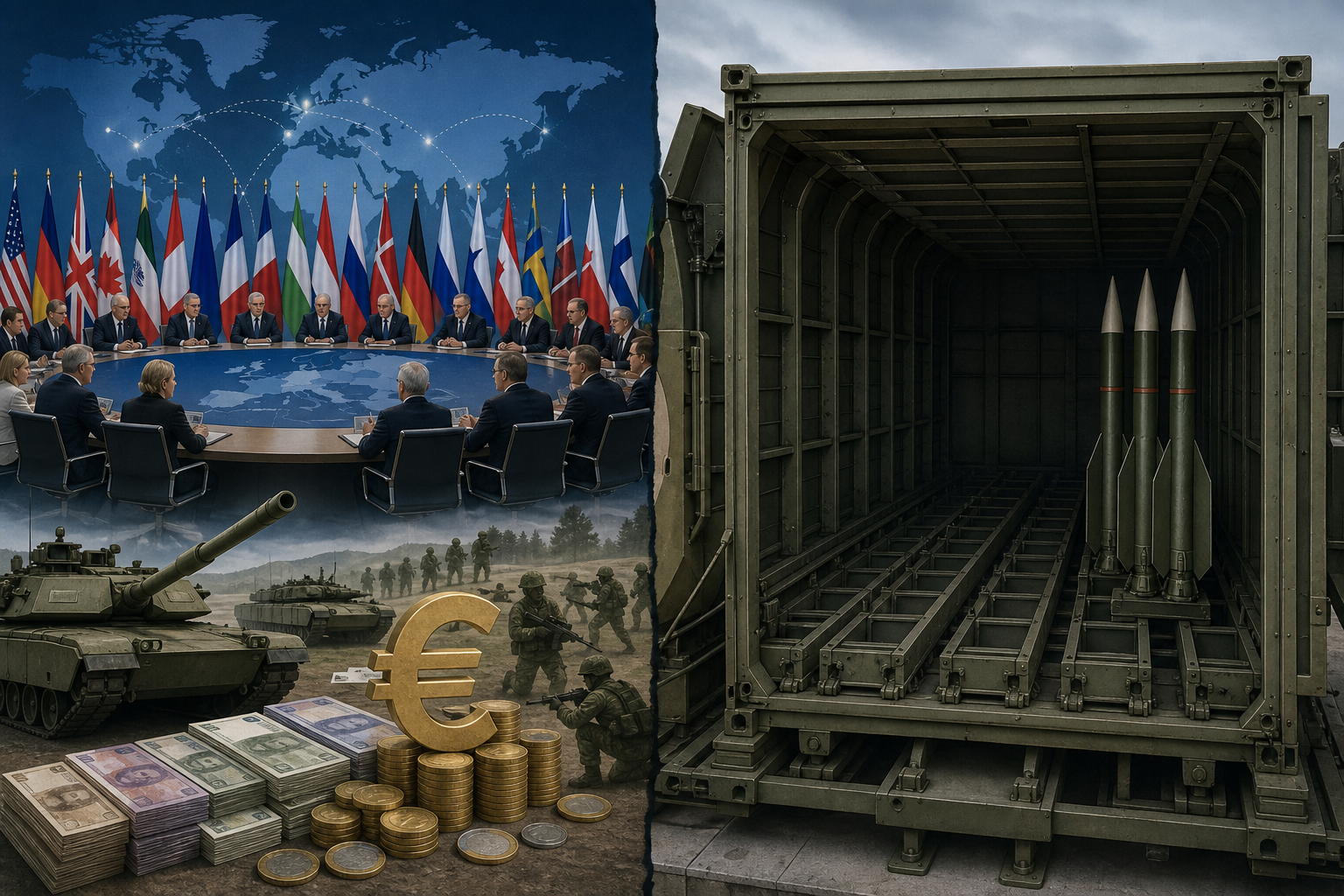
NATO leaders convene in Ankara on July 7–8. The draft declaration commits European allies and Canada to €70 billion in annual military support for Ukraine in 2026 and comparable levels in 2027 — €140 billion over two years. The package bundles existing bilateral pledges with the defense portion of the EU’s €90 billion loan facility. It covers equipment, training, and industrial investment. The United States is not expected to contribute to this specific funding line.
Zelenskyy dines with alliance leaders Tuesday evening, hours after the Kyiv strike. The optics favor resolve: Russia labeled a long-term threat, Ukraine’s financing routinized, Rutte’s production agenda advanced. What the communiqué will not itemize is interceptor replenishment at wartime tempo.
Tanks, artillery, and training contracts move through procurement cycles measured in quarters. PAC-3 MSE production runs closer to fifty-two interceptors per month globally, per defense-industry estimates cited after the Iran conflict depleted Gulf and U.S. stockpiles. Zelenskyy has cited Lockheed Martin output near six hundred interceptors annually — roughly sixty per month against Russian ballistic production estimated at triple that rate. Ankara’s €70 billion buys capacity. It does not refill the magazine by Wednesday.
From Magnets to Magazines
This crisis connects upstream to the supply-chain chokehold Culled examined before Ankara: permanent magnets in Patriot guidance assemblies trace through Chinese refining architecture Beijing contested with June 22 export controls on MP Materials and USA Rare Earth. Magnets constrain how fast interceptors can be built. Interceptors constrain who survives the night.
The binding constraint operates at two speeds. Production bottlenecks — rare-earth processing, DFARS sourcing deadlines, MOFCOM license queues — limit how many PAC-3 rounds leave Oklahoma and Alabama plants. Inventory depletion — Iran war expenditures, Gulf Patriot fires exceeding eleven hundred interceptors, U.S. batteries reportedly left with fifteen to twenty-one anti-ballistic rounds each — limits what allies can transfer without hollowing their own defenses.
Fedorov’s proposed stockpile swap is the rational fix: treat interceptors like blood plasma, not capital equipment. Bureaucracy, export licensing, and allied risk aversion have blocked it for months. Russia’s July 6 strike is the invoice.
The Countdown to Ankara
The acute story is calendar collision. Kyiv burns Monday. Ankara convenes Tuesday. Trump and Zelenskyy meet Wednesday. Fedorov negotiates interceptor transfers while Ihnat explains why doctrine did not fail — ammunition did.
For investors, Ankara is a sentiment event with a logistics footnote. Defense primes will announce contracts. European rearmament ETFs will price the €70 billion headline. The binding constraint will not appear in the communiqué. It lives in Patriot magazine counts, Lockheed production floors, and the magnet plants that feed both.
The alliance can pledge production at scale. Survival at supersonic speed still runs through rationed magazines until interceptors arrive faster than Russia fires them. Ankara will showcase the ledger. Kyiv counts the empty slots.
Continue reading


Sources
Ukrainska Pravda and UNITED24 on July 6 strike and Ihnat/Fedorov statements, Defense Express on 0/23 intercept rate and PAC-3 production, Kyiv Post on 2027 delivery timelines, Reuters and European Pravda on Ankara €70B pledge draft, prior Culled coverage of NATO magnet supply constraints


