

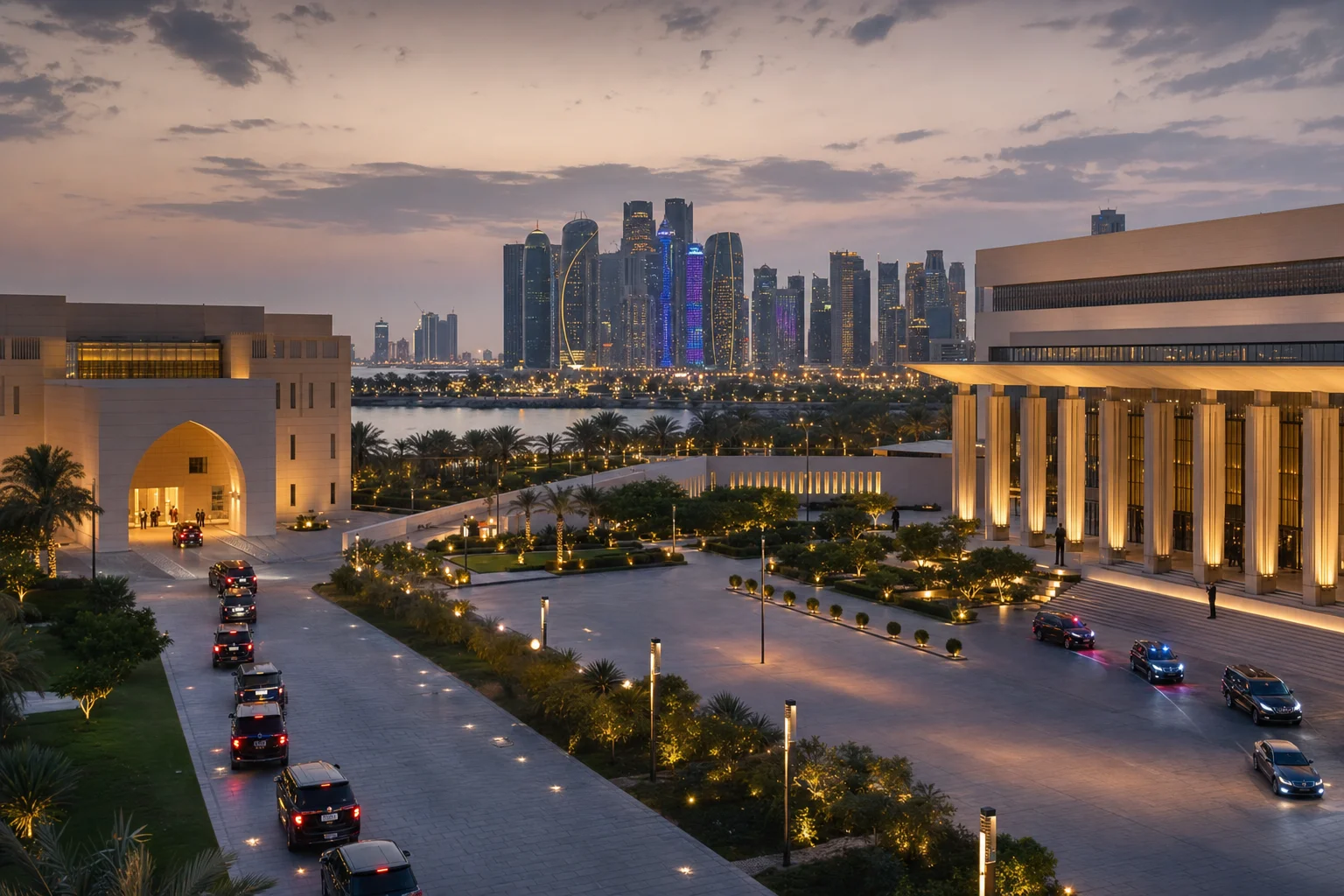
Steve Witkoff and Jared Kushner arrived in Doha as Trump claimed Iran requested talks. Qatar's foreign ministry said no direct U.S.-Iran meetings are scheduled. Tehran's delegation handles Hormuz implementation and frozen assets only — while Article 5's transit dispute remains unresolved.
On Monday, Donald Trump posted on Truth Social that Iran had requested a meeting in Qatar. White House press secretary Karoline Leavitt told Fox News that Steve Witkoff and Jared Kushner would fly to Doha for “high-level meetings this week.” By Tuesday, both envoys were in the capital — and Qatar’s foreign ministry spokesman Majed al-Ansari told reporters they would not meet Iranian officials. “To the best of my knowledge,” he said, “there are no direct meetings scheduled between the two parties in the coming days.”
Iran’s foreign ministry spokesperson Esmaeil Baghaei had already closed that door. Tehran would send an expert delegation to Doha on Wednesday to follow up on frozen assets and Hormuz implementation. “We will not have any negotiation meetings at any level with the American side in the coming days,” he said. Three capitals, three incompatible descriptions of the same diplomatic moment. The MOU is fourteen days old. The mediation gap is the story.
Article 5 and the Levy Nobody Priced
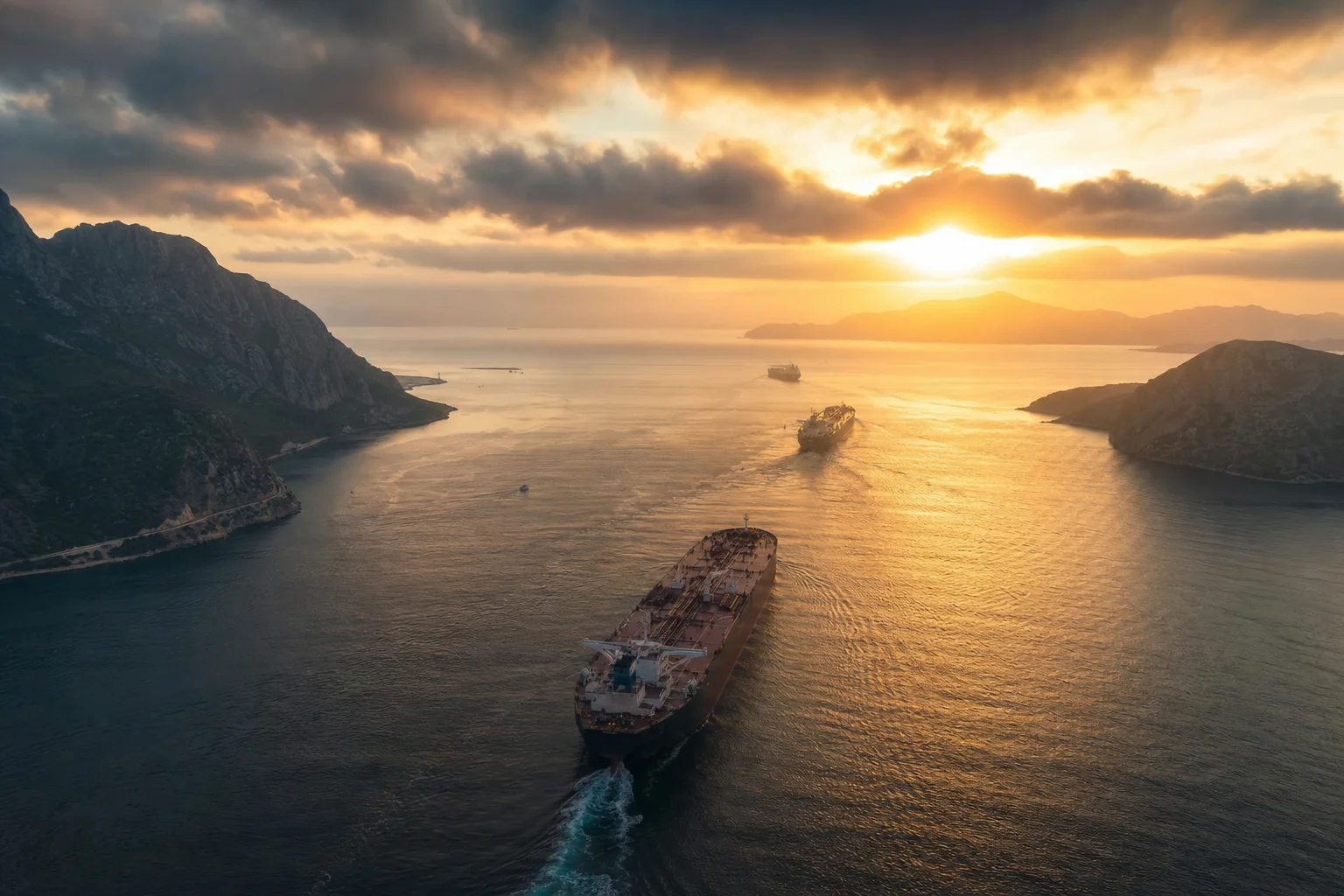
The June 17 memorandum commits Iran to reopen the Strait of Hormuz and Washington to lift its naval blockade. Article 5 specifies the terms: Iran “will make arrangements using its best efforts for the safe passage of commercial vessels with no charge for 60 days only from the Persian Gulf to the Sea of Oman and vice versa.”
That sixty-day toll-free window is not a permanent concession. It is a negotiating period — and Iran has been explicit about what follows. Parliament Speaker Mohammad Bagher Ghalibaf said Hormuz “will not return to pre-war conditions” and that Tehran retains the right to charge transit fees after the window closes, framing them as payment for navigation assistance and strait management. The published MOU text adds that Iran will define future administration of the waterway “in dialogue with Oman and the other Gulf States, but in line with international law.”
Washington reads Article 5 as reopening. Tehran reads it as a temporary fee waiver before sovereignty reassertion. Maritime lawyers and Gulf shipping operators read it as a liability they cannot underwrite without knowing which interpretation wins in mid-August. The dispute is not semantic. A transit levy on twenty percent of global oil and LNG flows is a price shock markets have not modeled — because the MOU’s signing ceremony treated Hormuz as solved.
Indirect Talks, Direct Stakes
Qatar’s role is structural, not ceremonial. Al-Ansari said Witkoff and Kushner would discuss “all regional issues,” including Lebanon and Hormuz, with Qatari mediators — the same channel Pakistan and Qatar used to broker the Versailles signing. Technical talks between U.S. and Iranian teams have continued on the margins, he confirmed, even without high-level face-to-face sessions.
Tehran’s Wednesday delegation reflects that architecture. Baghaei said the trip concerns implementation of MOU provisions on sanctions-blocked Iranian funds — assets Qatar holds as financial intermediary, to be transferred through future negotiations. Hormuz deconfliction corridors, mine clearance sequencing, and insurance protocols are on the technical agenda. What is not scheduled is a session where American and Iranian principals negotiate Article 5’s meaning before the mid-August deadline.
Vice President JD Vance offered a rosier read on Tuesday, telling reporters the strait is “open to oil traffic” with shipment levels outperforming pre-war volumes. Maritime tracking tells a more cautious story. Traffic rebounded to roughly seventy-three vessels daily before a weekend tit-for-tat — Iran struck two commercial tankers including a Qatari crude carrier, the U.S. retaliated against coastal IRGC sites, and both sides stood down late Sunday. The MOU survived contact with reality. It did not prosper on it.
The Mediation Gap Markets Ignore
Brent crude settled below $79 after the Versailles signing. Equities rallied on the assumption that a four-month Hormuz supply shock was ending. That trade prices the MOU’s headline — reopen the strait, lift the blockade — not its footnotes. Article 5’s sixty-day clock runs whether or not Doha produces a direct meeting. The transit levy question matures whether or not Witkoff sits across from an Iranian counterpart.
Indirect mediation can work. Qatar contained the weekend escalation and kept technical channels open after Bürgenstock’s strain. But indirect mediation cannot resolve a dispute both sides have defined in incompatible terms. Iran insists vessels must use Iran-defined corridors. The U.S. insists on unobstructed navigational freedom. Neither side is wrong within its own reading of Article 5. Neither reading is compatible with the other’s.
What Mid-Week Will Test
Through Wednesday and Thursday, three signals will clarify whether the MOU’s implementation gap is bridgeable or structural. First, whether Qatar’s mediators can produce a written understanding on Hormuz corridor rules before the next shipping insurance renewal cycle. Second, whether Tehran’s expert delegation advances frozen-asset release — the financial sweetener that keeps Iran inside the framework. Third, whether Trump continues to claim direct talks Iran denies, or adjusts to the indirect format that is actually functioning.
The peace process is alive. That is not the same as saying it is working. Doha has mediators, technical delegations, and a fourteen-point memorandum whose most contested clause governs the world’s most important oil chokepoint. It does not have, as of mid-week, a peace table — and the distinction matters for every tanker owner and every portfolio that priced the strait as open.
Trump’s victory lap assumed the hard part was signing. Article 5 suggests the hard part begins when the toll-free window ends and someone must decide who owns the strait’s price. Until Doha closes that gap — directly or through mediators patient enough to translate incompatible readings — the rally remains a bet on diplomacy nobody has yet scheduled to meet.
Continue reading


Sources
BBC, CNN, Al Jazeera, Jerusalem Post, TRT World on Doha delegations; MOU Article 5 text; Reuters and iran-mou coverage on transit fees; upfront reporting on weekend tit-for-tat and Qatari crude carrier strike


