

A Ukrainian strike Wednesday damaged two Novorossiysk grain terminals. By Thursday Delo Group's KSK had suspended too, taking all three hubs offline and idling about 75 percent of Russia's Black Sea grain capacity. Kyiv floated a mutual port-strike halt via a third party — a signal the shock is now live enough to bargain over.
Wednesday’s Ukrainian drone-and-missile barrage on Novorossiysk damaged two of the port’s three grain terminals — NZT and NKHP — and hit the last major Russian naval base on the Black Sea. That was the “damaged” version of the story. Thursday completed it. Delo Group suspended operations at KSK, Russia’s largest sea grain terminal, citing staff and infrastructure safety. KSK itself was not reported as hit. It went dark anyway.
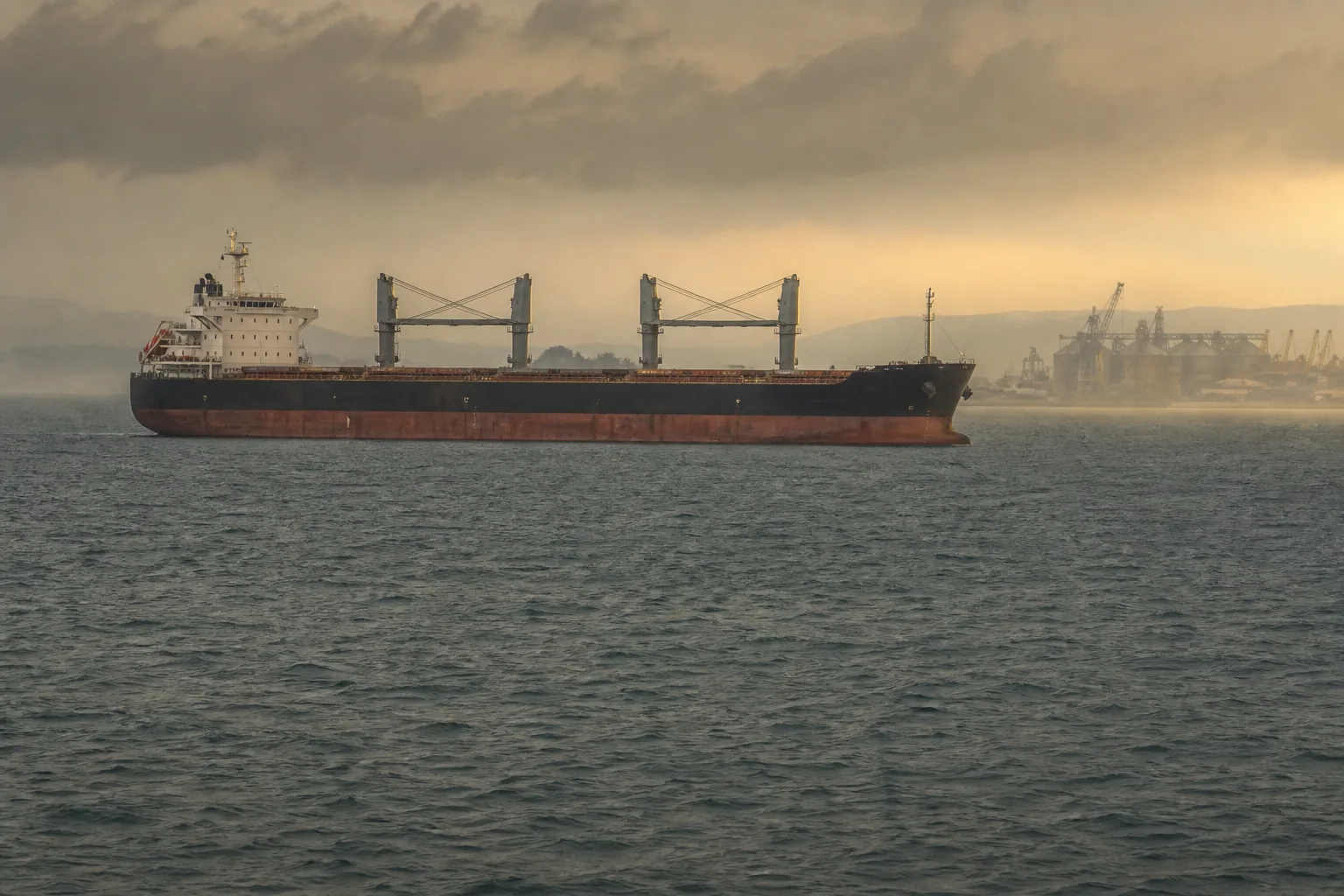
All three hubs are now halted. Together they account for about 24.6 million tonnes of annual throughput — roughly 75% of Russia’s Black Sea grain-terminal capacity. This is no longer a watch item. It is a live capacity shock.
From Two Terminals Down to a Corridor Closed
The damage is uneven, which is why the corridor still matters more than any single berth. Sources told Reuters that NKHP’s loading gallery is badly hurt and could stay offline for months. NZT took less damage and might restart sooner. KSK’s halt is a safety decision, which means it can, in theory, reverse faster than steel can be repaired — if anyone believes the airspace is quiet.
They should not, yet. A late-July strike already wounded the Taman Grain Terminal. Azov Sea restrictions since July 10 had already made Black Sea ports the residual valve. Seaborne Russian grain exports fell about 20% year on year in July. Analysts had already been penciling a ten-year low for August even before this week’s barrage. Sovecon’s Andrey Sizov put the new terminal suspensions at 0.7 to 1.2 million tonnes of lost August exports. The Russian Grain Union’s Arkady Zlochevsky said monthly shipments may struggle to reach two million tonnes, versus 5.7 million a year ago.
Moscow says it will reroute toward the Baltic and Caspian. That is geography as coping mechanism, not a substitute for Novorossiysk’s draft, silos, and ship-loaders. Chokepoints do not politely relocate. The same lesson showed up when cheap drones, not warships, shut Hormuz: insurance, safety, and idle infrastructure close a corridor faster than a navy can reopen it.
The Pause Offer Is the Tell
The newest fact is diplomatic, and it is more interesting than another damage photo. A source familiar with the matter told Reuters that Ukraine has transmitted, via a third party, an offer for both sides to halt attacks on civilian targets in the Black Sea. There was no reported Russian answer as of Thursday.
States do not shop a mutual port-strike halt because the campaign is going well. They shop it when both sides can see that commercial infrastructure has become a shared liability — grain going out of Russia, grain going out of Ukraine, and a world market that prices the interruption. Kazakhstan Grain Union’s Yevgeny Karabanov warned that Russia and Ukraine together could fall 30 to 40 million tonnes short of world grain supply, with food prices potentially 15–20% higher. That is the household channel Thanksgiving already taught Americans to feel in the grocery aisle.
It also collides with the other choke. Oil has been the inflation veto on Fed easing through Hormuz. Grain is the quieter twin: a second calorie-and-freight shock arriving while energy premia and soft-landing hopes still refuse to share a tape.
What “Fully Offline” Forces
Watch three clocks. First, whether KSK’s safety shutdown reverses in days or hardens into a weeks-long idle. Second, whether NKHP’s gallery really is a multi-month outage — that is the structural cut. Third, whether Moscow answers the port-halt offer. A pause would confirm that both capitals now treat Black Sea commercial targeting as too expensive. Silence, or another strike on Odesa or Izmail, would confirm the opposite: that food-export infrastructure remains a weapon.
The recursive read is simple. Damaged terminals are a raid. Three hubs dark, three-quarters of Black Sea grain capacity idle, and a ceasefire-on-ports already in the diplomatic mail — that is a market. Treat it as one until a ship actually loads.
Continue reading


Sources
Reuters via Baird Maritime Aug. 13 on KSK/Delo Group suspension, NKHP and NZT damage, 75% Black Sea terminal capacity, 0.7–1.2 mt August export cut, third-party port-halt offer; BBC on Wednesday Novorossiysk strike and Baltic reroute; Russian Grain Union August shipment comments; Sovecon; Taman late-July strike; Azov restrictions since July 10


