

Atlanta Fed interim President Cheryl Venable said Tuesday inflation remains too high and that the path back toward 2% still depends on Middle East energy risk. Iran restated Hormuz stays closed until blockade, sanctions, and reparations demands are met — a supply gap the Fed’s demand tools cannot reopen.
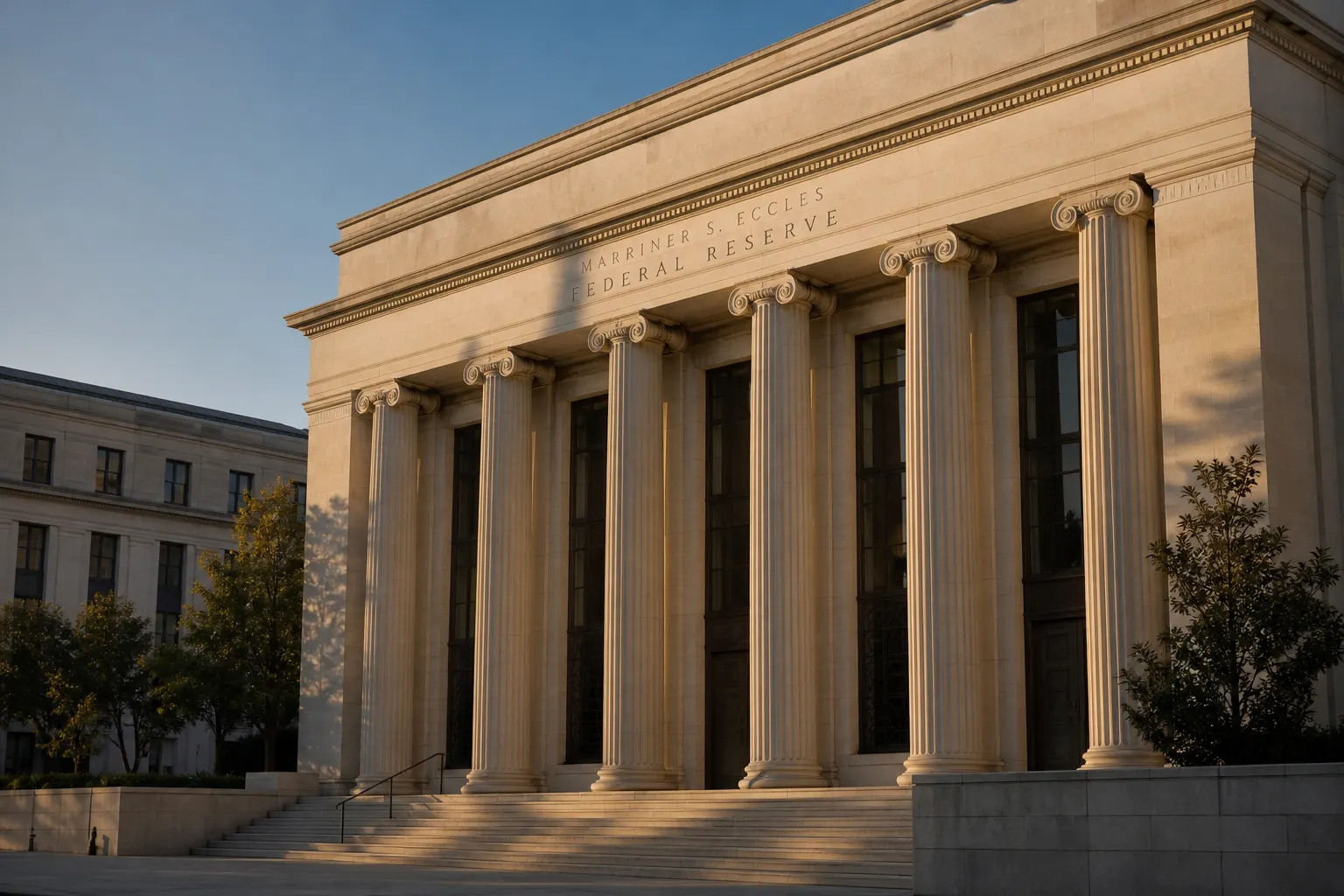
The Federal Reserve can raise the cost of money. It cannot reopen a shipping lane.
That asymmetry is what Atlanta Fed interim President Cheryl Venable put on the table Tuesday: inflation remains too high — she noted it has been for years — and the outlook still depends in part on geopolitics in the Middle East. She is a non-voter on the 2026 FOMC, which makes the remark less a formal signal than a plain-language confession. The soft-landing path now runs through barrels Iran can still withhold.
Peace Was Priced; The Strait Was Not Delivered
Markets have practiced this mistake before. When Versailles frameworks and Swiss calendars flashed “deal,” crude and equities treated reopening as a fact rather than a negotiation. Iran MOU markets priced peace while risks remained, and the broader tape priced in peace faster than tankers cleared the choke point. Tuesday’s senior Iranian line restated the harder ledger: Hormuz stays closed until U.S. blockade, sanctions, and reparations conditions are met. Diplomacy can be “advanced”; transit can still be zero.
That is why Swiss talks that survived political strain still jolted oil whenever implementation lagged the headline. Venable’s contribution is to say the quiet Fed part aloud: you do not get a clean cut cycle while that gap sits in the CPI basket.
Supply Gaps Are Not a Demand Story the Fed Can Fine-Tune
Interest rates and balance-sheet policy act on borrowing and spending. A conditionally closed Strait of Hormuz is a physical constraint. Raise rates and you may cool domestic demand; you do not move Omani lane maps or Tehran’s price for reopening. Hold rates and hope for diplomacy, and you still sit with energy that can re-accelerate headline inflation if talks fail.
The trap is dual-mandate ugly. Forcefully fighting a supply shock risks labor-market damage. Looking through sticky energy while inflation has already lived above target for years risks teaching households that 2% is aspirational. Earlier this summer the same collision showed up as rates meeting oil as the binding soft-landing constraint. Venable’s Tuesday line updates that thesis for an August in which Iran’s conditions, not a one-quarter “look-through,” remain the live variable.
There is even a darker twin of the same choke: forced efficiency and demand destruction that arrives as an accidental climate lever nobody voted for. That does not rescue the Fed. It only proves how far the energy gap reaches once the strait stops behaving like a utility.
What Changes for Policy and Portfolios
For the Committee, “data dependence” now includes tanker counts and diplomatic preconditions, not just payrolls and core services. For portfolios, rate-cut calendars that ignore Hormuz are fiction with a CME wrapper. Soft landing is still possible — but only if energy supply normalizes on a timeline faster than expectations re-anchor higher.
The recursive point is blunt. The Fed’s inflation strategy did not fail in a model. It met a geography. Until Hormuz traffic returns as a physical fact, easing remains a Middle East option priced in Washington’s language.
Continue reading


Sources
August 11 wire on Atlanta Fed interim President Cheryl Venable linking above-target inflation to Middle East geopolitics/energy; Tuesday Iran line on conditional Hormuz closure; prior Culled coverage of Iran MOU peace pricing, Bürgenstock oil strain, Hormuz climate lever, and rates-meet-oil.


