

Oil is no longer a side risk to the policy path. As Brent hovers near $93 and traders lift July and September hike odds, U.S. yields transmit a Gulf supply shock into the Fed funds curve — while Bank of Japan sources warn fuel and yen costs could force a faster pace at home.
Treasury markets spent Wednesday translating a war into a policy path. The ten-year yield rose more than three basis points to about 4.66%. The two-year, which tracks the front end of Fed policy, climbed more than four basis points to roughly 4.30%. The thirty-year held near 5.15%. Those are not panic prints. They are the bond market’s way of saying the soft-landing script — softer inflation, patient easing, energy as noise — no longer clears.
Crude settled up around three percent as U.S.–Iran exchanges stretched into another day and Hormuz risk stayed live. Brent hovered near $93. Money markets rebuilt what the June CPI surprise had briefly dismantled: CME FedWatch showed roughly a 34% chance of a hike this month and about a 78% chance of at least a quarter-point move by September. Deutsche Bank’s Jim Reid noted July hike odds had already recovered to 26% by Tuesday’s close — the highest since the CPI miss — after plunging as low as 10% the day after the print. Oil did in forty-eight hours what a soft print could not permanently erase.
The Binding Force Is Duration, Not the Print
The constraint behind rates meeting oil is not whether yields tick up on a Wednesday. It is whether the Gulf premium lasts long enough that the Federal Reserve must treat energy as transmission into core inflation, not as an exogenous one-off. A single CPI miss still matters for optics. A choke-point war that keeps Brent in a $90–$100 band rewrites the reaction function. That is the same fracture Culled tracked when Swiss talks and oil markets tried to price diplomacy against freight risk, when Hormuz became an accidental climate lever for anyone still pretending barrels were outside the model, when markets priced in peace that shipping never fully confirmed, and when the Iran MoU briefly sold a clear that the straits never delivered.
Capital hears the message first. Equities can still narrate growth. Treasuries cannot. When the front end and the belly both reprice hike odds while oil holds the bid, the binding actor is not the equity tape. It is state force on two planes: the conflict that throttles barrels, and the central banks that must decide whether those barrels are temporary weather or a lasting tax on the price level.
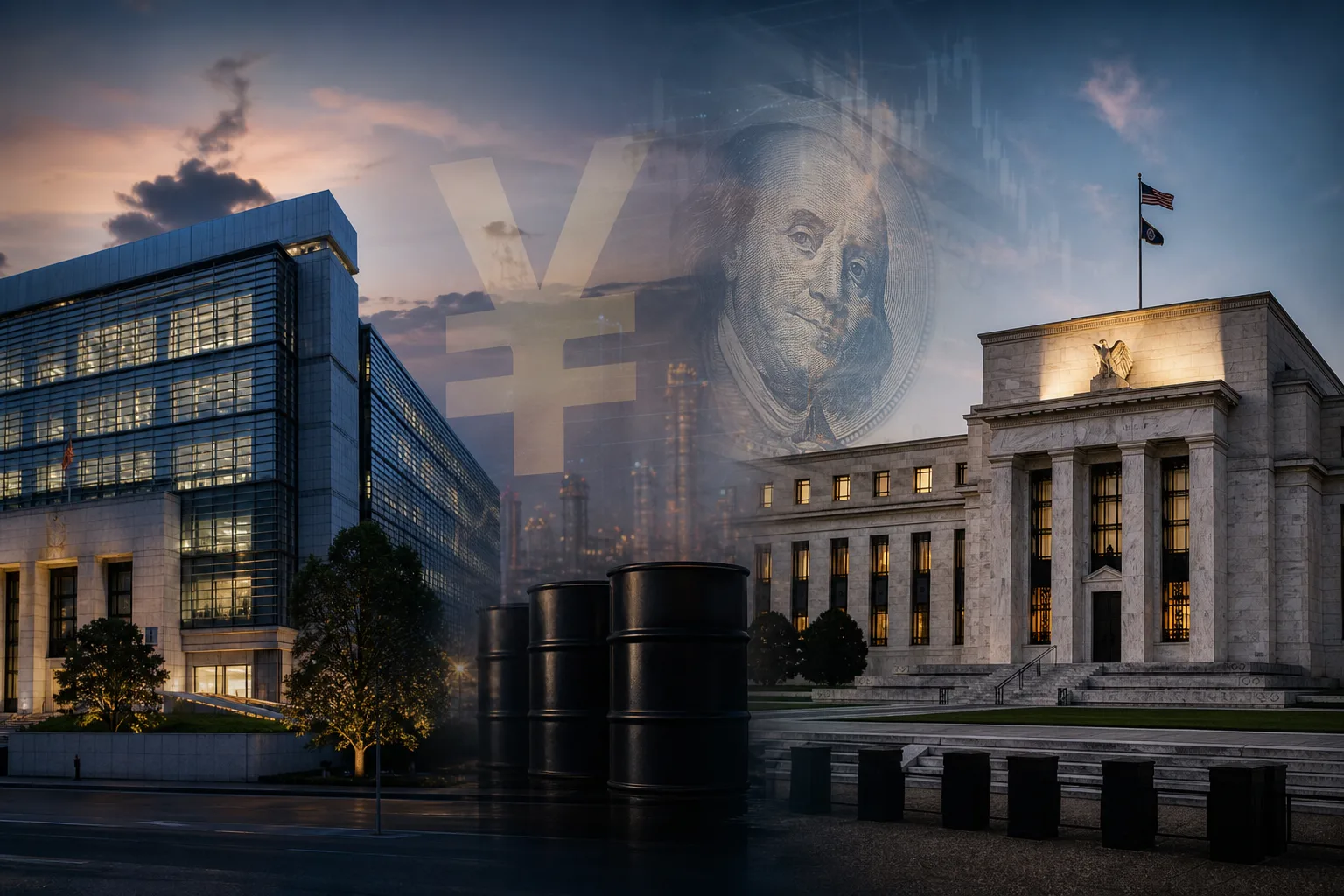
Tokyo Rhymes With Washington
The same constraint is audible in Tokyo. Bank of Japan sources told Reuters the bank remains alert to upside price risks that could force a faster hike path than markets’ twice-a-year baseline, even if next week’s meeting holds the policy rate at 1%. The drivers they name are familiar: a weak yen passing through import costs, and fuel pressures tied to the Middle East conflict — plus AI-related metal and chip costs that lift a broader goods basket. Underlying inflation already sits near the 2% target. Modest overshoots get more attention when the Gulf premium is live.
That dual-capital rhyme matters. Soft landing assumed one dovish reaction function and a temporary energy spike. Rates meeting oil across Washington and Tokyo means two policy shops watching the same choke-point arithmetic. If Hormuz risk fades quickly, hike odds compress and the June CPI narrative gets a second life. If the premium sticks, Warsh-era Fed politics and BOJ vigilance point the same way: oil is no longer outside the model. It is the constraint the model must absorb.
The actionable read is simple. Watch duration of the Gulf premium, not the next soft print alone. Yields and FedWatch probabilities are messengers. The binding force is whether a war that moves barrels forces two central banks to treat energy as core — and whether capital, once it prices that, leaves soft landing with anywhere left to stand.
Continue reading


Sources
July 22 CNBC Treasury yields and CME FedWatch hike odds; Brent near $93 and ~3% crude rally on extended U.S.–Iran strikes; Reuters BOJ sources on yen and Middle East fuel-cost upside risks; prior Culled coverage of Hormuz, Bürgenstock talks, and Warsh-era Fed reaction function


