

India's Sensex rose 363 points on Friday after Federal Reserve Governor Christopher Waller opened the door to a September pause. The Nifty barely moved. Brent held the mid-nineties, and West Asia risk capped the tape. Mumbai priced cheaper dollars. It did not price a quieter Gulf.
The BSE Sensex closed Friday at 76,515.43, up 362.57 points, snapping four sessions of losses. The Nifty 50 added 24.25 points to 23,897.70 after tagging 24,005.75 and giving the extra back. Metals, private banks, and oil-and-gas names did the lifting. The Nifty Smallcap index printed a lifetime high. Bank Nifty finished essentially flat.
The spark sat in Washington, not Dalal Street. On Thursday, Federal Reserve Governor Christopher Waller told a Reuters interview that if the next two weeks of data keep showing disinflation, he would support holding the federal funds rate at the September 15–16 meeting. If August inflation comes in hot, he would consider a hike. Implied odds of a September increase dropped toward even money. U.S. equities rallied. Asia followed. Mumbai bought the pause.
A Fed governor can reprice the Sensex in a session. He cannot reopen the water India uses to import the barrel.
The Nifty told on the Sensex
A 0.48 percent Sensex bounce against a 0.10 percent Nifty close is not a broad risk-on. It is a handful of heavy names catching a global bid while the rest of the tape remembers the import bill. Brent spent Friday in the mid-nineties. The rupee firmed to about 94.49 per dollar on inflows and a softer greenback — useful, not decisive. Foreign institutional investors had been net sellers on Thursday. Profit-taking into the close was the domestic confession that the relief was borrowed.
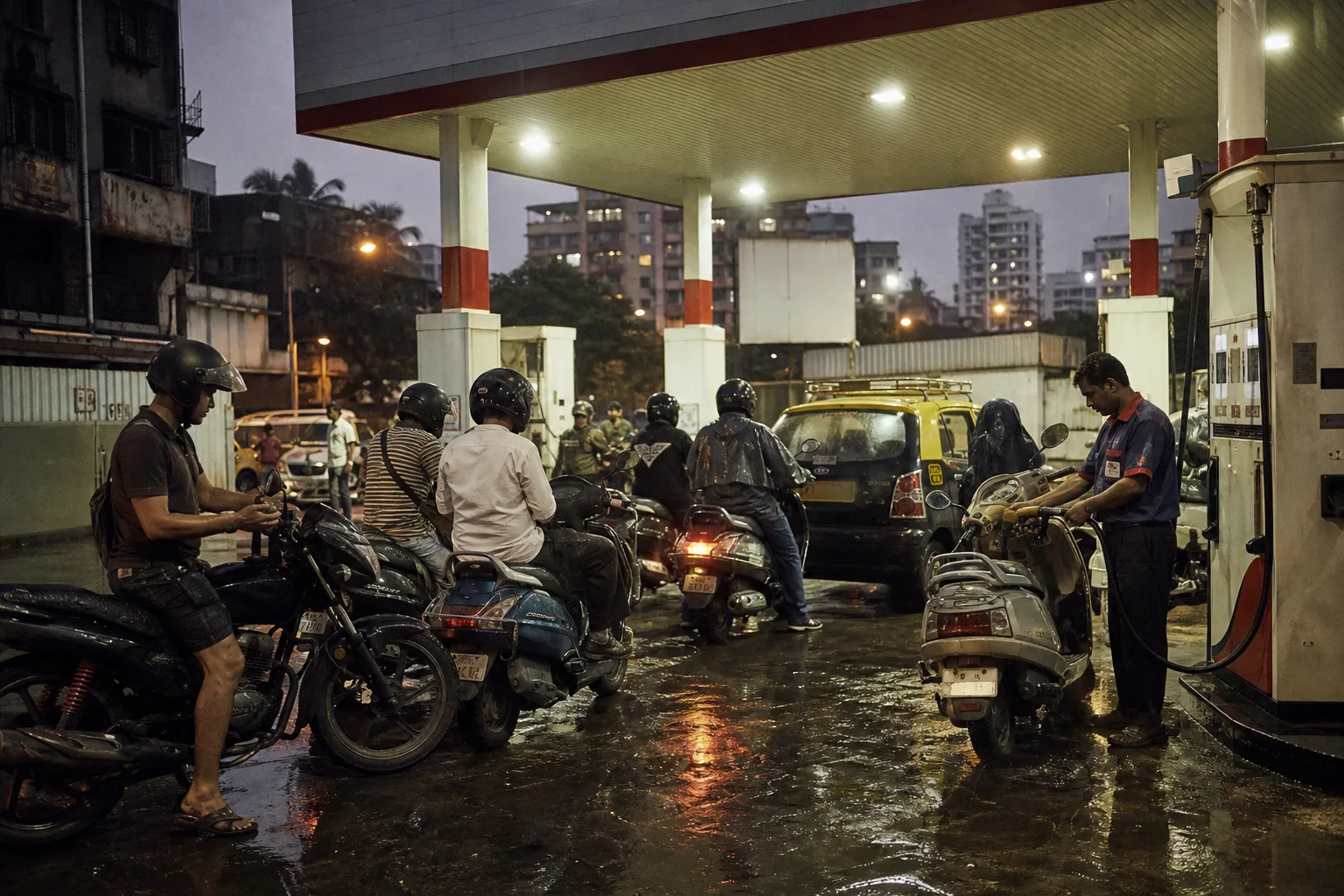
India still runs on barrels it does not pump. Australia and New Zealand have already been forced to treat Hormuz as a fuel-security ledger rather than a headline. Mumbai’s version of that ledger is quieter and larger: crude on the jetty, diesel in the CPI, and an equity market that can look brave in the last hour of a Fed speech.
Waller named the war. He did not cancel it.
Waller’s own reaction function put “military conflicts” beside trade policy and AI as the uncertainties that still move prices. That is the same bind Atlanta’s Cheryl Venable named when she tied the inflation path to Middle East energy. A pause is a statement about U.S. demand. It is not a statement about Gulf supply. Three-month core inflation is still above the Committee’s two percent goal. Waller is willing to wait if August cooperates. He is not willing to look through a reversal.
Mumbai’s Friday tape treated the wait as the news. The Gulf treated the war as unfinished. Global equities have priced peace before the strait delivered it. India’s version is more specific: a rate-sensitive bid layered on top of an oil-import constraint that does not care who won the last U.S. session.
The weekend arrived after the close
Friday’s buyers did not have Saturday. Tasnim reported missiles hitting an Iranian tanker at Kharg’s anchorage after Mumbai had already locked in the rebound. CENTCOM had not immediately confirmed. Brent was already holding the nineties. Diesel in the United States was already at records. The sequence is the point. The Sensex rallied on a conditional Fed hold. The next Gulf incident did not wait for the FOMC.
August CPI and the September 15–16 meeting will decide whether Waller’s pause survives contact with U.S. prices. India’s test is cruder. If Brent stays in the mid-nineties and the waterway stays a managed risk, a 363-point Sensex bounce is a liquidity story, not a peace story. Cheap dollars help an importer. They do not replace barrels.
Continue reading


Sources
Friday Sept. 4, 2026 BSE/NSE closes (Sensex 76,515.43, +362.57; Nifty 23,897.70, +24.25; intraday Nifty high 24,005.75); Fed Gov. Christopher Waller, Reuters NEXT Newsmaker, Sept. 3 (conditional hold if August inflation cools; hike if it does not; FOMC Sept. 15–16); CME FedWatch hike odds near 50% vs ~63% prior session; rupee ~94.49; Brent mid-$95s; Nifty Smallcap lifetime high; Thursday FII net selling; weekend Kharg tanker reporting; prior Culled analysis of peace-priced tapes, Fed-through-Hormuz, and importer fuel risk.


