

G20 finance ministers opened September in Asheville, North Carolina, aiming to align on energy-driven inflation. Treasury Secretary Scott Bessent used the forum to push secondary sanctions on buyers of Iranian crude, European officials balked at Russian Finance Minister Anton Siluanov's presence, and Brent stayed above ninety-two dollars as Hormuz tanker strikes kept the oil premium live.
The binding constraint at Tuesday’s G20 finance session was not the ECB’s September hike path or Japan’s yield curve. It was Washington’s willingness to treat Iranian oil purchasers as sanction targets — and the room’s uneven appetite for following.
What Bessent Wanted
Treasury Secretary Scott Bessent arrived in Asheville with inflation on the agenda and Iran on the microphone. European and Asian desks reported he pressed counterparts to accept secondary sanctions on entities still taking Iranian crude — the mechanism that turns U.S. primary Iran restrictions into a compliance obligation for banks, insurers, and refiners outside American jurisdiction.
The pitch fits a pattern Bessent has run since August’s “economic D-Day” rhetoric: isolate Tehran’s export finance, keep Hormuz pressure on the table, and force buyers — particularly in Asia — to choose between discounted barrels and U.S. market access. Beijing’s continued Iran trade has been the recurring subtext; Monday’s wire copy still had Gulf desks parsing whether the next package names Chinese state refiners explicitly or leaves ambiguity as leverage.
Secondary sanctions convert a bilateral U.S. Iran policy into a global clearing problem — and G20 is where that conversion either gains allies or stalls.
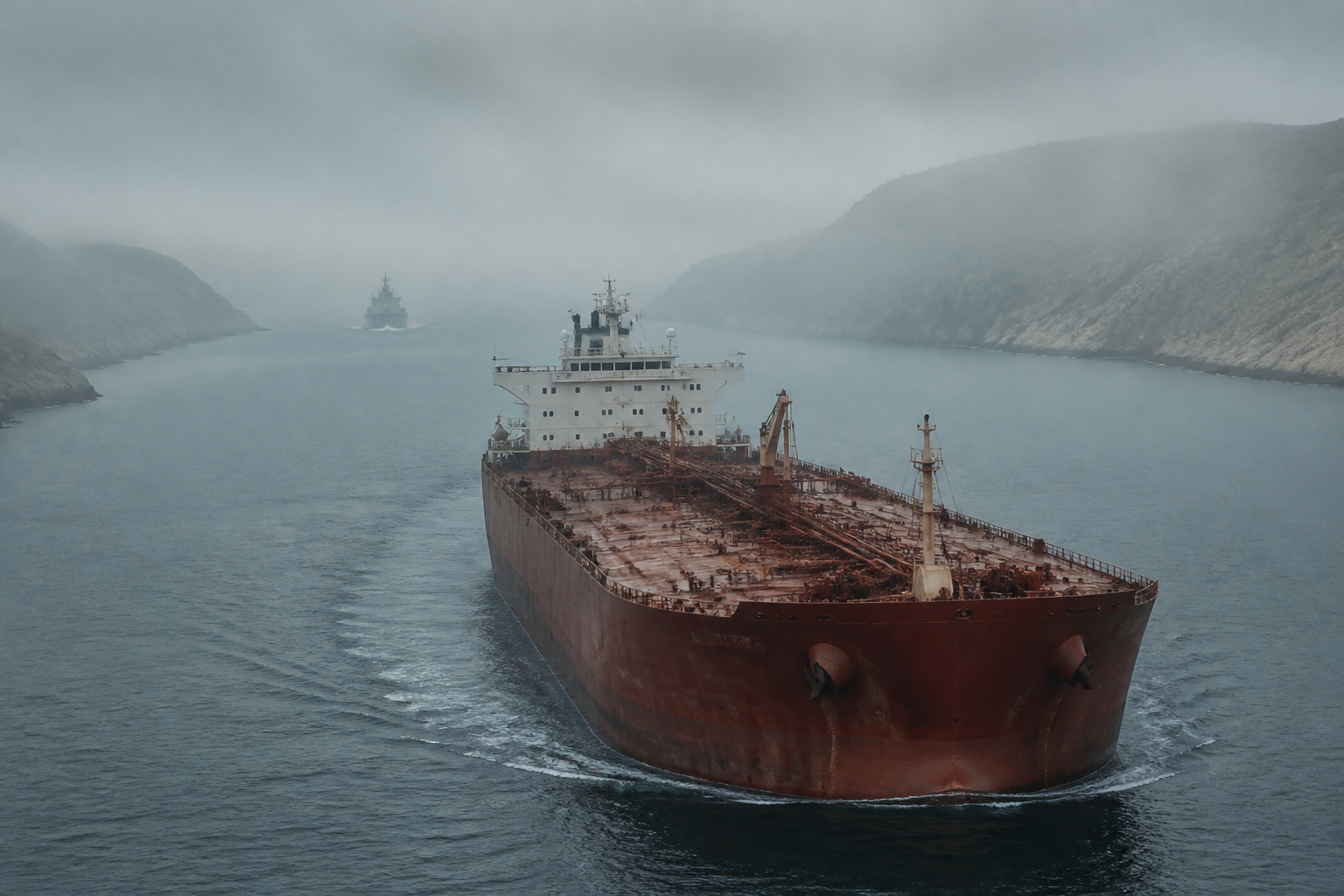
Bessent also told reporters the Strait of Hormuz would be “bypassed in two years” and become, in his phrase, a worthless piece of water as alternative routes mature. Markets did not agree on the timeline: Brent settled near $90.49 on Monday and traded above $92 on Tuesday after two Saudi-loaded supertankers were struck off Khasab, Oman, completing outbound Hormuz transits. The twin hits landed the same week Tehran’s June Islamabad memorandum expired without a durable reopening — a detail we flagged when markets priced peace before the strait did.
Why Europe Walked In Angry
The summit’s other fracture was diplomatic, not commercial. Russian Finance Minister Anton Siluanov attended the Asheville sessions, blindsiding several European delegations who had expected Moscow to be excluded from at least the ceremonial photo line after two years of Ukraine-related isolation. Allies demanded Siluanov be kept out of the group portrait; the host side blamed Canada for trade tensions when questioned about summit optics.
That fight matters for Bessent’s Iran campaign. Secondary sanctions require correspondent-banking cooperation European treasuries still control. Finance ministers who spent the morning arguing over Siluanov’s seat are not naturally positioned to align on a U.S.-led escalation against Iranian oil buyers in the afternoon — especially when eurozone August inflation printed at 3.3%, the highest since September 2023, and energy costs drove nearly the entire move. Madrid’s 4.5% reading and Frankfurt’s bund at a fifteen-year high near 3.36% are the inflation story finance ministers were supposed to solve together.
What Markets Heard
Capital heard coordination fail before communiqué language confirmed it. The September duration selloff — U.S. ten-year yields touching 4.78%, UK thirty-year gilts at 5.89%, Japan’s benchmark crossing 3% — already embeds an energy inflation premium. Bessent’s sanctions push adds a second premium: compliance risk for any bank still clearing Iran-linked flows.
That is the tension in our prior Hormuz coverage. When Swiss talks survived strain but oil markets jolted anyway, the lesson was that diplomacy and price can diverge for weeks. When the market priced in peace while the strait barely functioned, the lesson was reflex, not resolution. Tuesday’s tape is the third variant: no peace reflex, no successful mediation headline — just supply strikes plus a Treasury secretary arguing both that Hormuz will matter less in two years and that buyers of Iranian oil should face financial isolation now.
Insurance and shipping desks have been the early transmission channel, as we mapped when drone strikes collided with cloud infrastructure risk near Hormuz. Secondary sanctions deepen that channel: war-risk premia are voluntary; Treasury designations are not.
The China-Iran Loop
Beijing is the hinge. China remains the largest buyer of sanctioned Iranian crude, often routed through shadow fleets and opaque insurance stacks. Bessent’s G20 pitch, as reported on the wire, keeps that trade in focus without necessarily announcing new named entities at the summit itself — the threat of designation is part of the pressure.
Iran’s response lane ran parallel, not through Asheville. President Masoud Pezeshkian told the Shanghai Cooperation Organisation summit in Bishkek that Tehran would reciprocate if Washington returned to the June Islamabad framework, even as the deal’s sixty-day clock expired Monday. Markets have learned to treat such offers as background noise when tankers are hit inside a week. The accidental climate lever in Hormuz disruption — higher shipping miles, rerouted barrels — remains a secondary effect capital only prices once primary supply tightens.
What Changes From Here
Three tests will tell whether Tuesday’s G20 session moved markets or merely described them.
First, whether Treasury publishes a secondary-sanctions package with named banks or refiners — not rhetoric, designations. Second, whether European finance ministries issue any supportive language or stay silent while protesting Siluanov’s presence. Third, whether Brent holds above $90 once the summit ends and traders return to eurozone CPI and U.S. labor data.
If Bessent gets formal allied buy-in, Iranian barrels become more expensive even without a naval blockade — compliance costs propagate through letters of credit and hull insurance. If he does not, Asheville becomes another forum where Washington announced financial violence and the rest of the G20 priced it as unilateral risk, the same way capital has treated prior Iran escalation cycles.
The summit was meant to coordinate on inflation. Instead it confirmed that energy supply and great-power access are the same meeting now — and that the Treasury secretary’s binding constraint travels farther than any communiqué draft.
Continue reading


Sources
Culled biztoc digest, world desk briefs, upfront banners, BreakingTheNews Bessent remarks, European press on Siluanov attendance


