

President Trump said Friday he would "pretty soon" declare the Strait of Hormuz a U.S. territory. Iran's deputy foreign minister answered that the waterway cannot be taken by tweet, carrier, decree, or election speech. The remark is a claim of ownership, not another turn of blockade language.
President Trump said Friday he would “pretty soon” declare the Strait of Hormuz a U.S. territory. Speaking at the Nassau County Police Academy in Garden City, New York, he tied the claim to a war he described as already won. “After we finish defeating Iran, which is being very badly defeated, pretty soon I’ll be declaring the Hormuz Strait a territory of the United States,” he said, then added the operational gloss: “Essentially that’s what we have. We have the blockade. No ships get through unless we want them to.”
That second sentence is the tell. A blockade is a wartime control on passage. A territorial declaration is a claim of title. One is a gun on the water. The other is a map.
A different legal object
The strait is not an empty rectangle waiting for a flag. Its waters include the territorial seas of Iran, Oman, and the United Arab Emirates, plus a corridor that international law treats as an international strait — transit passage, not a U.S. harbor. Legal scholars have already said that even the milder idea of a U.S. “guardian” toll, floated last month as a 20 percent fee, would collide with that regime. Annexing the channel would not be a bigger blockade. It would be an attempt to rewrite whose shoreline the water is.
Iran’s deputy foreign minister for legal and international affairs, Kazem Gharibabadi, answered on Saturday in that register. The strait “has been Iranian, is Iranian, and will remain Iranian,” he wrote, and it opens or closes only under Iran’s command. Then the line that names the category error: it “cannot be seized by a tweet, nor by an aircraft carrier, nor by issuing an order, nor by an election speech.”
He is the same official who, days earlier, told partners that an Iran–Oman transit text would not reopen the waterway until Washington lifted its naval blockade and restored oil-sanctions relief. Tehran is not bargaining over a punchline. It is bargaining over who gets to say the strait is a legal object.
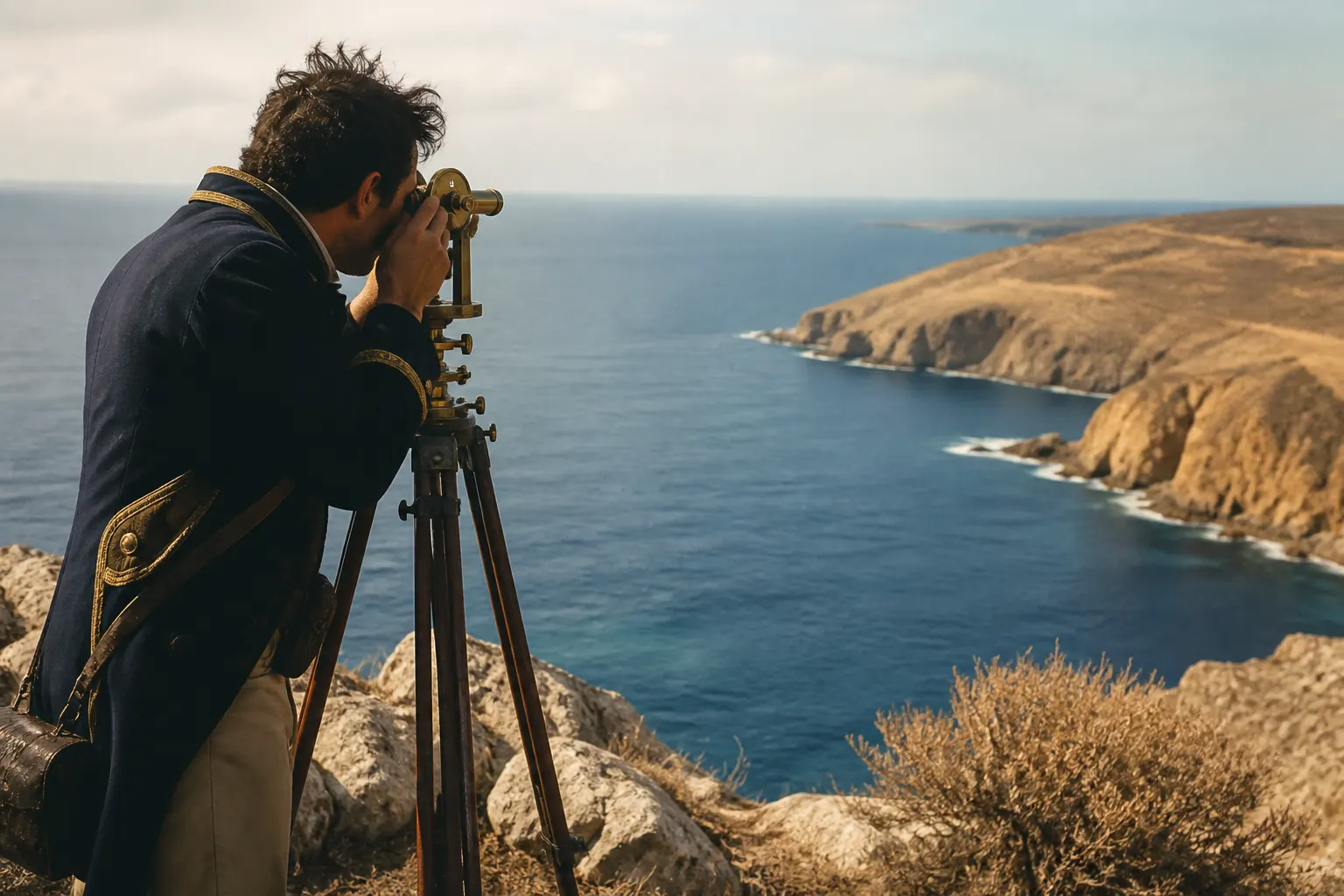
An unnamed senior White House official told reporters the Garden City line was a joke and that Trump had not met advisers on a post-war territorial decree. He did chuckle. He also said, “It’s true.” Markets and foreign ministries do not price the chuckle. They price the category: once a president places Hormuz in the same rhetorical bin as Greenland and a “growing nation,” the ceiling on what Washington might demand in a settlement has moved.
The water is already a statute fight
The remark lands on a strait that is already barely a market. Since late February, when the United States and Israel opened the war, Iran has treated the channel as a wartime latch. The United States has run its own blockade and, this week, fired on a cargo ship it said was trying to reach Iranian ports. Trump called that wall “unstoppable” and “a great service for the world.” Iran’s parliament, the same week, moved to write a hostile-flag transit ban into law. Both capitals are converting guns into paper. Friday’s speech tries to convert paper into a deed.
Washington has spent months rejecting Tehran’s bid to institutionalize corridor management as unenforceable legal theater. A U.S. territorial claim is the mirror image of that complaint. If Iran cannot mint a right to meter an international strait, neither can a midterm rally.
The war remains unresolved and, at home, unpopular: a late-July Quinnipiac poll found 60 percent of U.S. voters opposed to the Iran campaign. Munitions strain has already limited how much more kinetic pressure the Pentagon can add. That is why the language migrated from ships to soil. When you cannot close the war, you try to rename the water.
The actionable distinction is simple. Insurers already price a closed Hormuz. They have not yet priced a U.S. claim of title on a chokepoint that other sovereigns treat as their own. One is a risk premium. The other is a contest over whose map the premium sits on.
Continue reading


Sources
Al Jazeera, USA Today, The Guardian, and Gulf News reporting on Trump's Aug. 14 Garden City remarks and Gharibabadi's Aug. 15 rejection; WSJ via social reporting of an unnamed White House official calling the line a joke; prior Culled coverage of Hormuz law, Iran-Oman transit sequencing, and the U.S. trust deficit.


