

Argentina's first Expo Auto Chino opened October 2 at BA Ferial in Buenos Aires, gathering 26 Chinese marques after a nine-year absence of a proper new-car salon. Registrations from Chinese brands approach 10% of the market; BYD, the volume leader, skipped the hall. Decree 49/2025's zero-tariff electrified quota is what actually moves metal onto Argentine roads.
Buenos Aires has not hosted a full-scale new-vehicle salon since 2017. That drought ends this weekend with a twist: the hall is organized by origin, not by incumbency. Expo Auto Chino — October 2 through 4 at BA Ferial on the Costa Salguero riverfront — lines up twenty-six Chinese marques across roughly 13,000 square meters, with organizers expecting on the order of 20,000 visitors. Chery, Geely, GWM, Changan, MG, Jetour, and a long tail of badges most Europeans cannot spell share carpet space while importers stage debuts that would have been spread across twelve months of Instagram launches.
Why Argentina, and why now
The obvious answer is arithmetic. Chinese-origin brands closed 2025 near 5% of national registrations; by mid-2026 they were brushing 10% on many months, with more than 29,800 units in the January–July window alone. Add vehicles built in China but sold under American or European nameplates — the Ford Territory is the textbook example — and one in seven July registrations carried a Chinese factory stamp. That is not a niche curiosity; it is share theft in a market that was still shrinking overall.
The policy layer matters as much as the product map. Decree 49/2025 set a 0% import tariff on electric and qualifying hybrid vehicles inside an annual quota of up to 50,000 units for five years. Electrified registrations reportedly rose roughly 300% year on year in the first half of 2026, with plug-in hybrids up even faster. Importers did not need a themed expo to notice; they needed clearance to land containers. Javier Milei’s broader import liberalization — the same macro climate that keeps household balance sheets under stress even as capital returns — lowered the fence before Chinese OEMs lowered the price.
Argentina also sits where Chinese exporters want a Latin American showroom: dollarized aspirations, thin local assembly competition for crossovers, and consumers who ask on forums whether Chinese cars are “reliable” the way they once asked about Korean brands. The expo is CIDOA’s importers answering that anxiety in person — touch the leather, sit in the third row, compare ten Haval-adjacent SUVs before lunch.
What the stands are selling
Not every gleaming crossover behind the rope is a launch. Trade guides distinguish display stock from first Argentine sales; the value of the weekend is density, not a single mic drop. Still, several lines are genuinely new to the market.
Omoda & Jaecoo, Chery’s international division, is using the fair for its public Argentine debut, operating through a direct subsidiary rather than a legacy importer — four electrified configurations on the stand, including plug-in SUVs pitched against European soft-roaders at peso prices that would have been fantasy three years ago. GWM is showing Deepal and Soueast, sub-brands that signal how Chinese groups now market like Japanese keiretsu: one booth, many badges, shared platforms.
The importer map is familiar Argentine patchwork: Grupo Corven fields Chery, DFSK, and Foton; Belcastro handles BAIC, Arcfox, and Lynk & Co; other national distributors stack brands the way trading houses stack commodities. Stellantis appears only through Leapmotor — the lone traditional “terminal” on a floor otherwise populated by import chambers. Even ABB has a charger stand, because the story is not only sheet metal; it is whether the apartment garage can swallow a wallbox.
Readers searching “are Chinese cars good” or “BYD Argentina price” are really asking two questions: who honors the warranty when the peso jumps, and whether electrified drivetrains survive Argentine voltage and potholes. The expo does not settle engineering; it settles visibility — the same function Tokyo or Detroit salons served when those countries owned the narrative.
The residual: volume king, empty chair
The conspicuous absence is BYD. It is no longer a fringe importer; in September 2026 it ranked ninth nationally with about 1,584 registrations, roughly 3.4% of the entire market — from eighteen units in the same month a year earlier. Within the import chamber CIDOA, BYD’s August share approached 23%, nearly double July’s pace. Yet BYD declined Expo Auto Chino.
Organizers cite commercial reasons and hope for a second edition. People close to the company frame it sharper: BYD runs as a local terminal (a corporate subsidiary, not a classic importer) and dislikes a salon defined solely by nationality — there is no “German auto show” or “Japanese auto show,” their argument goes. BYD would attend a neutral industry fair; it will not lend its badge to a China-pavilion branding exercise while it is busy renting shopping-mall parking lots for its own crowds. Every other CIDOA Chinese member showed up; BYD stayed home and still won the month.
The expo measures importer solidarity; BYD’s registrations measure consumer indifference to the label on the tent.
That split is the piece wire copy underplays. Expo Auto Chino is part trade policy billboard, part nostalgia for a national auto salon, part coordinated answer to quality skepticism. What actually rewrites the fleet on Avenida General Paz is tariff engineering plus financing in pesos, the same levers patchwork trade blocs use elsewhere to pull supply chains toward new partners. Show floors recycle desire; decrees allocate volume.
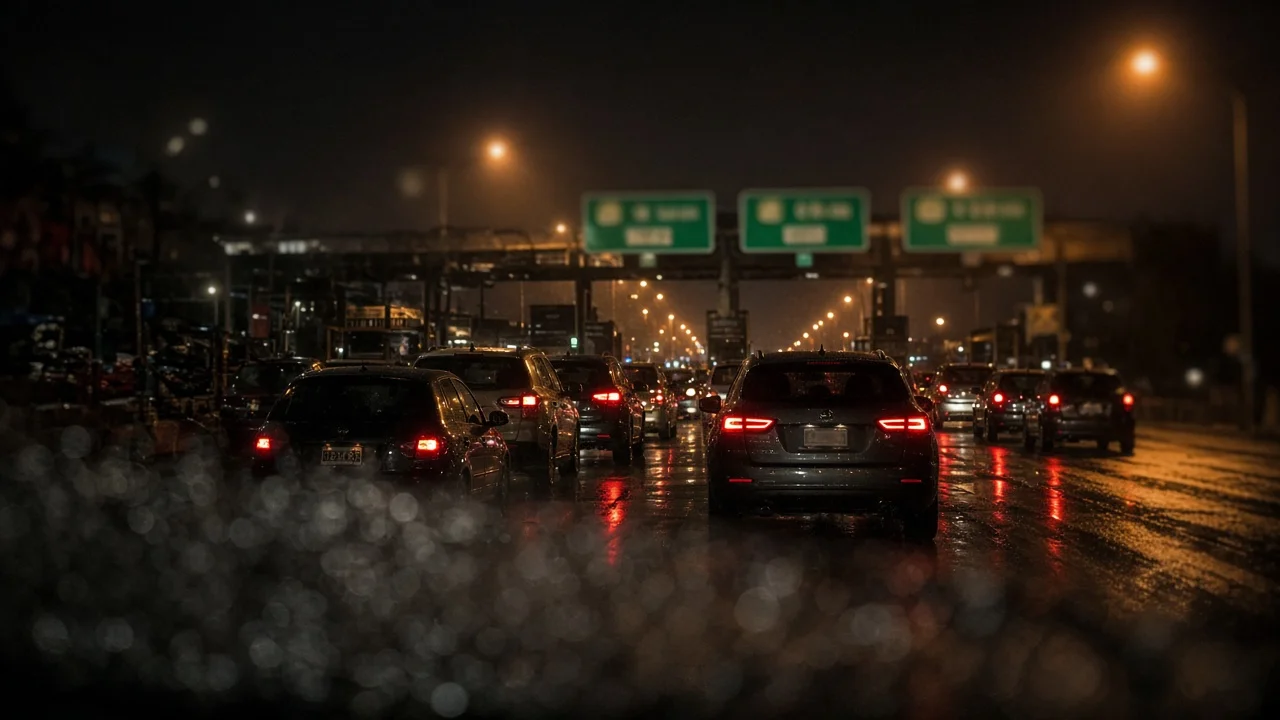
From registration slip to rush-hour texture
Patentamiento data is not poetry, but it is the fleet you will meet tomorrow. August’s CIDOA tally — 5,973 imported units, up 12% month on month — put Chinese names in seven of the top ten importer slots: BYD, BAIC, Chery, Haval, MG, Foton, Jetour ahead of the usual German and Korean fixtures. Chery’s jump from fourth to third place inside one month is the competitive texture behind the expo: these firms are fighting each other as hard as they fight Toyota.
For Argentine drivers the impact is mundane and immediate: more subcompact crossovers in ride-hail queues, more hybrid badges in supermarket parking, more service bays learning to scan Chinese CAN buses. For incumbents it is margin compression in the heart of the market — not luxury, but the fat SUV segment that paid for a decade of local assembly. For Beijing it is proof that South-South automotive diplomacy can ride consumer law rather than state fleet orders, provided the host government opens the dock door.
Watch three dials, not the confetti on opening night. Whether BYD joins a future neutral salon or keeps building parallel pop-ups. Whether Decree 49/2025’s electrified quota fills fast enough to trigger political backlash from domestic assemblers. And whether credit conditions — the same household leverage that makes Milei reform a gamble — let buyers convert showroom curiosity into sixty-month notes. The expo ends Sunday; the registrations accrete all year.
If you remember one image, make it the toll plaza at dusk: not a boardroom chart of market share, but brake lights stacked three deep — imported metal, local debt, and a government that decided electrified cars could land duty-free while the city argued about whether to trust the badge on the grille.
More in Geopolitics


Sources
Expo Auto Chino official site and Argentine trade press (MSA News, El Economista, Autoblog Argentina, Automundo); CIDOA August 2026 registration data via Diario de Autos and iProfesional; Decree 49/2025 electrified tariff treatment via Revista Mercado and Observatorio Sino-Argentino commentary
