

SPCX closed Monday at $171.09 after Morgan Stanley reiterated a $300 target. The note was the spark, not the thesis. Investors are beginning to price SpaceX as a three-part industrial system—profitable connectivity, capital-hungry AI, and Starship as the freight layer that links them—rather than as a launch vendor with side projects.
SpaceX shares closed Monday at $171.09, up 7.63%—the highest close in roughly three months. The stock sits about 27% above its $135 IPO price and roughly 58% above early-August lows.
The proximate trigger was easy to name. Morgan Stanley reiterated its Overweight rating and $300 price target, arguing that SpaceX looks expensive on conventional multiples but unusually cheap relative to expected growth. Adam Jonas’s framework reportedly puts the company near 30× expected 2028 EBIT, versus about 16× for large technology peers, but only about 0.3× EV/EBIT/growth versus roughly 0.5× for that group.
Other tailwinds helped: additional Buy ratings, strength across AI-related equities, Tesla’s recent momentum, and continued enthusiasm around SpaceX’s expanding AI infrastructure plans.
None of that fully explains why investors are willing to entertain a $300 SpaceX.
Starship does.
And Flight 14 materially changed what can be said about it.
SpaceX is starting to trade on what Starship makes possible
The deeper story is that the market is beginning to value SpaceX as a three-part industrial system rather than as a rocket company:
Starlink generates the cash and customers. Starship expands the physical capacity of the network. AI gives that capacity a potentially much higher-value use.
That is the thread worth pulling, not “the stock rallied because Morgan Stanley raised its target.”
What Flight 14 actually proved
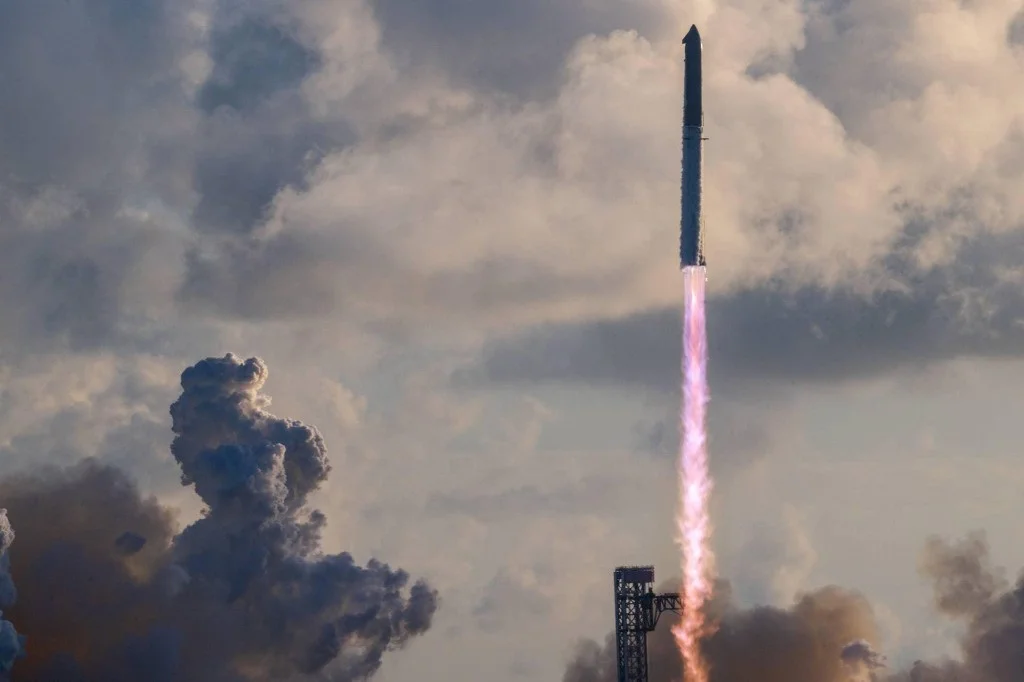
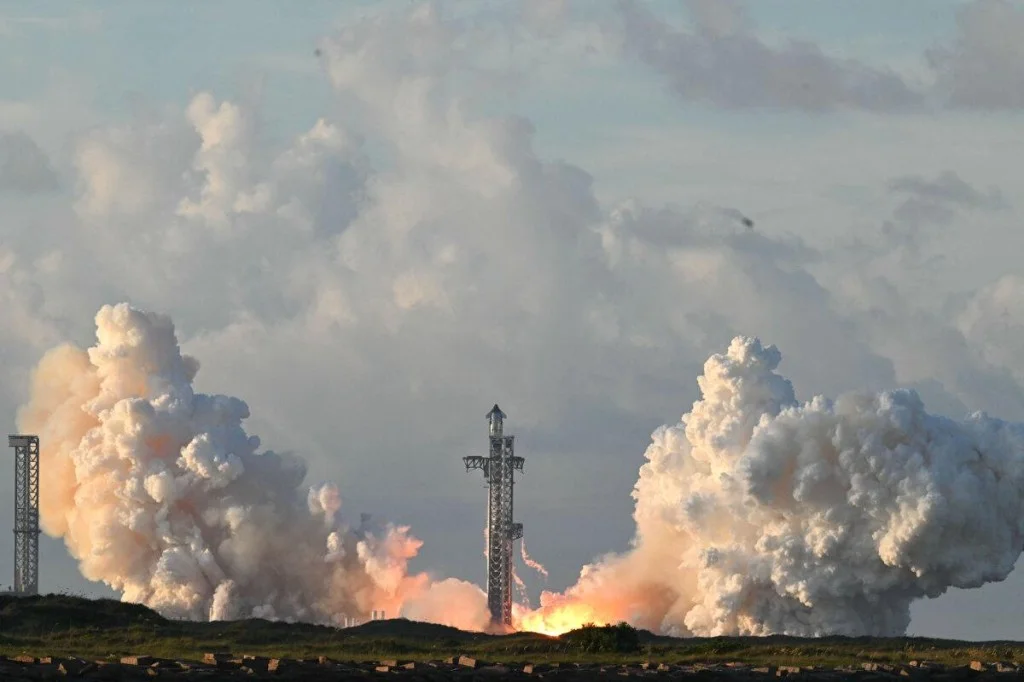
On September 28, Starship reached orbit for the first time and deployed 26 Starlink V3 satellites. SpaceX describes the mission as both its first orbital Starship flight and its first delivery of a meaningful payload to orbit.
That distinction matters.
Previous Starship successes demonstrated pieces of the architecture: ascent, staging, engine relights, controlled reentry, booster recovery, and increasingly precise upper-stage splashdowns.
Flight 14 crossed into something economically recognizable:
A Starship carried revenue-producing infrastructure to orbit.
The 26 V3 satellites still need checkout and orbit raising before they become useful network assets, and Starship is nowhere near routine reuse. Flight 14 therefore did not prove the thing that ultimately matters most—cheap, rapid, fully reusable heavy lift.
But it reduced one important uncertainty.
Starship is no longer merely a gigantic experimental vehicle that might eventually carry payloads. It has now done so.
And that creates a direct bridge between the rocket program and SpaceX’s largest existing business.
Starlink is the part of SpaceX investors can already touch
This is where the numbers in SpaceX’s SEC filings stop being speculative.
At June 30, Starlink had 12.0 million subscribers, exactly double the 6.0 million reported a year earlier. It added 1.7 million sequentially from Q1.
Q2 Connectivity revenue reached $4.29 billion, up 66% year over year.
More importantly, Connectivity produced $1.66 billion of operating income, up 79%, for an operating margin of about 39%. Adjusted EBITDA was $2.60 billion.
That is an extraordinary distinction within SpaceX because neither of the other two reported segments currently generates operating profit:
| Q2 2026 | Revenue | Operating income |
|---|---|---|
| Space | $962M | -$542M |
| Connectivity | $4.29B | +$1.66B |
| AI | $2.56B | -$1.26B |
| Total | $7.81B | -$143M |
In other words:
Starlink is already the economic engine carrying two giant development projects on either side of it.
The rocket business is spending on Starship.
The AI business is spending on compute.
Connectivity is the profitable machine sitting between them.
That is probably the single most useful way to explain SpaceX to readers who still file the company under “launch services.”

The wrinkle in the Starlink numbers
Subscriber growth is spectacular.
Pricing power is less spectacular.
Subscriber count rose 101% year over year, but subscriber ARPU fell 22.4%, largely because SpaceX is moving into lower-income international markets and offering cheaper service plans. Q2 ARPU was about $66 a month, versus $85 a year earlier.
Consequently, consumer Starlink revenue rose 44%, considerably slower than subscriber growth.
That is not necessarily bad. It may be exactly what global network expansion looks like.
But it means the bullish thesis is not simply:
double subscribers, double profits forever.
The more interesting growth is occurring further upmarket.
Starlink’s Enterprise & Government revenue reached $1.81 billion in Q2, up 108% year over year. SpaceX also disclosed more than $6 billion of multi-year Starshield awards, largely tied to Space Force communications and sensing programs.
That is where aviation, maritime, defense, mobile connectivity, and other higher-value services begin changing the economics.
And this is precisely why V3 matters.
More payload per Starship flight means more network capacity.
More network capacity means SpaceX can sell more high-value bandwidth.
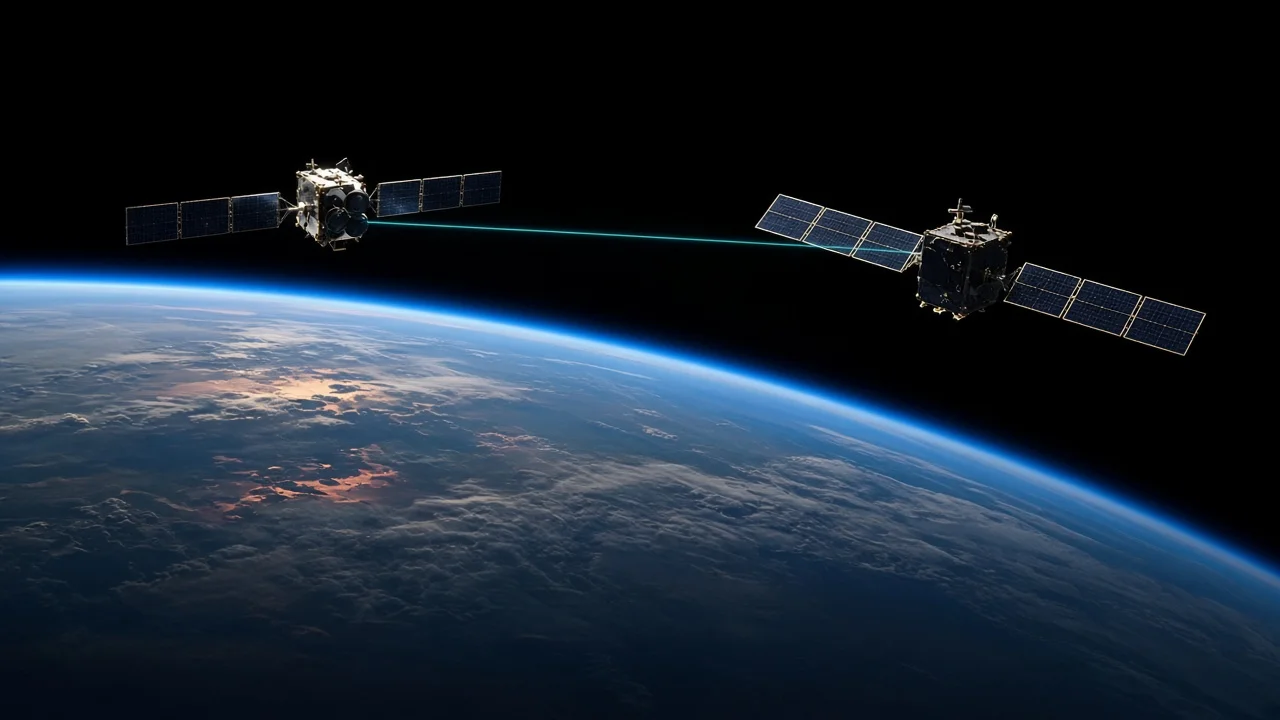
Then comes the part Wall Street is increasingly paying for: AI
This is where the SpaceX investment case becomes much stranger.
AI is already a genuine business inside SpaceX, not merely rhetoric about putting servers in orbit.
Q2 AI revenue was $2.56 billion, compared with $737 million a year earlier. AI Solutions & Infrastructure alone contributed $2.19 billion. SpaceX has also disclosed $14.1 billion of contracted cloud-service sales.
The growth is remarkable.
The cost is equally remarkable.
SpaceX spent $18.37 billion on capital expenditures in Q2 alone.
Of that:
$15.83 billion—86%—went into AI.
For the first six months of 2026, SpaceX spent $28.48 billion in total capex, of which $23.55 billion went to AI infrastructure.
That is the number worth putting high in any serious valuation debate.
Because it changes the nature of the question.
The market is no longer mainly asking:
Can Elon Musk build Starship?
It is increasingly asking:
Can SpaceX turn extraordinary physical investment into sufficient economic return before the next enormous investment cycle arrives?
AI generated $2.56 billion of Q2 revenue but still lost $1.26 billion on an operating basis. Adjusted EBITDA was positive, at $1.15 billion, largely because depreciation and stock compensation are added back.
So this is already a very large business.
It is also an astonishingly capital-intensive one.
Where Starship and AI become the same story
Morgan Stanley’s thesis makes more sense once the rocket, broadband, and AI businesses are treated as one stack.
SpaceX is attempting to build a vertically integrated physical system:
rockets → satellites → communications → compute → models/software
And increasingly:
chips → compute → power → orbital infrastructure
That is why projects that once sounded unrelated have started converging inside SpaceX.
SpaceX completed its acquisition of Cursor in August for an implied $60 billion, paid largely in stock. The deal gives its AI operation a large enterprise software distribution channel rather than leaving Grok primarily as a consumer model product. (See our earlier piece on what that distribution layer implies.)
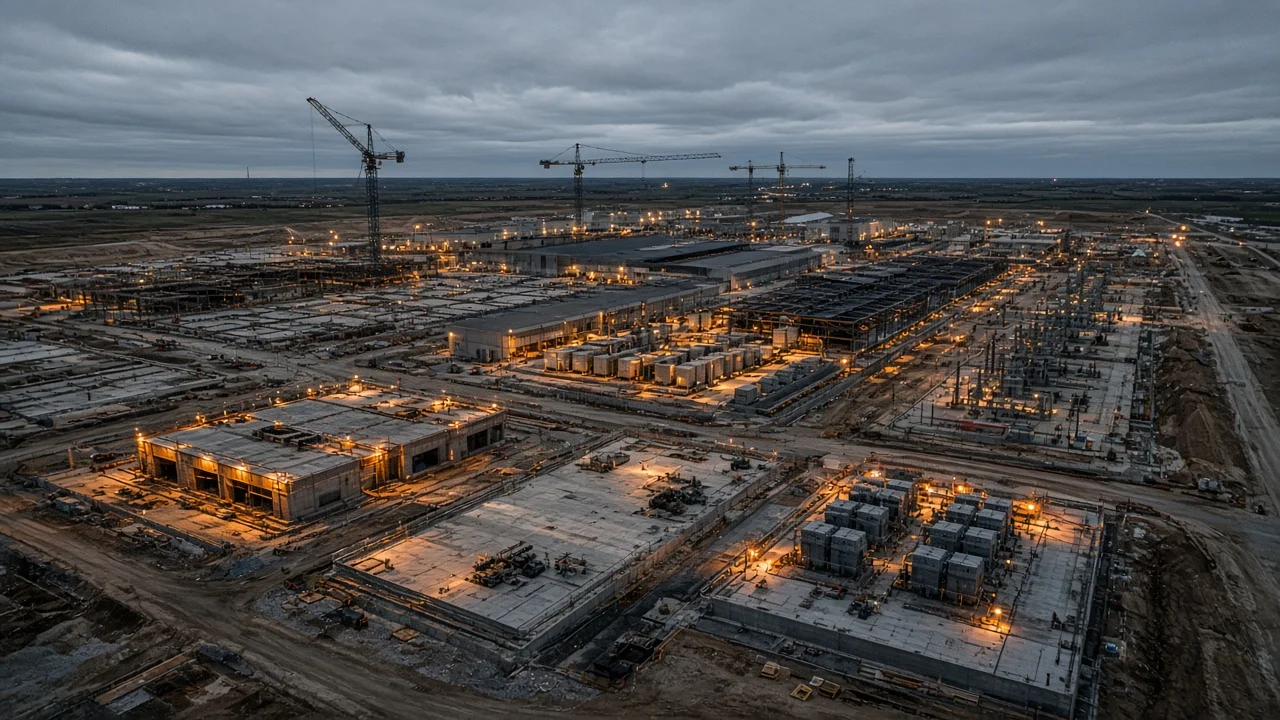
SpaceX and Tesla are also pushing ahead with Terafab, the planned Texas semiconductor complex intended to produce advanced logic, memory, and packaging for their future compute requirements. SpaceX says combined Tesla and SpaceX demand could ultimately exceed one terawatt of compute.
Intel has said it is involved, and Musk has suggested talks with TSMC as well, although no final TSMC arrangement has been announced.
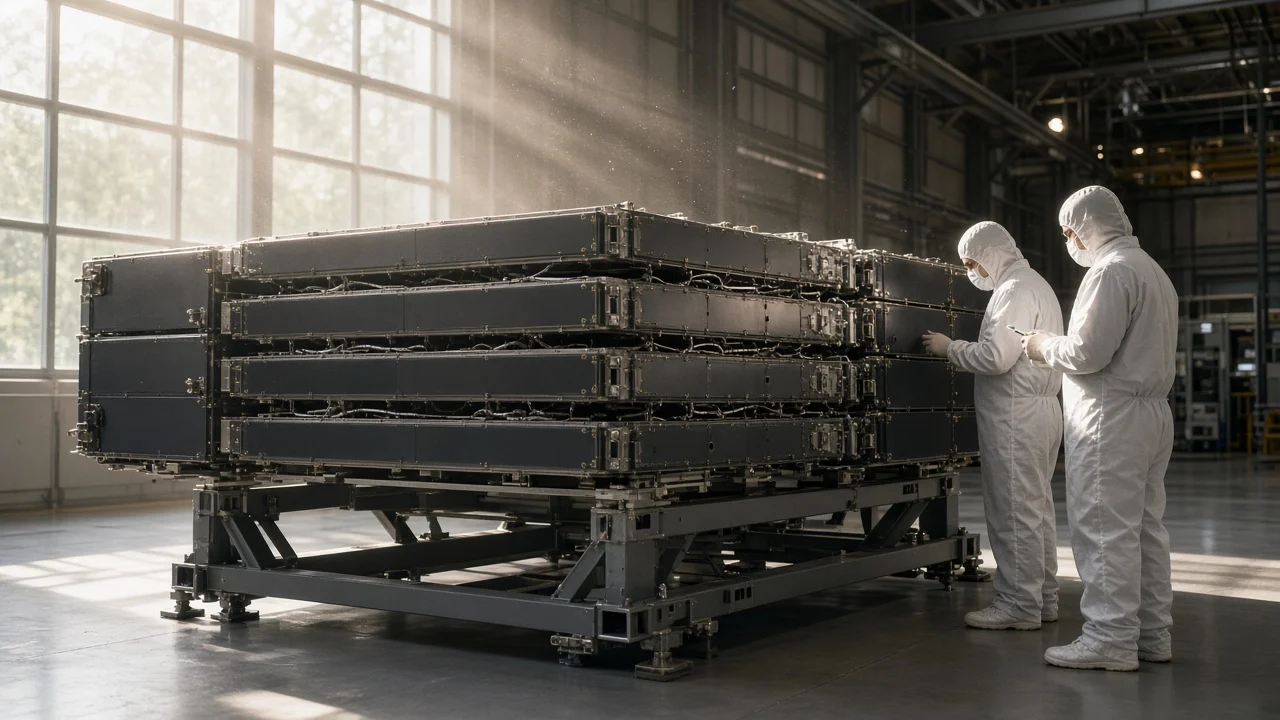
Meanwhile Google has already put AI hardware into orbit: a recent SpaceX-launched experimental satellite carries four Google TPUs to test whether AI accelerators can tolerate the orbital environment. That is Google’s experiment, not a SpaceX orbital-cloud product—an important distinction missing from some bullish write-ups.
Orbital AI is not science fiction in the narrow sense that hardware cannot operate there.
The unresolved question is economics.
Why put AI in space at all?
A data center on Earth has three increasingly awkward requirements:
electricity, cooling, and land.
Put compute in the right orbit and one constraint becomes attractive: sunlight.
Solar generation can be much more continuous than on Earth, and there is no terrestrial grid-connection queue.
But space introduces a different set of problems: radiation, thermal rejection, maintenance, networking, hardware replacement—and, above all, launch cost.
One estimate cited in recent reporting puts a hypothetical 1-GW orbital data center at roughly $30 billion under present economics.
That is where Starship enters again.
If Starship becomes rapidly reusable, the price of moving huge quantities of mass into orbit falls.
Then V3 Starlink satellites do not merely represent better broadband.
Starship potentially becomes the freight system for an entirely new class of orbital infrastructure.
That is why a successful ship catch—or eventually rapid turnaround—would be economically more important than another spectacular launch video.
The orbital-compute bottleneck is not only about silicon. It is about who can afford to lift the racks.
Starship as SpaceX’s capex multiplier
Falcon 9 made SpaceX the dominant launch provider.
But Falcon 9 still constrains how much physical infrastructure SpaceX can put into orbit.
Starship is supposed to change the denominator.
If it works as intended, SpaceX can:
- deploy much larger Starlink satellites;
- add network capacity far faster;
- replace aging satellites more cheaply;
- launch heavier national-security payloads;
- send lunar hardware;
- put fuel depots in orbit;
- eventually deploy compute infrastructure.
That means Starship does not need to become a huge third-party launch business to justify itself.
Its most valuable customer may be SpaceX itself.
SpaceX disclosed that during H1 2026, 908 of 1,041 tonnes it put into orbit were its own payloads. Third-party launch revenue is almost secondary to what launch capability lets the company build for itself.
This is why comparing SpaceX with Boeing, Lockheed, or even Rocket Lab can become misleading.
The rocket is not merely a product.
It is internal infrastructure—like Amazon building fulfillment centers or Google building data centers—except the transport layer leads to another physical domain.
Valuation beyond P/E
SpaceX is presently a terrible company to value through near-term earnings.
It is deliberately spending enormous amounts of money on two businesses whose economics it expects to improve dramatically with scale.
Q2 illustrates the problem.
SpaceX reported:
$7.81B revenue
$541M net loss
$3.54B adjusted EBITDA
$18.37B capex
Those four numbers describe almost four different companies depending on which metric you choose.
The balance sheet gives SpaceX room to run this experiment. At June 30 it had roughly $93.5 billion in cash plus $6.5 billion of short-term marketable securities, helped by its IPO and a $25 billion bond issuance.
But first-half operating cash flow was only $3.47 billion, while capex was $28.48 billion.
That is the valuation risk in one line.
SpaceX has plenty of capital.
It is also finding extremely ambitious ways to consume it.
The businesses are becoming dependent on each other
This is why the market’s enthusiasm can be rational even if the valuation proves too high.
SpaceX’s structure produces reinforcing loops:
Starlink → Starship: More subscribers require greater capacity; greater capacity requires more and larger satellites; Starship is supposed to lower the marginal cost of launching them.
Starship → Starlink: Lower launch cost means faster constellation expansion and potentially larger V3 satellites—more sellable bandwidth.
Starlink → AI: Starlink provides global networking infrastructure and profitable cash flow.
AI → Starlink: AI services potentially increase demand for connectivity and data transmission; orbital compute could eventually become another network customer.
Starship → AI: If orbital compute becomes economically viable, Starship supplies the mass-transportation system.
AI → Starship: AI’s enormous potential economics can justify investment in launch capability far beyond what commercial satellite-launch revenue alone could support.
Terafab → AI + Starlink: Custom chips potentially reduce dependence on external suppliers while optimizing silicon for terrestrial and space environments.
Cursor gives SpaceX a software endpoint through which that compute can be sold.
That is a much more coherent company than a laundry list of Musk projects makes it appear on first read.
The dangerous property of an integrated valuation
SpaceX’s businesses reinforce each other if they work.
Unfortunately, the valuation increasingly assumes that several of them do.
Morgan Stanley’s $300 thesis is not simply a bet that Starlink gets more subscribers. It increasingly embeds some combination of:
successful Starship reuse
continued Starlink expansion
enterprise and government growth
profitable AI infrastructure
Cursor monetization
continued compute scaling
and eventually some value from orbital compute
That is why the upside can become enormous.
It is also why a seemingly unrelated failure can hit the stock disproportionately.
A Starship delay does not merely affect launch revenue.
It can slow V3 deployment.
Which can constrain Starlink capacity.
Which can alter the timing of orbital compute.
Which can force more capital spending elsewhere.
That interconnectedness works in both directions.
Flight 15 and what still has to be proved
Public reporting says an upper-stage ship catch is a possible forthcoming objective, but SpaceX has not given investors an ironclad commitment that Flight 15 will perform one.
More importantly, one catch is not full reusability.
The sequence investors need is closer to:
orbit → payload deployment → controlled return → catch → refurbishment → relaunch → progressively faster relaunch.
Flight 14 moved SpaceX convincingly through the first two.
The market is now paying for the remaining arrows.
There is a useful warning sign in the rhetoric: Musk recently reduced his stated 2027 Starship launch ambition to roughly one or two flights per week, down from previously much more aggressive talk about daily cadence.
That is still extraordinary.
But it shows how much execution remains between “Starship reached orbit” and the industrial machine implied by a multi-trillion-dollar valuation.
What actually drove Monday’s stock
Ranked in order:
1. Morgan Stanley provided the immediate spark. The $300 target and “cheap on growth” argument gave investors a fresh valuation framework.
2. Flight 14 de-risked the most important physical dependency. Not full reusability, but orbital payload deployment.
3. AI enthusiasm is causing investors to assign greater value to assets they previously treated as distant optionality. The AI business already generated $2.56 billion last quarter.
4. Starlink continues to prove there is a huge real business underneath everything. Twelve million subscribers, $4.3 billion quarterly revenue, and $1.7 billion quarterly operating profit give SpaceX something many moonshot companies lack: an existing cash-generating platform.
5. The market is beginning to connect these businesses instead of valuing them independently.
That is the important change—and it echoes the repricing we described when the rally stopped being about rockets and when launch cadence met AI contract billing.
A few corrections worth keeping on the record
The stock price, IPO reference, Morgan Stanley $300 target, Starlink subscriber count, Flight 14 payload, and Cursor acquisition check against public filings and contemporaneous coverage.
The Wells Fargo $212 target appears in secondary coverage, with some reports showing an initial $230 target later reduced to $215 and then $212; attribute it to the bank’s published work rather than treating it as a company-disclosed fact unless the primary note is in hand.
Q3 earnings timing should not be stated as locked. SpaceX’s investor-relations page had not announced a date as of this writing; third-party calendars estimate early November and label those dates as estimates.
Flight 14’s V3 satellites are deployed; their eventual operational contribution to the network is not yet the same thing as “already proving” commercial benefits.
Be cautious with unsourced aggregate defense revenue figures. SpaceX has disclosed more than $6 billion in multi-year Starshield awards; larger totals need precise sourcing before publication as revenue.
What the stock is pricing now
SpaceX jumped 7.6% Monday after Morgan Stanley argued that one of the world’s most expensive companies is still cheap. That sounds absurd until the pieces are assembled.
Starlink has become a highly profitable communications network. SpaceX’s AI operation is already generating billions of dollars in quarterly revenue. Starship has finally carried real infrastructure into orbit.
The wager embedded in the stock is that these are not separate businesses at all. They are layers of the same machine.
The question the market is trying to answer is not whether SpaceX can build another rocket.
It is:
What does SpaceX become if Starship actually works?
Not another rocket manufacturer.
Not even merely the world’s largest satellite network.
Potentially a company controlling an unusually large portion of the physical stack beneath communications and computing:
chips → data centers → AI software → global networking → satellites → launch.
There are very few historical analogues for that.
And there is an uncomfortable conclusion for investors:
SpaceX may simultaneously be one of the most vertically integrated companies ever built and one of the most capital-intensive growth bets ever attempted.
The bull case is that every layer makes the layer above it cheaper.
The bear case is that every layer gives SpaceX another place to spend $10 billion.
That, rather than Monday’s $300 Morgan Stanley target, is the story worth reading.
Continue reading


Sources
SpaceX Q2 2026 SEC filings and earnings release; Morgan Stanley coverage as reported Oct. 5, 2026; SpaceX Flight 14 mission materials; contemporaneous market data for SPCX.


