

Apollo Global Management plans to finance a more than $15 billion AI infrastructure project in Chiba Prefecture with developer RHAELM, power generator JERA, and Dell. The planned 400-megawatt campus makes Japan’s domestic compute ambitions inseparable from power supply, construction finance, and industrial policy.
Apollo Global Management plans to become a financing and investment partner for a more than $15 billion AI infrastructure venture in Chiba Prefecture. The project brings together U.K. developer RHAELM Holdings, JERA, Japan’s largest power generator, and Dell Technologies. Its planned operations date is 2028; its proposed power draw is as much as 400 megawatts.
That combination explains why the project matters. Japan is not simply proposing another data-center shell. It is trying to bind land, generation, construction, servers, and long-duration capital into one domestic-compute strategy.
The scarce asset is the powered site
JERA says Japan could become Asia’s largest data-center demand center outside China, with power demand potentially reaching 10 gigawatts. For a developer, that is an opportunity. For the grid, it is a claim on generation and transmission that must be financed long before a customer runs its first model.
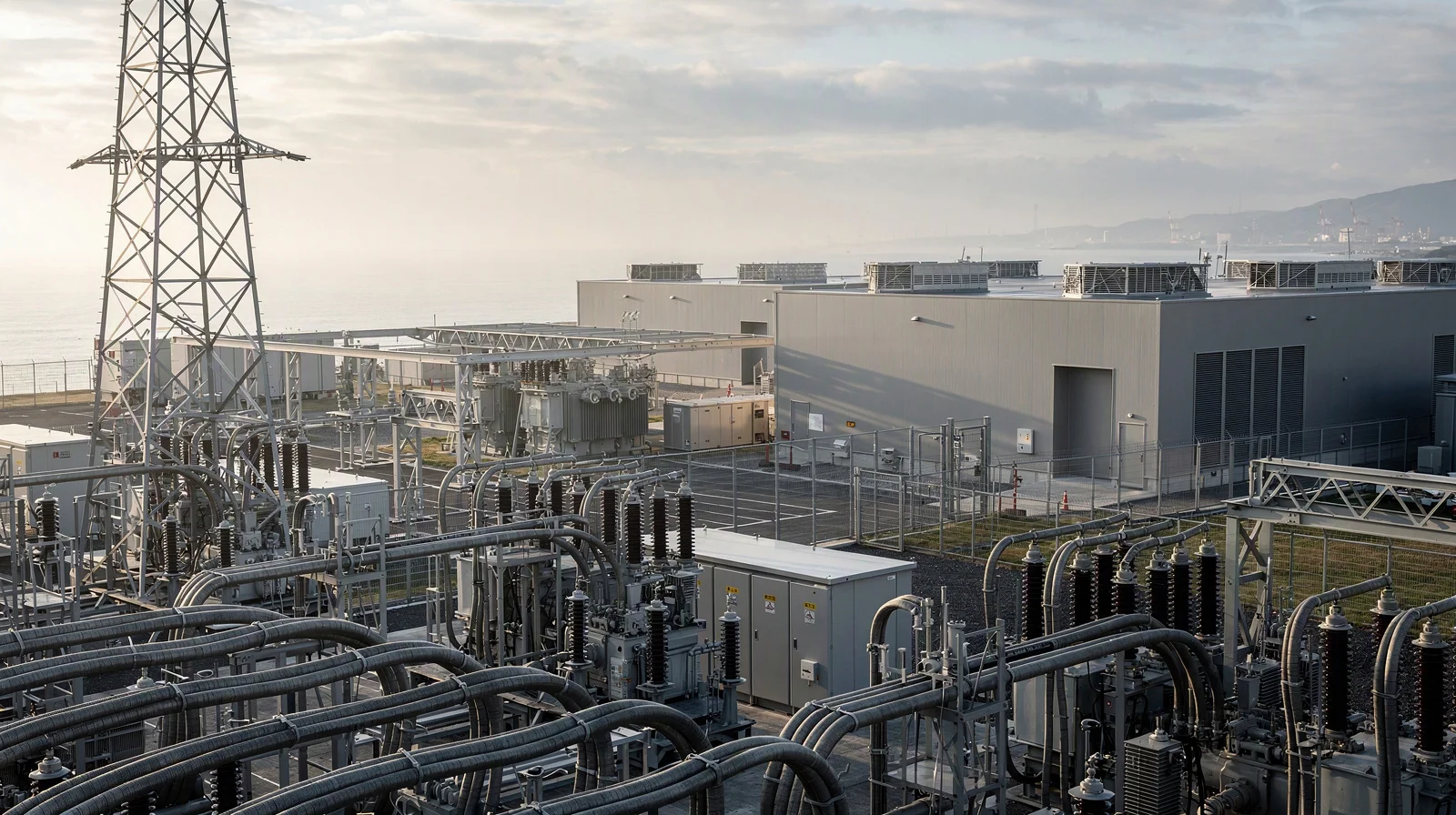
The Chiba site gains an unusual advantage from JERA’s nearby thermal-power station. Physical proximity does not remove permitting, interconnection, or fuel questions. It does change the project’s bargaining position: a power company is present at the beginning rather than added after a developer has designed a campus.
That is the same constraint visible in the fight over who pays for AI grid upgrades. Compute capacity is not just a chip order. It is a financing structure around electrons delivered on a date certain.
Private credit meets industrial policy
Tokyo has committed ¥102 trillion to AI and semiconductors as part of a broader manufacturing strategy. Apollo’s participation makes that policy legible to private capital: a global asset manager can finance the physical layer while local partners supply power-market knowledge and an operating foothold.
Apollo has already financed AI-related projects involving Nvidia, Broadcom, and Anthropic, while also expanding its Japan presence. The firm’s recent increase of a loan to SoftBank illustrates the broader pattern. The AI buildout increasingly depends on institutions that can underwrite assets whose cash flows will arrive years after construction begins.
Japan’s AI strategy is becoming an infrastructure strategy: secure the megawatts, then finance the machines.
The risk is execution. A 400-megawatt site is a large initial commitment, and JERA has discussed a possible three-to-four-gigawatt expansion that could require roughly $150 billion. Those numbers are a roadmap, not delivered capacity. The market will test them through construction milestones, power contracts, and tenant commitments.
For now, the Chiba venture offers a clearer signal. Japan’s AI ambition is moving from semiconductor subsidies toward the harder business of building powered, financeable campuses where domestic demand can actually run.
More in AI & Compute


Sources
Bloomberg reporting published by The Japan Times on the Apollo, RHAELM, JERA, and Dell Chiba project; prior Culled reporting on AI power constraints.
