

Waymo now averages about 500,000 paid robotaxi trips per week across 15 U.S. cities and a fleet of roughly 4,000 vehicles, according to TechCrunch's September 24 review of company figures and state registration data; Texas alone registered 1,102 Waymo vehicles that day after a 49% three-week surge driven largely by imported Zeekr-platform Ojai vans. Washington is tightening rules on Chinese automotive technology even as America's leading robotaxi operator scales on a Geely-built chassis fitted in Arizona.
Waymo’s commercial story is usually told in trips. The company now books about 500,000 paid robotaxi rides every week, operates in 15 U.S. cities, and fields on the order of 4,000 vehicles, TechCrunch reported September 24, citing company disclosures and public fleet trackers. Two years ago it was in three markets; the Sun Belt expansion is real, measurable, and paid.
The more revealing number is parked in Texas. State registration data compiled by the Texas Autonomous Vehicle Fleet Tracker show 1,102 Waymo vehicles in the state as of September 24—a 49% jump in three weeks after a summer plateau near 700. Roughly 80% of Waymo’s national fleet sits in California and Texas combined, so when Texas accelerates, the national fleet narrative accelerates with it.
The Van Under the Sensor Pod
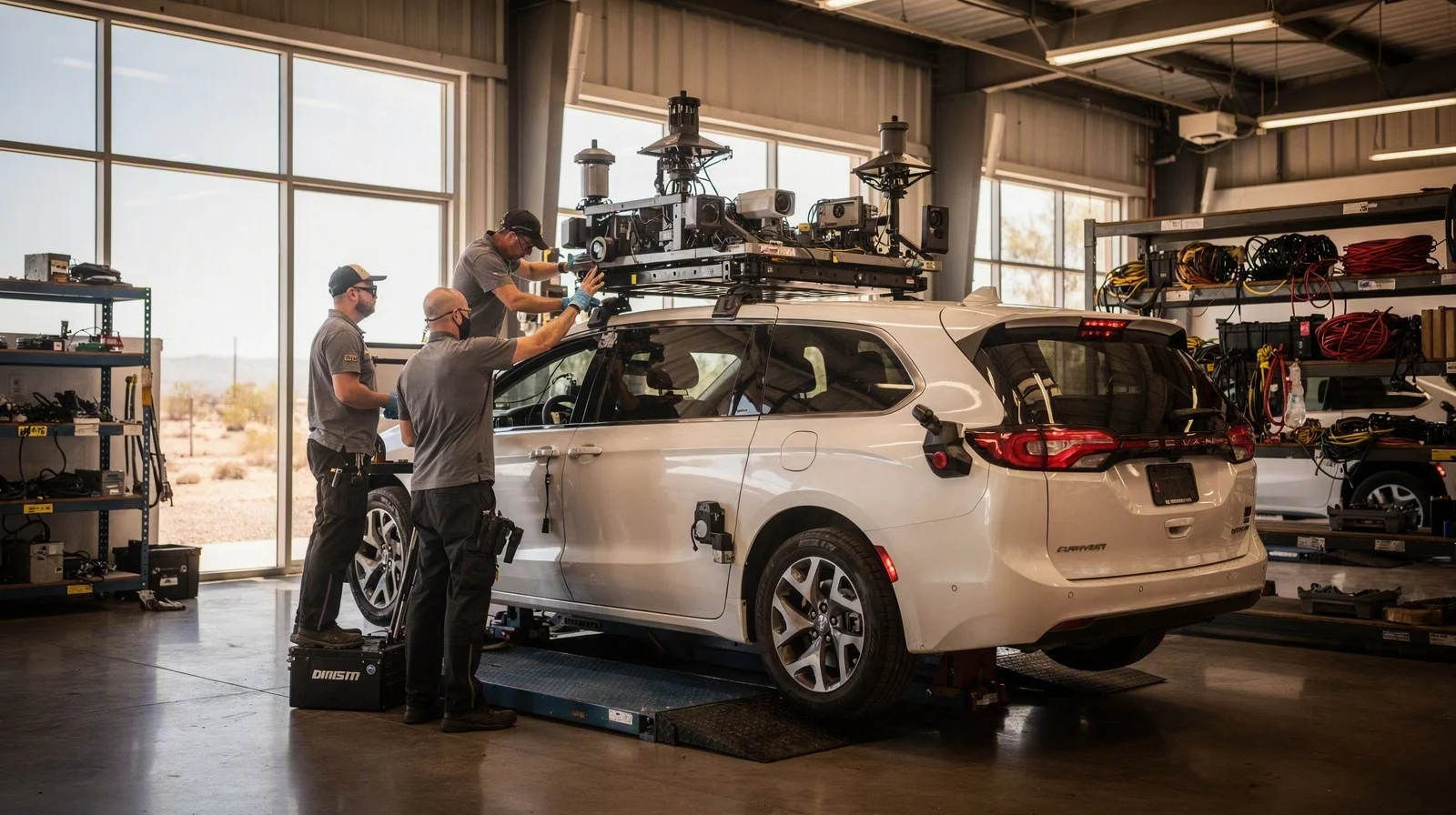
The surge is not a mystery of demand alone. It tracks the arrival of Ojai, Waymo’s sixth-generation robotaxi built on a modified Zeekr RT minivan. TechCrunch reports Ojai units already account for about one-third of the Texas fleet. Strip the autonomy stack and you are looking at a Geely-owned Zeekr product on the SEA-M platform—manufactured in China, shipped to the United States without Chinese connected-car technology, then sent to Waymo’s Arizona facility for sensor and compute installation.
That is the Culled complication behind a otherwise clean scale chart. U.S. policy is explicitly trying to reduce dependence on Chinese automotive hardware and software at the same moment America’s most credible robotaxi operator appears to have found a Chinese volume platform useful for deployment. Tariffs have made the imported shells materially more expensive than domestic alternatives on paper; shipping data cited by TechCrunch and analysts including MoffettNathanson suggest Waymo is still on pace to import on the order of 5,100 Ojai bodies by year-end, with Texas, Florida, and newer markets such as Las Vegas in the allocation queue.
Waymo’s defense is operational, not ideological: the Zeekr architecture is a modular van tuned for fleet use, and decoupling the connected-car layer is how the vehicle clears U.S. security framing while preserving Chinese manufacturing economics. Whether that distinction satisfies regulators long term is a developing question; what is not developing is the registration count.
Physical AI Acquires Fleet Counts
Read beside Toyota’s reported factory robotics budget—hundreds of thousands of planned units, billions in annual spend, workers training humanoids rather than being swapped out overnight—and Waymo’s graph looks like the consumer-facing mirror. 2026 is less about another chat model drop than about machines acquiring schedules: weekly ride totals, state registration curves, import manifests, factory retooling timelines.
Tesla’s Cybercab narrative still competes for attention, but Waymo’s numbers are already on the board: half a million paid trips a week is a logistics statistic, not a demo reel. The platform choice underneath—Zeekr metal, Waymo software, U.S. tariffs in between—is what turns a ride-hailing milestone into a trade story.
For investors and policymakers, the actionable frame is not “autonomy works” or “autonomy fails.” It is which parts of the stack must be domestic to call a fleet American, and whether scale winners will pay the tariff bill anyway because no alternate chassis is ready at volume. Texas just added more than three hundred registered vehicles in three weeks while Washington debates decoupling. The rides are American. An increasing share of the sheet metal is not.
Continue reading


Sources
TechCrunch fleet and registration reporting (Sept. 24, 2026); Texas Autonomous Vehicle Fleet Tracker data cited therein; shipping import estimates for Ojai vans


