

AI-exposed equities led Tuesday's tape while Brent stayed near $103 and Treasury yields hovered near 5.29 percent. Nvidia outpaced the Nasdaq-100 as semiconductors kept their fifty-day lead. Chair Kevin Warsh's secular-growth frame — AI lifting potential output — meets an energy war premium the Doha shuttle has not removed.
The AI capex supercycle narrative won Tuesday’s argument on the equity sleeve — but not cleanly. Nvidia finished modestly green while the Nasdaq-100 and the semiconductor ETF slipped on the day. Stretch the window to fifty sessions and the pattern holds: semiconductors have outrun broader tech by several percentage points, exactly the “AI-exposed names lead, semis beat QQQ” behavior the desk has been tracking. Capital is not abandoning the buildout. It is concentrating it.
That concentration is the bridge to Warsh. Since the September hike, the Chair has talked about an economy whose potential growth may be rising again — not because oil got cheap, but because productivity-linked investment, much of it AI and power-hungry compute, could expand supply capacity if it converts to output. It is a secular-growth frame: higher speed limit, less need to celebrate every disinflation print. The Sintra-era version of the same tension already paired Warsh’s hawkish dots with AI-driven inflation he could not wave away. Tuesday updated the mix: not just electricity and memory, but crude still living in the war-premium band.
Oil Did Not Get the Diplomacy Memo
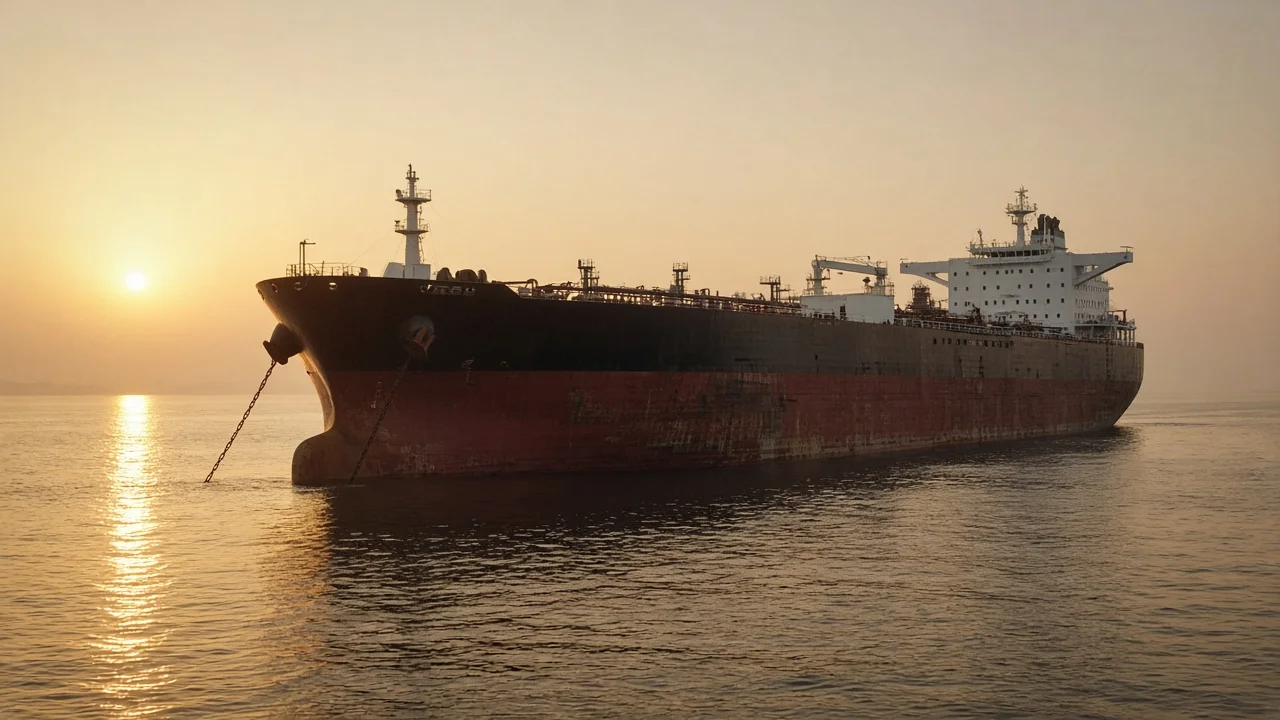
Brent rose more than one and a half percent on the session, holding near $103 even as Reuters-sourced reporting described U.S. feedback to Iran on a seven-day trust plan in Doha and Qatari officials insisted shuttles would continue. Muscat’s role in any Hormuz reopening without tolls remains on the table in mediator drafts; the war itself is still active, with ceasefire sequencing and sanctions relief unsettled. Markets have repeatedly priced peace before the strait functioned like peace. Tuesday was another day when equity optimism and energy realism diverged: gold firmed, volatility ticked higher, and the energy-equity complex did not confirm the crude move the way a pure supply-scarcity story would demand.
The AI trade is borrowing against productivity tomorrow. Brent near $103 is charging inflation today.
For Warsh, that split is the policy problem in miniature. New York Fed President John Williams reinforced that another rate increase remains likely even as consumer confidence weakens — a reminder that the reaction function is still tilted hawkish while the long end already prices fiscal and war risk. The 10-year hovered near 5.29 percent, the kind of level that makes every hyperscaler capex dollar compete with risk-free yield. SPY barely moved; the index was not melting down. It was balancing — capex hope on one shoulder, duration and oil on the other.
Nvidia Still Carries the Relative Trade
The stock-specific story is not mystery. Nvidia’s modest daily gain still left it nearly five percent above its fifty-day average — leadership without euphoria. That posture rhymes with a market that applauded record revenue and then sold the shares anyway: proof of demand is necessary, no longer sufficient. Custom silicon and efficiency challengers keep tightening the moat narrative — Broadcom’s quiet takeover of the ASIC stack on one flank, China’s efficiency push against the Silicon Valley bet on another — while the capex line itself keeps climbing.
The merge note on the desk was blunt: September 30’s Nvidia–QQQ split prices AI investment against 5.29 percent yields. Iran diplomacy keeps the duration trade narrow — not loose, just not allowed to widen into a full growth scare while AI names absorb flows. The dot-com analogy fails for reasons we have mapped before; the financial analogy that does bite is simpler. Two secular stories — compute buildout and Gulf energy premium — are sharing one balance sheet called the United States.
What Would Break the Frame
The falsifier is not “Nvidia down one percent.” It is coordinated relief: Brent sustained below the low nineties on verified Hormuz traffic, breakevens falling with it, and the long bond rallying without a growth scare. Until then, Warsh’s productivity optimism and the tape’s AI overweight remain a paired bet — that inference demand scales fast enough to justify multiples while the Fed keeps optionality to tighten if oil embeds.
The open question is utility, not silicon. Hyperscalers can keep ordering racks; consumers and enterprises still owe proof that applications earn the buildout. Tuesday’s market answered the short-run question: investors still prefer NVDA to QQQ, semis to megacap tech, and gold to naive risk. They have not yet answered whether secular growth, in Warsh’s sense, can win an argument with $103 Brent without another hawkish chapter.
More in AI & Compute


Sources
Culled decision surface and flight-deck tape for Sept. 30, 2026 (NVDA/QQQ/SMH moves, Brent change, yield curve); desk summary on Doha trust-plan reporting and AI capex supercycle narrative; prior Culled coverage of Warsh reaction function and Hormuz diplomacy
