

Treasury’s Iran sanctions against VTB and a New York forfeiture action against $61 million in USDT share a practical target: the channels that move money. The cases are not publicly linked, but both show enforcement reaching correspondent accounts, settlement systems, wallets, and financial facilitators.
On September 14, the U.S. Treasury sanctioned Russia’s VTB Bank under Iran authorities after saying the bank had established correspondent relationships with sanctioned Iranian financial institutions, worked on moving billions of dollars in frozen Iranian assets, and built a ruble-rial settlement system through correspondent accounts. The same day, federal prosecutors in Manhattan sought forfeiture of roughly $61 million in USDT held across ten cryptocurrency addresses, alleging the funds were proceeds of black-market Iranian oil sales.
Those actions are not publicly presented as one operation. No released filing identifies VTB in the USDT case, and Treasury’s VTB release does not identify the ten wallets. That gap matters. The evidence supports a narrower and more useful conclusion: U.S. enforcement is increasingly describing the financial channels around sanctioned activity as targets in their own right.
VTB’s new exposure sits in correspondent banking
VTB was already heavily sanctioned under Russia-related authorities. The September 14 action added an Iran-specific basis. Treasury’s explanation focused on what the bank allegedly provided Iran: offices, correspondent relationships, national-currency settlement and a route for frozen assets.
The correspondent-account detail is the mechanism. A bank can be named on a blacklist, but international commerce still depends on other institutions deciding whether to maintain accounts, clear payments or facilitate transactions touching it. Treasury explicitly warned foreign financial institutions that continued dealings with VTB after the Iran designation could create additional sanctions risk and said those relationships should be cut off.
That makes the enforcement surface larger than VTB itself. The practical question for another bank becomes whether its own account relationships can carry exposure to a sanctioned counterparty.
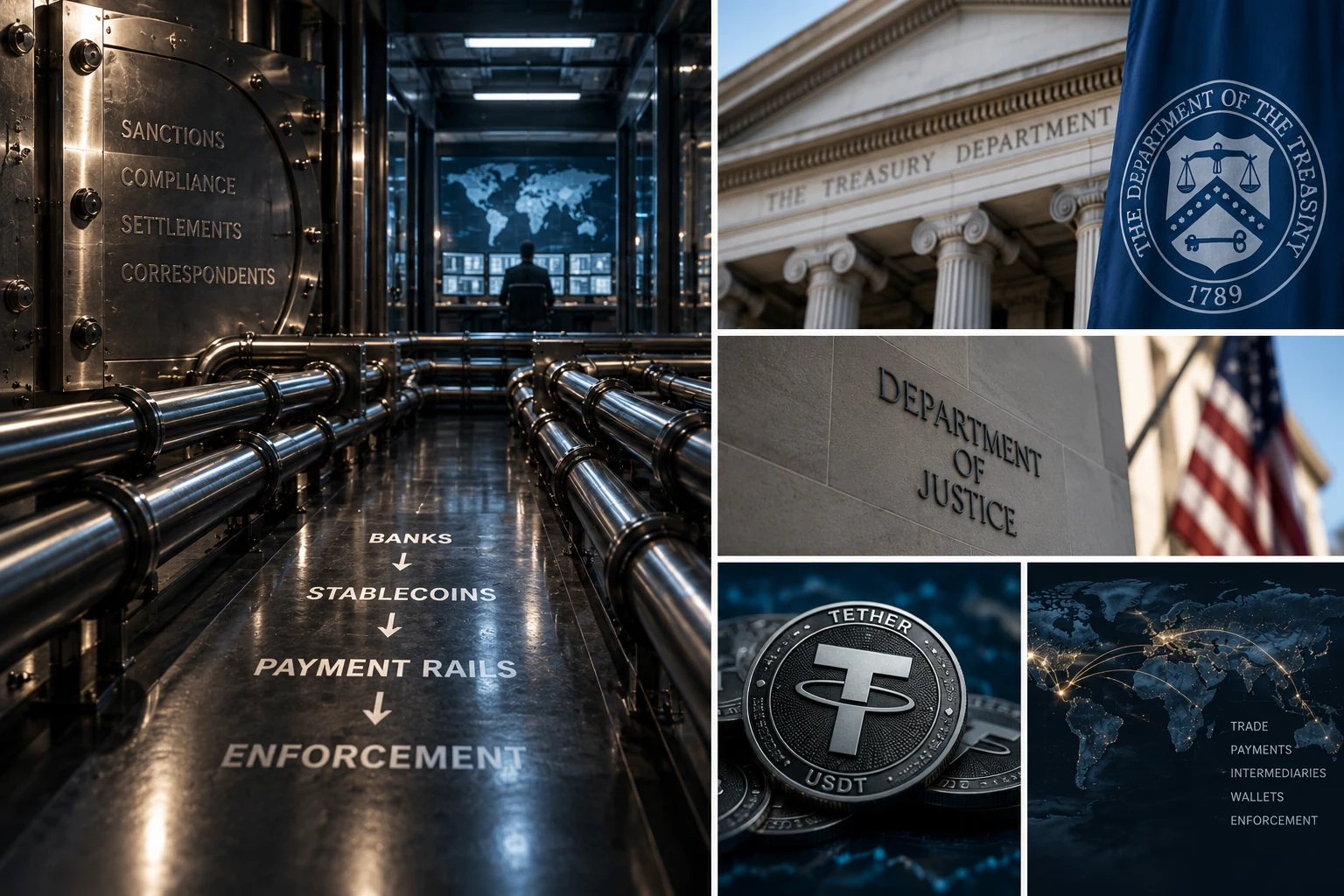
The USDT complaint targets the value inside ten addresses
The Manhattan case uses a different legal tool. Prosecutors filed a civil in rem forfeiture complaint against all USDT held in ten specified cryptocurrency addresses. They allege the cryptocurrency represents proceeds of sanctioned Iranian crude-oil and petroleum sales intended to finance the Iranian government and military components including the Islamic Revolutionary Guard Corps.
The complaint therefore identifies the asset and its locations with unusual precision: USDT at named blockchain addresses. It does not establish a public connection to VTB.
The common feature is not a shared defendant. It is enforcement aimed at the route by which value is stored, settled or transferred.
That distinction keeps the thesis within the evidence. A correspondent account and a blockchain address are not equivalent infrastructure, and the cases arise through different authorities. But both matter because counterparties, custodians, exchanges and other intermediaries can act on them.
Alex Saab adds a third example of pressure on financial facilitators
A day later, Alex Saab pleaded guilty in Miami to conspiracy to launder monetary instruments. DOJ said Saab used shell companies outside Venezuela and the U.S. financial system to move and conceal proceeds from a bribery and fraud scheme involving public food and medicine contracts.
The Saab case should not be folded into the Iran cases as though DOJ announced a common operation. It did not. Its relevance is narrower: the department’s own description emphasizes front companies, shell accounts, false records and financial facilitators. The prosecution follows the movement and concealment of money, not merely the political identity of the person accused.
That is consistent with a broader enforcement practice in illicit-finance cases: identify the person or entity, then map the accounts, intermediaries and assets that let the money move.
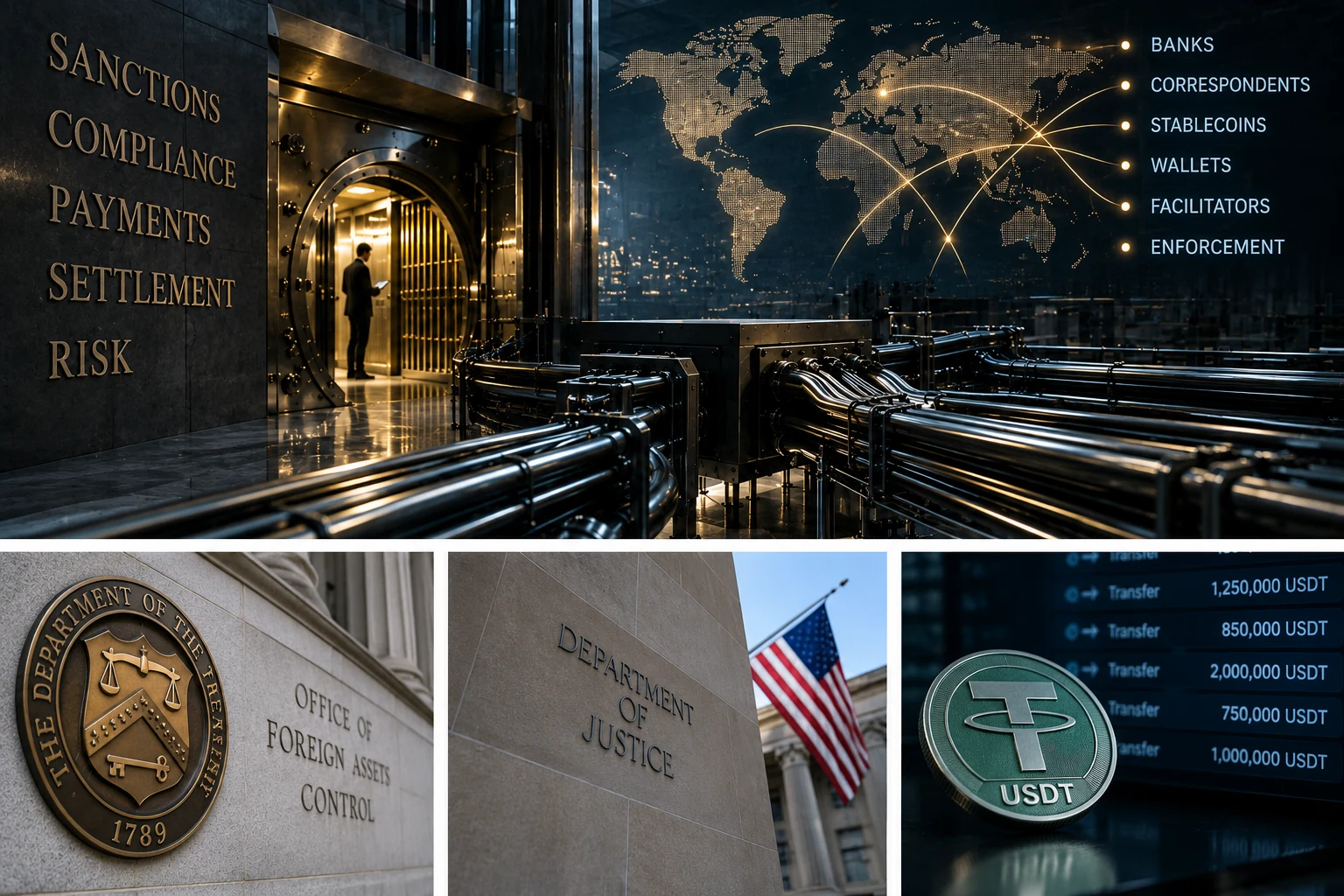
The evidence stops short of a coordinated payment-plumbing campaign
The strongest version of the thesis would require a bridge that the public record does not currently provide. There is no named correspondent bank shared by the VTB and USDT matters, no wallet identified in Treasury’s VTB action, no VTB transaction identified in the SDNY complaint, and no announced joint legal theory tying the cases together.
The timing is also slightly different from the original event surface. Treasury’s VTB action and SDNY’s USDT forfeiture were announced September 14; Saab pleaded guilty September 15. Treating them as a single September 16 enforcement event would overstate what happened.
What can be said is more concrete. Treasury is using secondary-sanctions risk to pressure financial institutions around VTB’s correspondent relationships. SDNY is asking a court to forfeit stablecoins at ten specified addresses. DOJ’s Saab prosecution describes shell accounts and financial institutions as parts of the laundering machinery. In each case, enforcement attention extends from the principal actor to the financial mechanism.
What payment firms and banks now have to price
For banks, the VTB designation raises the cost of maintaining relationships that can touch Iran-related activity. For crypto intermediaries, the SDNY complaint is another reminder that a stablecoin’s transferability does not make the asset unreachable when investigators can identify addresses and seek forfeiture.
The next evidence to watch is operational. A filing that connects a VTB correspondent, a settlement channel or a named intermediary to the USDT addresses would turn parallel cases into a documented network. An enforcement notice directed at a custodian, exchange or correspondent for facilitating the transactions would make the infrastructure thesis stronger still.
Until then, the testable claim is limited but consequential: U.S. authorities are not relying only on sanctioned-name lists. In these cases they are identifying correspondent relationships, settlement systems, shell accounts and blockchain addresses as the places where enforcement can interrupt the movement of money.
More in Geopolitics


Sources
U.S. Treasury OFAC release on VTB Bank; SDNY civil forfeiture complaint and release concerning approximately $61 million in USDT; DOJ release on Alex Saab's guilty plea.
