

Metlen says a Greek gallium plant can cover Europe's entire current demand. It plans 50 tonnes a year at under $300 a kilogram, against European prices above $3,000. A U.S. offtake already books about a quarter of that metal before the factory exists.
Europe can produce a metal it treats as strategic. The first large contract is not with Europe. That is not a mining failure. It is a demand-architecture failure.
The plant can cover Europe. The first buyer is American.
Gallium is the quiet metal in compound semiconductors, radar, satellites, and parts of the AI hardware stack. China still dominates refined supply. The usual European story is that the continent cannot produce enough of it.
Metlen Energy & Metals says that story is already outdated. Evangelos Mytilineos told the Financial Times that a planned unit at Aluminium of Greece, in Agios Nikolaos in Viotia, could eventually make 50 tonnes a year — enough, the company says, to cover current European demand. Production is slated to start next year. The firm puts its cost below $300 a kilogram, against European market prices above $3,000, and talks of driving costs toward $100 if Chinese supply returns and crashes the price.
On paper this is a Critical Raw Materials Act success. The project has Strategic Project status and European Investment Bank backing under REPowerEU. The metallurgy is a recovery story: gallium as a by-product of an existing bauxite-to-alumina chain, not a greenfield mine in a jurisdiction Europe does not control.
The commercial sequence is less flattering. In July, Metlen announced a long-term offtake for about 25 percent of planned annual output with a leading U.S. technology company. Deliveries are meant to begin in 2027 and reach contracted volume in 2028. Two further non-European deals are under discussion. Mytilineos’s complaint is blunt: European buyers still prefer cheaper Chinese metal, and Brussels has not built the financing and offtake tools that would keep the tonnes at home.
Whoever guarantees a buyer can capture the metal before the factory exists.
That is the residual. Europe is not short of a plant. It is short of a purchaser willing to pay for supply security instead of the Chinese spot print.
Offtake is now the mine
The dominant coverage of critical minerals still counts flags on deposits. China processes; the West panics; a new project is announced; sovereignty is declared. We have already seen how that script breaks on magnets: NATO’s rearmament still runs through Chinese refining, and even a genuine European win — Neo’s Narva plant shipping commercial EV magnets — is a rare case where a customer showed up with a qualified order.
Gallium in Greece is the inverse. Capacity is being built on European soil. Demand is being organized elsewhere.
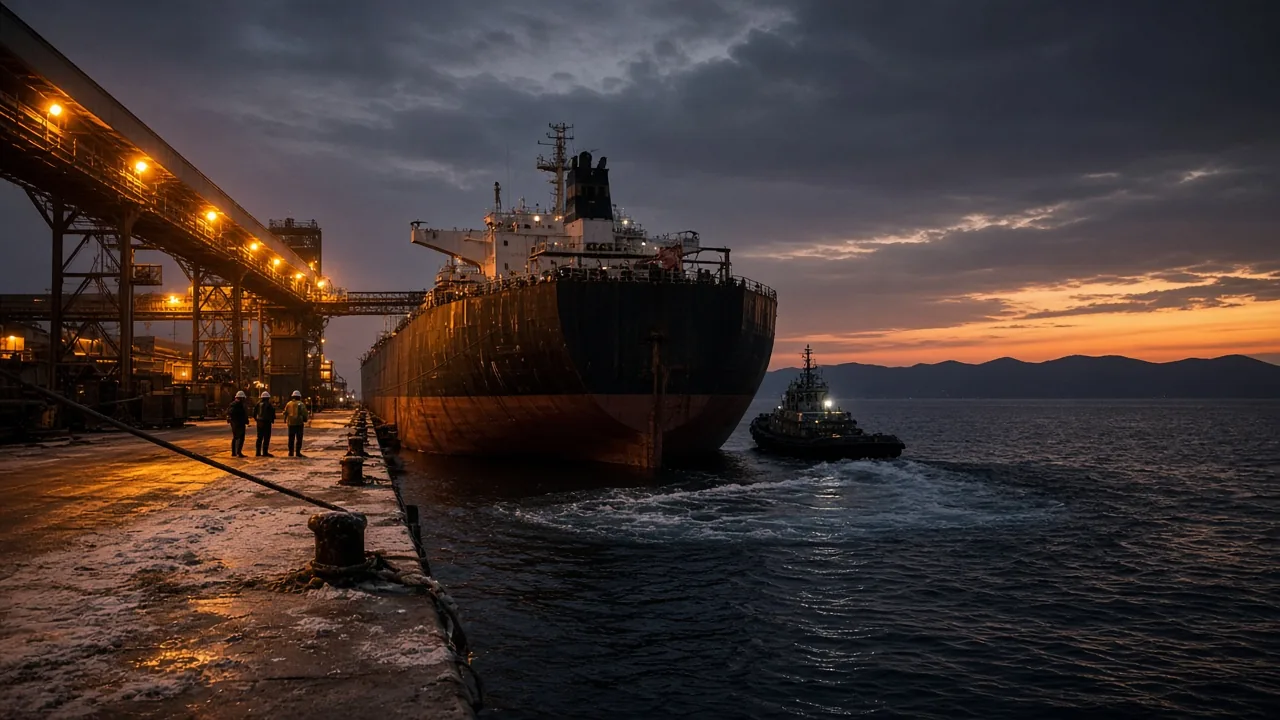
An offtake is not a press release. It is a claim on future physical output: a named volume, a start date, a counterparty that can prepay, pre-qualify, or otherwise underwrite the plant. The United States and Japan have been faster at writing those claims. Tokyo’s mineral diplomacy after Chinese licensing shocks, which we tracked in the Japan–South Korea supply-chain realignment, was always about contracted tonnes, not slogans.
Europe’s policy stack still leans on designation. Strategic Project. EIB loan. CRMA list. Those instruments can lower the cost of building. They do not, by themselves, create a European buyer who will sign for metal at a premium to Chinese gallium while Brussels lectures about autonomy.
The price gap makes the politics worse. If Metlen can produce below $300 and Europe trades above $3,000, a European offtake at a security premium should be easy. Mytilineos says it is not. Downstream users will take the cheaper Chinese kilogram until a license is denied. Upstream producers will sell to whoever books first. The metal then leaves as a commercial success and a policy failure.
This is the same rationing logic we have seen in other bottlenecks: lithium conversion and lithography slots are allocated by contracts, not by the existence of a factory. The critical-minerals contest is moving to that layer. Mine ownership still matters. Offtake architecture now decides who the mine works for.
The test is whether Europe writes a purchase order
Mispricing sits in two places. Investors still treat “European production” as equivalent to “European supply.” It is not, if the first 12.5 tonnes are already spoken for across the Atlantic. Policymakers still treat Chinese dominance as a geology problem. Metlen is arguing it is a contracting problem.
The falsifier is simple. If a European chipmaker, defense prime, or stockpile authority signs for a comparable share of the Greek output on public terms, the paradox closes. If the remaining 75 percent also goes to U.S. and Japanese buyers while EU speeches continue, the plant will have solved a shortage for someone else.
Europe can cover its gallium demand on a spreadsheet. Capture requires a buyer, dated, named, and willing to pay before the first kilogram exists.
Continue reading


Sources
Metlen statements to the Financial Times and its July 29, 2026 gallium offtake announcement; EU CRMA/EIB project context.


