

On July 15, ASML pledged 30 percent more lithography capacity in 2027 and again in 2028, without new cleanrooms, and said 2027 EUV slots are already booked. Tool famine eases. Wafer throughput, export maps, and lithium storage do not.
ASML’s July 15 print was designed to soothe. Second-quarter revenue came in at €9.33 billion; full-year sales were lifted to €43–45 billion. CEO Christophe Fouquet called demand “extremely strong,” then pledged about 30 percent more lithography output in 2027 and again in 2028 — extreme-ultraviolet (EUV) and deep-ultraviolet immersion alike. The implied 2026 base is roughly 65 low-NA EUV tools and 130 immersion tools. The wire heard relief: the bottleneck that might slow the AI boom was, on paper, being built away.
The dominant story is true as far as it goes. ASML is the only company that ships production EUV scanners. TSMC, Samsung, and Intel cannot substitute a peer. If DRAM makers lean harder into EUV and TSMC’s order book thickens — the two-vector upside we mapped in ASML’s DRAM-and-TSMC cycle — unit demand does not wait for a new factory.
Thirty percent more machines is not thirty percent more wafers
The residual question is the one the headline does not answer. If ASML can expand EUV capacity by 30 percent a year, why do throughput and regulation still constrain AI chip growth?
Because the 30 percent is a factory-output number, not a die-output number. JPMorgan’s later read of management is the mechanism: ASML can push past a previously communicated ceiling near 90 EUV tools without pouring new cleanrooms, via cycle-time cuts, conversion of research floor into production, temporary diversion of High-NA bays into extra low-NA units, and Covid-era fast-shipment protocols. Those levers are real. They are also admissions. The envelope is the existing Dutch plant. You get more scanners by squeezing the same rooms harder.
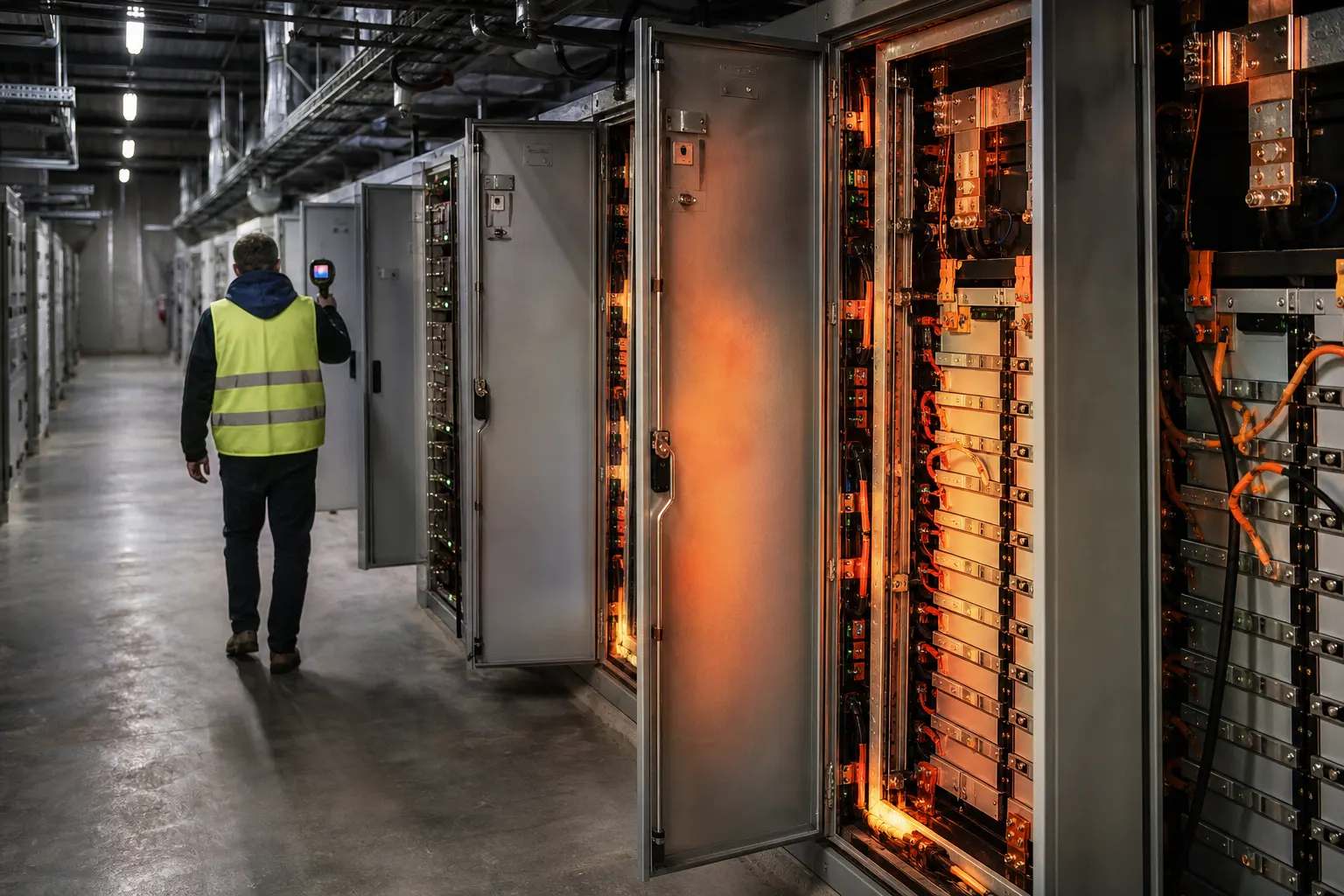
Squeezed rooms do not rewrite wafers-per-hour. A High-NA EXE:5000 is specified around 110 wafers per hour; the EXE:5200B, with a kilowatt-class source, lifts that toward 175. Adding boxes helps only if those boxes are the high-throughput generation and print the layers that bind AI silicon — logic and the EUV-heavy DRAM that feeds HBM. Diverting High-NA floor into extra low-NA units raises shipments while delaying the density step meant to cut multi-patterning. Fouquet’s other clause matters more than the percentage: nearly all expanded EUV capacity through 2027 is already booked. Incremental output is sold before it exists.
Licenses allocate the extra tools
Throughput is the physics. Export control is the map. The Netherlands has not licensed EUV to China since 2019; ASML says it has never shipped an EUV system, nor EUV-specific modules, to Chinese customers. Extra 2027–28 machines therefore land in a closed set of foundries — not a global pool. In June 2026 U.S. officials pressed ASML over suspected EUV-related components; the company denied it. Thirty percent more tools inside the permitted geography can coexist with a hard stop everywhere else.
That is why AI chip production can stay constrained as the shipment chart steepens. China’s accelerators keep using older nodes and multi-patterned DUV. Western AI silicon still queues for the same TSMC and Samsung EUV bays. Intel’s first High-NA logic — a subset of Panther Lake on 18A — proves the tool works in volume, not that it is the default printer. By February 2026 High-NA tools had processed about 500,000 wafers at roughly 80 percent uptime: a production platform, not yet the fleet.
Lithium sits on the same serial line
The market books ASML on a semiconductor desk and lithium on a chemicals desk. The AI stack does not. A die that leaves an EUV bay still has to live on a rack whose power draw no longer looks like enterprise IT. GPU clusters swing from a fraction of load to full load in milliseconds, eating UPS batteries and forcing denser chemistry. ZincFive’s 2026 operator survey found 54 percent of centralized UPS already on lithium and 52 percent citing AI dynamic power as a design driver, up from 37 percent a year earlier.
Albemarle made that quantitative. Energy-storage sales rose 78 percent year over year. Management lifted the 2026 stationary-storage battery forecast to 900–1,100 gigawatt-hours and said that slice could be about 30 percent of global lithium demand, approaching light-duty EVs. Miners idled expansion in the EV winter. Data-center BESS and GPU-side UPS did not.
Announced capacity is not constraint relief. Lithium can look plentiful on a surplus table while the carbonate and LFP that fill four-hour containers and high-cycle UPS cabinets tighten. Conversion plants and offtake contracts ration tonnes the way licenses and wafers-per-hour ration scanners.
What still gets mis-priced
Equity screens treat ASML’s 30 percent as the AI bottleneck easing. The number is a shipment print, already spoken for in 2027, produced without a new factory, and geographically fenced. Nvidia’s best quarter already taught the tape to shrug at silicon that cannot be energized. Culled’s utility-gap argument asked whether apps clear the bill; lithium storage asks whether the bill’s waveform can be absorbed without eating the backup plant. The dot-com echo is useful only as a caution: capital still arrives faster than the physical layer that makes it useful.
The testable claim is simple. If, by late 2028, ASML is shipping on the order of 110 low-NA EUV tools a year, High-NA EXE:5200B-class throughput is the foundry default, 2028 slots are not pre-sold into a multi-year queue, and Albemarle’s 900–1,100 GWh stationary band is met without another lithium squeeze, the dual-bottleneck reading is wrong. If 2027 remains fully booked, High-NA stays a minority of wafer starts, export geography does not widen, and stationary storage keeps taking a rising share of LCE, the 30 percent is a machine story. AI growth will still be rationed by wafers per hour, by license, and by the cabinets that keep the hall from cycling itself to death.
Continue reading


Sources
ASML Q2 2026 results and CEO commentary (July 15); JPMorgan note on EUV output without new cleanrooms; High-NA EXE:5000 / EXE:5200B throughput specs and Intel 18A High-NA milestone; Dutch/U.S. EUV export-control record; Albemarle Q2 2026 stationary-storage commentary; ZincFive 2026 data-center energy-storage survey


