

Bloomberg reports DeepSeek is near securing at least 80 billion yuan, about $12 billion, in a Tencent- and CATL-backed round that blew past its own 50-billion-yuan target. The headline is Chinese AI fundraising. The mechanism is industrial: inference, chips, power, and distribution still bill like infrastructure even when training looks cheap.
The commodity read on Tuesday’s tape is simple: Chinese artificial-intelligence companies are raising enormous sums again. Bloomberg reported that DeepSeek is close to securing at least 80 billion yuan — roughly $12 billion — in a financing led by corporate strategics including Tencent and battery giant CATL, blowing past an initial 50-billion-yuan target as the round nears a close. People familiar with the process told the news service that signed term sheets could push the final tally toward 100 billion yuan, with restructuring ahead of an early-2027 initial public offering.
That number lands in the same week Moonshot AI is said to have closed private fundraising near a $50 billion valuation and begun early-look meetings for a Hong Kong listing targeted for the first quarter of 2027. Two marquee labs, one open-weights shock and one consumer-facing Kimi franchise, both racing toward public markets. Capital is not applauding a breakthrough in arithmetic. It is pre-paying for capacity.
DeepSeek’s reputation was built on a different story. Its models arrived with a challenge to the Silicon Valley assumption that frontier intelligence required frontier burn — that you could not credibly compete without matching OpenAI-scale spend on clusters and talent. The lab’s efficiency narrative mattered because it suggested the marginal cost of intelligence might fall faster than the marginal cost of GPUs. Markets and policymakers treated that as a technology claim. Investors this week are treating it as a balance-sheet claim.
Neither reading is automatically wrong. Training can be cheaper while winning still is not. Once a model leaves the lab, the meter moves to inference at scale, continual releases, multimodal products, enterprise distribution, proprietary data pipelines, developer ecosystems, and the silicon and power underneath all of it. DeepSeek’s reported round is consistent with a lab that discovered the post-training bill resembles the Colossus economics U.S. hyperscalers already advertise: tenants, turbines, and queue time, not a single heroic pretraining job.
Tencent’s repeat presence is the tell. The WeChat operator was already among DeepSeek’s largest backers after an earlier 10-billion-yuan tranche, according to Bloomberg’s reporting, and strategic investors of that size rarely write checks for benchmark scores alone. They buy placement — APIs inside super-apps, cloud defaults, advertising surfaces, and the right to route millions of daily queries through a model they partly own. CATL’s participation rhymes with the same industrial map from the other direction: batteries and grid-adjacent hardware are becoming upstream inputs to AI campuses, not just electric vehicles.
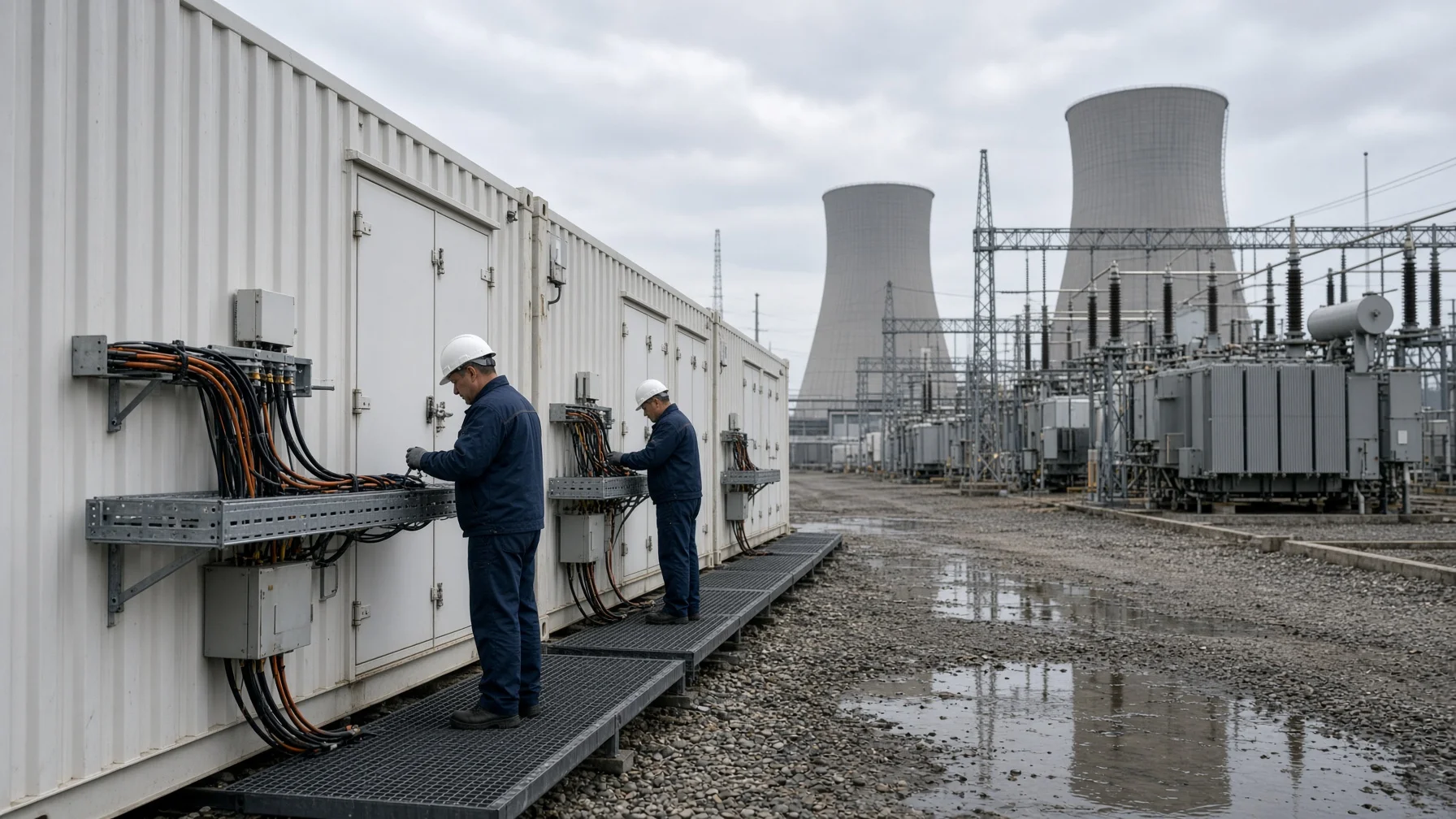
China’s supply chain adds a platform constraint the U.S. debate often skips. Export controls pushed domestic accelerators into production plans; coverage of the round has emphasized Huawei-class AI chips as part of the spend envelope. Efficient software on constrained silicon is a genuine engineering achievement. It does not repeal physics. Someone still has to finance fabs, packaging, rack deployment, and the power contracts that make utilization rates honest — the same choke Anthropic’s multi-billion compute partnerships and GPU-backed financing structures encode on the American side.
Moonshot sharpens the comparison without duplicating it. Kimi K3’s open-weight push already forced investors to ask whether frontier capability can be rented down-market, a question Culled traced through Seoul’s memory complex when open models collided with leveraged AI exposure. Moonshot’s IPO choreography — confidential Hong Kong filing, sponsor banks, ARR targets climbing toward $2 billion — is the consumer-software face of the same capital race DeepSeek is running with infrastructure patrons.
The residual is not whether DeepSeek “was never efficient.” It is whether efficiency was ever sufficient to escape industrialization. Software companies that touch intelligence at scale keep discovering they are also power companies, chip brokers, and lessors of cold aisle space. SpaceX monetizes gigawatts beside launch pads. OpenAI’s partnerships read like utility charters. DeepSeek goes looking for twelve billion dollars with a battery maker at the table.
If the deeper AI story is increasingly balance sheets, the falsifier is operational, not rhetorical: sustained revenue per watt and per yuan of inference capex that clears public-market scrutiny without another private round the size of a regional bank. Until then, “cheap AI” describes a training technique. The market is pricing the scaffolding.
A frontier model can be efficient on day one and still inherit the same turbines, transformers, and term sheets as every other infrastructure bet.
Continue reading


Sources
Bloomberg News Oct. 6, 2026 reporting on DeepSeek's Tencent- and CATL-backed funding round and Moonshot's IPO timeline; CNBC follow-on on round size; prior Culled coverage of SpaceX Colossus capacity, Moonshot/Kimi open-weight pressure on GPU returns, and AI data-center bottlenecks.


