

Europe's effort to loosen China's grip on permanent magnets has crossed a small but important threshold. Neo Performance Materials says its Narva, Estonia plant is now in commercial production and has delivered its first sintered rare-earth magnets to a Tier 1 electric-vehicle traction-motor customer after completing automotive qualification.
For years, Europe’s rare-earth strategy was mostly a map of vulnerabilities: Chinese processing, Chinese magnets, European demand. A factory in Narva has now supplied the missing verb. It shipped.
Narva has crossed from demonstration to customer production
Industrial policy produces many ceremonies before it produces a component. Groundbreakings, grants, pilot lines and sample shipments all matter, but none proves that a demanding customer will actually accept a part into production.
Neo Performance Materials crossed that line on September 14. The Canadian company said its Narva, Estonia magnet plant is now in commercial production and has delivered its first commercial volumes of sintered rare-earth magnets to a Tier 1 electric-vehicle traction-motor customer.
That language is less glamorous than a mine opening. It is also more consequential. The magnets have moved through development, sampling and automotive qualification into an operating supply program. Additional traction-motor and accessory programs are expected to launch later this year.
Europe has spent years explaining why it needs this capability. The European Commission says 98% of EU rare-earth magnet demand is met by Chinese imports. China also supplies the EU’s heavy rare earths, the materials that help high-performance magnets tolerate heat in demanding motors.
The strategic milestone is not that Europe built a magnet factory. It is that a customer accepted the magnets.
The difficult middle of the supply chain is becoming physical
Rare-earth geopolitics is often narrated from the mine. But a permanent magnet sits at the far end of a much fussier chain: ore must be separated into oxides, converted into metals and alloys, processed into magnetic material, shaped, coated, assembled and qualified for applications where failure is expensive.
Neo’s Estonian footprint matters because several of those stages now sit unusually close together. Its Silmet operation in Sillamäe already separates rare earths. The company has also commissioned European capacity for heavy rare earths including dysprosium and terbium. Roughly 25 kilometers away, the Narva plant turns material into sintered magnets.
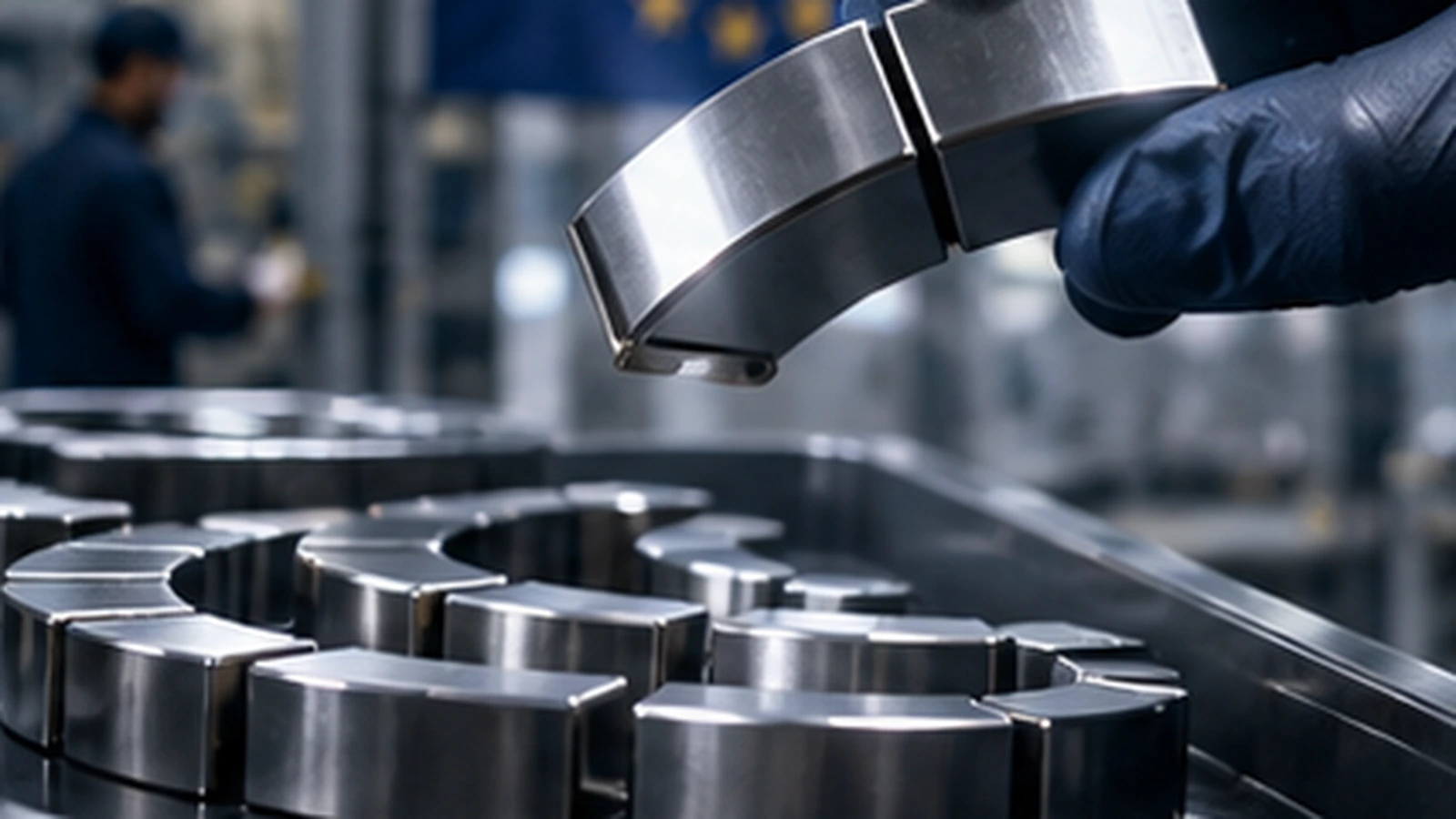
Phase one of Narva is designed for about 2,000 metric tons of annual magnet capacity, with plans to scale above 5,000 tons. The numbers are still small against China’s industrial base. That is precisely why the first qualified shipments matter: Western supply chains cannot diversify by proclamation; they diversify one accepted production lot at a time.
The plant also illustrates what government support looks like after the press conference. Estonia and the European Union helped finance the project through the Just Transition Fund. The factory opened in 2025. Samples preceded qualification. Commercial deliveries followed a year later.
Europe is finally testing whether industrial policy can compound
The interesting question now is not whether Narva can make a magnet. It is whether one operating plant changes the economics of the next one.
A qualified customer program creates engineers who have solved actual production problems. It creates suppliers with revenue histories, quality systems and delivery records. It gives automakers an alternative that procurement departments can evaluate rather than merely endorse.
That is how strategic autonomy becomes less theatrical. Capacity attracts demand; demand justifies expansion; expansion gives upstream processors somewhere to sell.
China’s advantage remains enormous. European Commission materials have estimated Chinese dominance above 90% across several downstream rare-earth stages, and Europe remains heavily import dependent. Narva does not overturn that structure.
But September 14 supplied something policy documents cannot: evidence of repetition. A European plant made qualified traction-motor magnets, shipped them to a commercial customer, and began the next programs.
For a continent that has spent years describing the hole in its supply chain, the first useful sound may be the least dramatic one: a loading dock closing behind a shipment.
More in Geopolitics


Sources
Neo Performance Materials and European Commission materials on Narva, commercial shipments, capacity, and magnet import dependence.
