

Washington and Tehran held fire through Sunday for a third straight day, Brent fell more than five percent, and global equities staged a relief rally. That is not peace. Hormuz traffic remains a trickle, CENTCOM says the blockade holds, and markets are pricing a pause — not a settlement.
Global markets opened Monday into the first serious attempt to price diplomacy back into the barrel since President Trump declared the previous ceasefire over. Brent crude fell more than five percent to trade near $92 a barrel. U.S. stock futures rose — Dow futures up about half a percent, Nasdaq 100 futures up 1.2%. Europe’s STOXX 600 touched its highest level since early July. Asia had already moved: Tokyo’s Nikkei closed up 320 points at 64,931, and India’s Sensex jumped 776 points to end near 23,996, snapping a five-day losing streak.
The trigger was not a treaty. It was silence. After thirteen consecutive nights of U.S. strikes ended Thursday, Washington and Tehran held fire through Sunday for a third straight day. Iran’s army spokesman said Tehran halted retaliatory operations as long as the American pause holds. U.N. Ambassador Mike Waltz told Fox News Sunday that President Trump is giving talks “some space.” Reuters reported that Joint Chiefs Chairman Gen. Dan Caine has privately warned about depleted munitions stockpiles — a practical constraint on escalation that markets read as dovish even when no diplomat signed anything.
The Pause Is Not a Settlement
A reciprocal halt in bombing is not the same as a settlement. The distinction matters because equity markets conflate them almost instantly.
On the ground, almost nothing that would define peace has changed. Shipping data from Kpler showed fewer than ten commodity vessels crossing the Strait of Hormuz daily through the weekend despite the pause in strikes. CENTCOM said Saturday the Iran naval blockade remains in full effect — twelve commercial vessels redirected, two disabled, two boarded for compliance checks as of July 25. War-risk insurers have not normalized premiums. Saudi Arabia is still routing more crude through the Suez Canal as Houthis keep pressure on Bab el-Mandeb. Oman reported progress on Hormuz safe-passage talks with Tehran, but traffic counts did not move.
This is the same fracture Culled tracked when markets priced in peace that shipping never confirmed, when Brent near $79 still carried an escalation discount despite active strikes, and when rates met oil because the Gulf premium refused to behave like weather. The pattern repeats: diplomacy speaks in progress verbs; the physical market speaks in tanker counts.
Why Equities Launched Anyway
If peace is not here, why did stocks launch?
Because the binding constraint on the past three weeks was not geopolitical resolution — it was the oil price path into central bank reaction functions. Brent touched $102 last week. That rebuilt Fed hike odds, lifted Treasury yields, and threatened the earnings multiples that megacap tech needs for this week’s reports. A five-percent Monday drop in crude eases that knot immediately. Ten-year Treasury yields fell toward 4.64%. The dollar softened against most G10 peers. Travel and leisure stocks led London’s rally while Shell and BP fell — a rotation, not a broad risk-on scream.
Capital hears oil before it hears communiqués. When the barrel falls, inflation expectations fall with it, and equities get a reprieve whether or not Hormuz reopens. That is why Mumbai’s rupee strengthened and India VIX fell even as FIIs had sold heavily into the prior week. It is why Japan Airlines surged 4% on cheaper fuel while semiconductor names trimmed gains ahead of Advantest and Kioxia earnings. The trade is macro de-escalation, not geopolitical resolution.
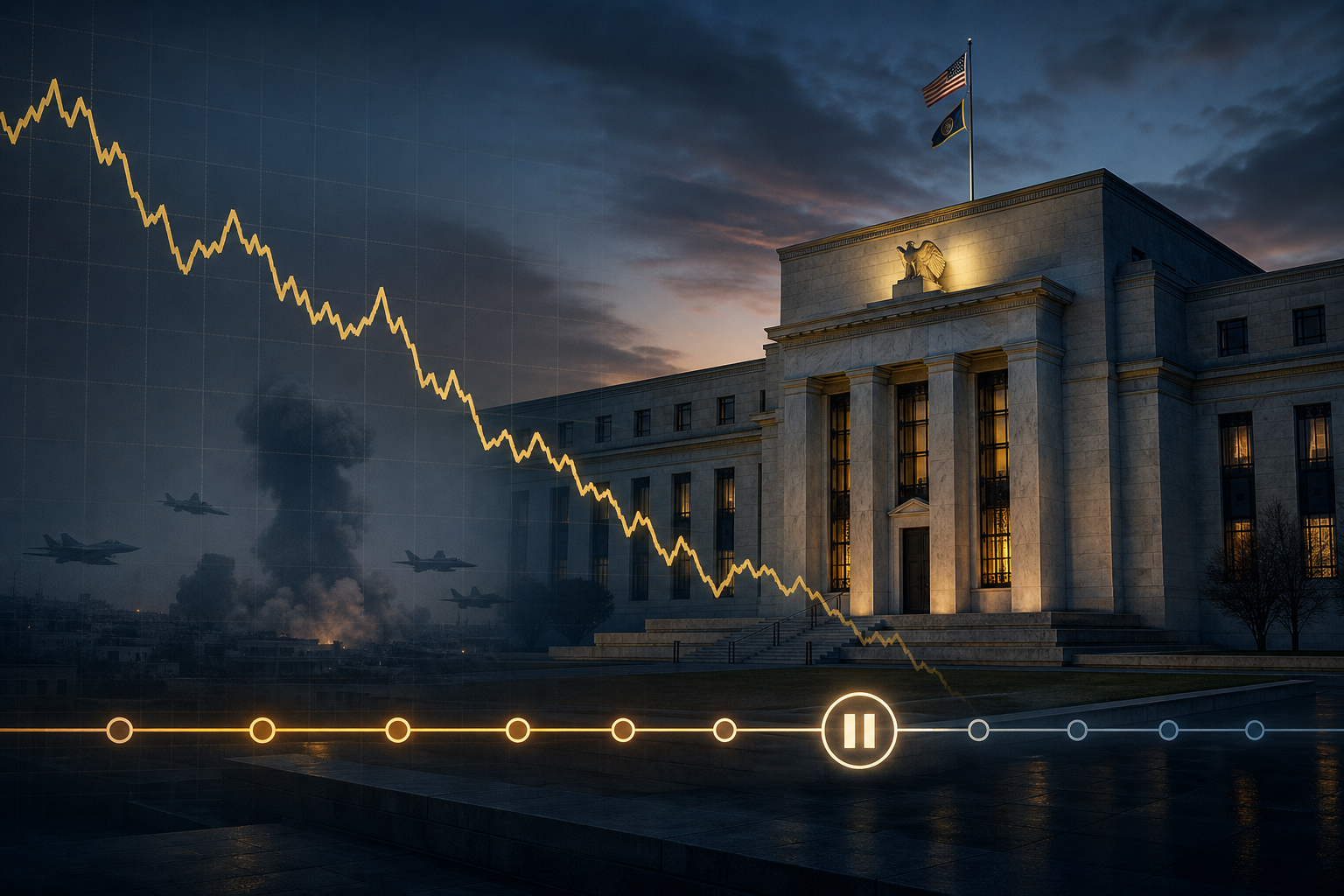
What Real Peace Would Require
Real peace — the kind that launches a durable equity rerating rather than a one-day relief pop — would need at least three things markets do not yet have.
First, visible normalization of Hormuz traffic, not just silence in the air. Until tanker counts recover and war-risk premiums compress, the supply chain is still paying a war tax even if Brent falls on hope.
Second, a diplomatic framework that survives contact with Washington politics. Netanyahu is scheduled to meet Trump in Washington on Tuesday. Any conversation that pushes toward renewed strikes — or toward options that include ground operations — can unwind a pause that markets have barely priced.
Third, confirmation that the energy shock is fading fast enough for the Federal Reserve to keep treating oil as exogenous. Wednesday’s FOMC decision and Chair Kevin Warsh’s press conference arrive in the same week as Microsoft, Meta, Apple, and Amazon report. If oil stabilizes near $90 and megacap AI spending still looks inflationary, the relief rally meets a second constraint: Warsh-era Fed politics that may not reward a one-week crude dip with dovish guidance.
State force still binds the outcome. Washington can pause strikes; Tehran can halt retaliation; Oman can mediate. None of that reopens a strait by itself.
The Actionable Read
Monday’s rally answers one question and leaves two open.
The answered question: will a pause in hostilities lift equities? Yes — immediately, broadly, and through the oil-inflation channel that has dominated this war’s market transmission. Relief rallies do not require peace. They require the probability of the next escalation to fall faster than the probability of the last one rises.
The open questions are harder. Can the pause hold through Netanyahu’s Washington visit and a Fed week that still prices meaningful September hike risk? And if the pause holds but Hormuz does not reopen, how long before markets notice they priced the bomb’s absence rather than the barrel’s return?
Watch tanker counts, not communiqués. Watch whether Brent holds below $95 after the first headline fade. Watch whether the ten-year yield stays down when megacap earnings begin. A pause can launch equities for a week. Only shipping can launch a peace trade for a quarter.
The market is not wrong to rally on Monday. It would be wrong to call it peace.
Continue reading


Sources
July 27 Reuters, AP, CNN, and CNBC reporting on U.S.–Iran strike pause; Kpler Hormuz transit data; CENTCOM blockade statements; Monday market tape from FTSE, Nikkei, Sensex, and U.S. futures; CME FedWatch and Treasury yield moves


