

CENTCOM said it rendered five Iranian tankers inoperable on September 8 after IRGC ballistic fire at a U.S. warship. Secretary of State Marco Rubio vowed Iran will lose tankers for every attempt on U.S. ships. Markets still fuse that rule with inventories and a midterm calendar the record does not show.
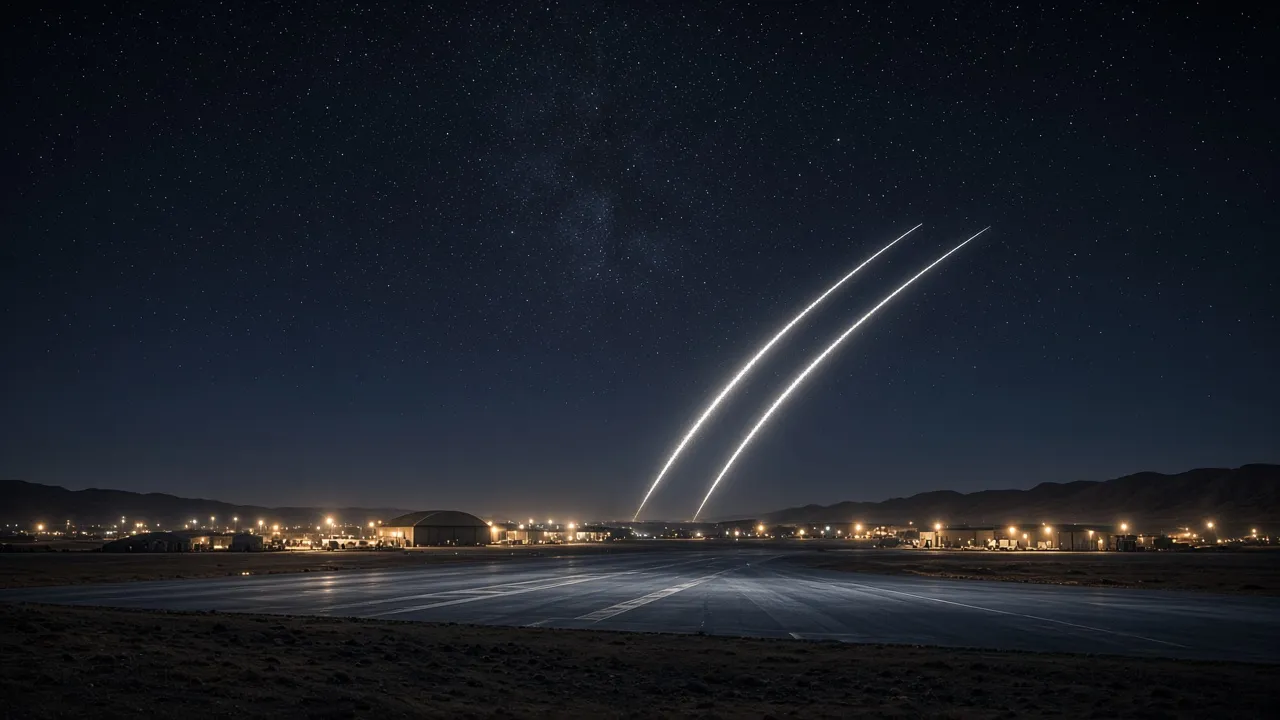
CENTCOM said it rendered inoperable the Kaviz, Charminar, Horizon 1, Riesco, and Derya on September 8, after IRGC ballistic shots at a U.S. warship, and released video of the Riesco sinking. Secretary of State Marco Rubio stated the operating rule in the open: Iran will “lose tankers” for every attempt on U.S. ships, and “you’ll see that again today.” Overnight, Iran fired at the U.S.-used base near Jordan’s Al Azraq; Amman said it destroyed 18 of 20 missiles, two fell in empty ground, and a U.S. official called the barrage ineffective with American troops accounted for. Brent had already been holding the high nineties after the weekend’s Kharg-area hits. Energy names led. Breakevens, as they did after the last Gulf salvo, have room to firm if oil stays there.
The dominant read fuses three things into one “war premium”: thin inventories, tanker destruction, and a midterm clock with about eight weeks to November 3. The first two are physical. The third is a calendar. The residual is whether that calendar is an observable electoral or policy mechanism — polling, a congressional vote, an administration statement that the strikes were timed or scoped for the election — or merely the number of days remaining printed next to a CENTCOM release.
It is the latter. There is no dated poll, floor action, or order in the public record that says the hulls went down because of November. The kill-conditions for a midterm-causation piece are unmet. What exists is a stated military-economic bargain: fire at a U.S. ship, lose export steel. That is a continuation of the tanker-for-tanker grammar Axios already flagged inside earlier CENTCOM waves, and of the Kharg anchorage strike Tasnim reported days before this five-ship list.
Reciprocity is in Rubio’s sentence. The midterm is in the byline math.
Capacity Cut or Reciprocal Premium
Separate the price into inventory and conflict, or you will mis-attribute both. EIA draws and a blocked Hormuz have been lifting the level for months — the same tightness Culled tracked when diesel printed a record after the Kharg hit and when Warsh left a hawkish path on the table as breakevens rose. Five named hulls are a flow event only if they subtract barrels that would have loaded. They are a premium event if they raise the probability of the next salvo — Al Azraq, a destroyer claim, another exclusion zone — even if those barrels were already stranded. AIS, Kharg loadings, and war-risk quotes the morning after each named ship are the split. Sector leadership in energy equities is not the split. A hedge, an earnings revision, and a rotation out of duration all print green on the same tape.
The diplomacy table has not rewritten that grammar. Bürgenstock survived a strained Sunday and still left Hormuz as the spoiler. The June MOU never cleared the risk. Equities have priced peace before while the strait barely functioned. Insurance and cloud already learned that this war hits underwriters and interconnects, not only barrels. None of those facts requires a midterm multiplier. The electoral fact we do have is older and domestic: approval and the pump can punish an incumbent in November without CENTCOM having aimed the missiles at a generic ballot.
What still mis-prices is treating days-to-election as a coefficient on Brent, and treating energy-stock outperformance as proof of a political hedge. The testable claim is operational. If the next IRGC shot at a U.S. ship is followed by another named tanker, Rubio’s rule is confirmed. If a pause or a widening is justified in electoral language — a documented decision, not a pundit’s countdown — the midterm mechanism would exist. Until then, count hulls, intercepts, and inventories. Leave the calendar in the date line.
Continue reading


Sources
CENTCOM Sept. 8 statement on Kaviz, Charminar, Horizon 1, Riesco, and Derya after IRGC ballistic fire at a U.S. warship; Secretary Rubio tanker-for- tanker remarks; Jordanian account of the Al Azraq salvo (18 of 20 intercepted); Brent near $97 after weekend strikes; prior Culled Hormuz, Kharg, Bürgenstock, and breakeven coverage.


