

Brent traded as high as $97.93 on a shortened Labor Day session. Regular gasoline printed a holiday-record $4.14 a gallon. Two commodity ships crossed Hormuz on Saturday. The tape looks like barrels blocked. Prior truces show prices also trade how long the blockage is expected to last.
Brent printed as high as $97.93 on Monday, extending last week’s climb, while AAA’s Labor Day regular-gasoline average sat at a holiday record $4.14 a gallon and diesel had already set an all-time $5.85 on Friday. CME energy matching stops at 1:30 p.m. Central; the exchange publishes no Monday settlement. The EIA’s weekly petroleum status report slips to Thursday at noon. On the water, Kpler’s ten-day average through Hormuz fell to ten commodity ships, the lowest since May: two on Saturday, six on Sunday, after U.S. and Iranian strikes on tankers.
That is the dominant story, and most of it is true. The war is in its seventh month. OPEC+ left October quotas unchanged on Sunday. Iran says a new restricted zone and corridor maps are coming. Energy Secretary Chris Wright told CNN the Navy is still “winning that battle,” with transits averaging more than nine million barrels a day and pipelines lifting the region toward two-thirds of pre-war flows. Independent trackers have spent weeks arguing those official barrels run hot. The holiday tape then does what thin sessions do: it stretches whatever headline arrives over fewer counterparties.
The residual sits one layer down. If the price is mainly a physical blockade, why has oil already fallen on an Israel-Iran pause while the strait was still described as closed and enforcement continued, including the disabling of a tanker trying for an Iranian port?
Because the futures curve is not a ship-count. It is a guess at how long the shock lasts.
A lull can cut the expected length of the disruption without putting a single extra barrel through the strait.
In June, Brent dropped more than one percent in Asia after both sides indicated a halt following a Trump appeal, even as reporting kept the passage under a double blockade. That pattern is the same one we marked when markets priced peace while Hormuz barely functioned, and again when an MOU left the water risks intact. Bürgenstock talks produced the same jolt: diplomacy reprices duration faster than tugs reprice transit. Saturday’s Kharg-adjacent strikes and the weekend exchange of tanker hits do the reverse. They lengthen the expected war, so a Labor Day print near $98 can be a duration rewrite on light volume rather than proof that Monday’s barrels vanished.
Escorts do not settle the point. If U.S. protection were restoring uneconomic routes, ship-days and insurance premia would show it. What the public record shows is a contested footprint: CENTCOM listings of tanker hits, IRGC claims against unauthorized transits, Kpler’s collapsed ten-day average, and Wright’s higher official flow. Those can all be true at once if escorts move some cargo, waiting and war-risk still tax the rest, and AIS-dark hulls confuse the count. None of that is a reopened strait. It is a rationed corridor whose expected remaining life still sets the price.
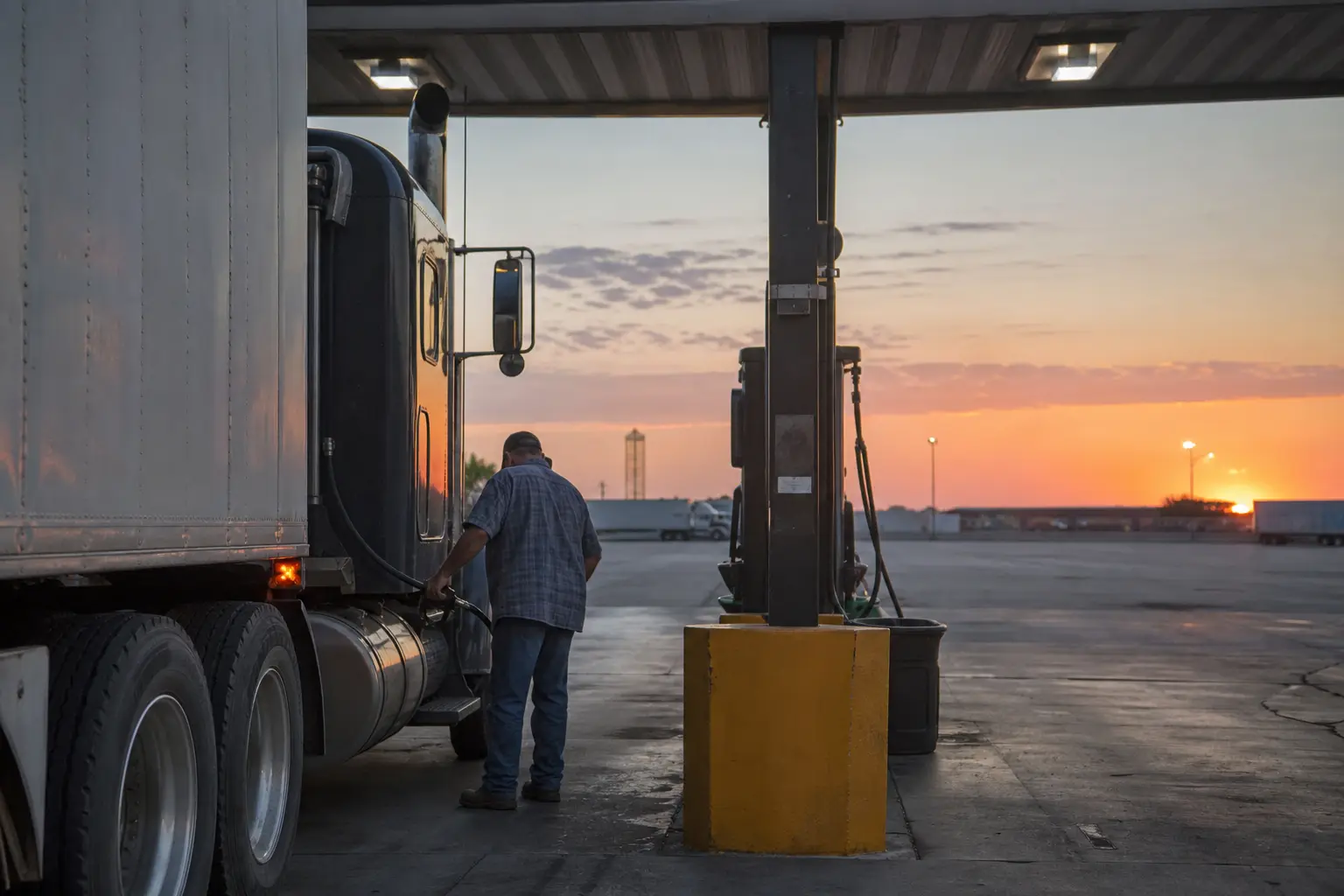
Holiday liquidity and the delayed EIA release can mask the next move. They do not cause it. A shortened NYMEX session with no official settlement is a poor place to read physical tightness. The test is the full Tuesday book and Thursday’s delayed stocks print: if inventories and distillate draws confirm a flow shock, the curve should stay steep and diesel should not ease. If the next diplomatic headline cuts expected months of disruption while Kpler’s ship count barely changes, prices can fall again with the blockade still in force. That is what underwriters already learned when war risk repriced infrastructure off the water. The forced energy-transition arithmetic is the long version of the same duration tax.
What still gets mis-priced is the official barrel as restoration, and the holiday as the story. Wright’s nine million is a claim about escorted flow. The pump is a claim about how long households and freight will pay. Those are not the same number.
The kill tests are public. If the June-style drop was a bad timestamp, later settlements will not repeat it. If a truce actually restores traffic, Kpler’s ten-day average and waiting-time reports should rise before the front month fully surrenders. Until one of those arrives, Labor Day oil is a thin quote on expected months of a closed corridor — not a census of ships that sailed this morning.
Continue reading


Sources
Reuters Sept. 7 Kpler Hormuz transit (10-day average of 10 ships, two on Saturday); AAA Labor Day gasoline $4.14 and Friday diesel $5.85; CME Globex Labor Day energy hours to 1:30 p.m. CT, no Monday settlement; EIA Weekly Petroleum Status Report delayed to Sept. 10 noon EDT; Energy Secretary Wright CNN Sept. 6 on 9 million bpd escorts; CENTCOM weekend tanker strikes; June 2026 Investing.com/Hellenic report of oil falling more than 1% on an Israel-Iran pause while the double blockade held


