

Brent trades near $79 after a second day of U.S.–Iran strikes, a revoked Iranian oil waiver, and an SPR at 319.5 million barrels. Tanker counts are thinning again. The tape still prices residual supply comfort more than the probability that Hormuz tightens further.
Brent near seventy-nine dollars is not a calm price. It is a negotiated one. After a second day of U.S. strikes on Iranian coastal targets, Iranian retaliation against Gulf bases, and President Trump’s declaration that the Islamabad memorandum is “over,” crude has climbed — but not into the territory a full Hormuz crisis usually demands. The market is answering a different question than the headlines ask.
The question on the tape is not whether conflict exists. It is whether conflict becomes a sustained interruption of barrels. So far, traders are still pricing residual supply comfort: some oil still moves, strategic releases have already plugged wartime gaps, and demand looks soft enough to absorb a contained scare. Escalation probability is the variable they are discounting.
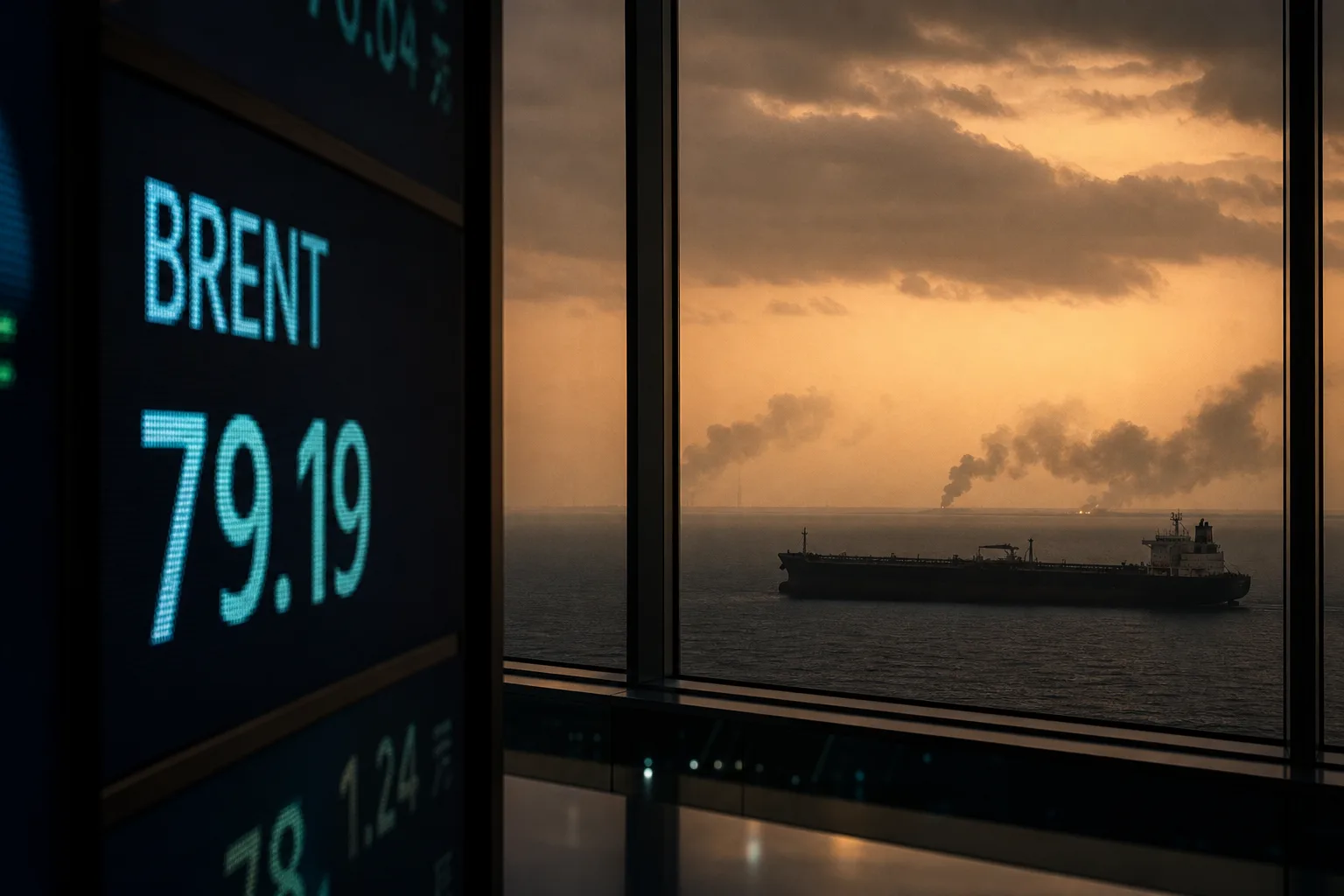
Residual Barrels Still Anchor the Curve
Physical comfort has a ledger. Commodity carriers through Hormuz averaged roughly thirty-four a day in the three weeks after the mid-June reopen; on July 8, Kpler counted about twenty — thin, but not zero. Dark transits and corridor games muddy the count, yet the market’s working assumption remains that some Gulf crude still clears. That is residual supply comfort in its purest form: price the barrels that are still flowing, not the ones that might stop tomorrow.
The Strategic Petroleum Reserve reinforces the same psychology even as it weakens the buffer. At 319.5 million barrels for the week ending July 3 — the lowest since 1983 — the SPR has already done the work markets once feared would require a hundred-dollar print. Emergency oil entered the system. Prices stayed below panic. The irony is structural: the more successfully the reserve capped the wartime spike, the more traders treat the next flare as manageable — until the caverns cannot answer again.
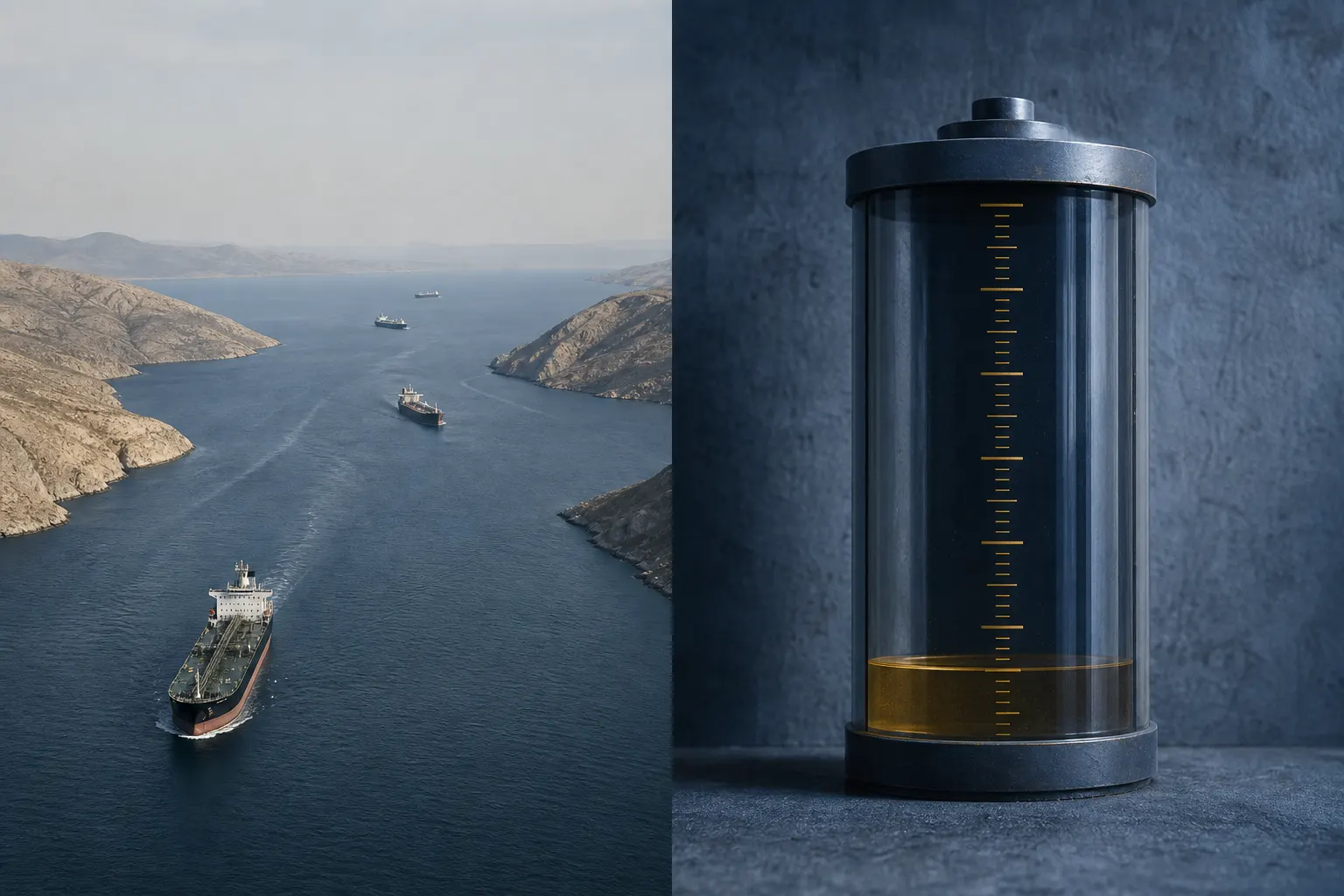
The Waiver Recall Is Not a Barrel Shock — Yet
Treasury’s revocation of General License X on July 7 looks dramatic and prices modestly. Iranian crude was never the marginal barrel that set Brent; China and other buyers already treated sanctioned oil as a discount product. Replacing GL X with a wind-down license through July 17 mostly re-criminalizes a flow that was never fully normalized. The market reads the move as a diplomatic signal more than a sudden supply subtraction — another reason seventy-nine feels like a risk premium, not a shortage print.
That reading can be correct for a week and wrong for a quarter. If Hormuz traffic stays near wartime lows, war-risk premiums climb toward three to five percent of vessel value, and owners pause voyages, the “still flowing” assumption fails without a formal blockade. Nigel Green of deVere Group put the complacency plainly: markets are behaving as though the probability of a major disruption is negligible. The data that would falsify that view is not a speech from Ankara. It is tanker counts, freight, insurance, and export volumes.

Escalation Odds Are the Missing Line Item
Seventy-nine dollars embeds a story: strikes are punitive theater, mediators will pull both sides back, and the strait will not close for weeks. That story may still be right. It is also the story that dies fastest when three more tankers are hit, when the Omani corridor empties, or when Trump’s threatened return to a port blockade becomes operational. In options language, the market is short the left tail of a full Hormuz stoppage and long the mean of “contained conflict.”
The binding constraint is capital’s probability weight, not the state’s rhetoric. Washington and Tehran can escalate or de-escalate; the curve moves when traders change the odds they assign to each path. Residual supply comfort explains why oil is not at ninety. Escalation discounting explains why that comfort is fragile. Watch the lane, not the podium — and treat seventy-nine as a temporary settlement between two incompatible maps of the same waterway.
Continue reading


Sources
July 9 Brent tape near $79; Kpler Hormuz transit counts; OFAC GL X revocation and GL X1 wind-down to July 17; DOE SPR at 319.5M barrels week ending July 3; deVere Group CEO Nigel Green on underpriced Hormuz risk; Lloyd's/JWC war-risk premium reporting


