

Ukraine sent more than a thousand drones toward Russia on Sunday, hundreds aimed at Moscow, with damage reported at the capital's oil refinery. Domestically produced Flamingo and Pelican missiles joined the raid. The lasting signal is not the weekend damage. It is a new line item on immovable capital: persistent defense, redundancy, and interruption insurance.
Ukraine sent more than a thousand drones into Russian airspace overnight Saturday into Sunday — Russia’s Defense Ministry called it the largest overnight figure it has yet claimed — with hundreds headed toward Moscow and damage reported at Gazprom Neft’s Moscow Oil Refinery in Kapotnya. President Volodymyr Zelenskyy said domestically produced Flamingo and Pelican missiles participated alongside other long-range systems. The wire will keep arguing over which airframe hit which unit. Finance should argue over what the raid implies for anything that cannot leave.
Long-range cheap precision is beginning to alter the cost of owning immovable capital. A software firm can migrate workloads. A tanker can change course — until insurers refuse the voyage, as Hormuz war-risk cancellations already showed. A refinery cannot move. Neither can a semiconductor fab, an LNG train, a port, or a substation waiting years for a replacement transformer.
The old cost stack gains a new line
A refinery’s textbook model was rough but stable: construction, feedstock, labor, energy, maintenance, financing. The emerging stack adds persistent defense, redundancy, repair capacity, inventory buffers, and interruption insurance. None of those items appear on a process-flow diagram. All of them show up in cash.
The asymmetry is brutal. Attackers can spend relatively little per sortie and force defenders into magazines, sensors, and repair crews that do not scale as kindly. Ukraine’s Patriot interceptor rationing already taught that air defense is a production-line problem, not a doctrine slogan. When the same logic reaches civilian industrial sites, the premium is not optional patriotism. It is operating expense.
The more capital-intensive and geographically fixed an asset is, the larger its new asymmetric exposure may be.
That is the inversion. Density and scale once bought efficiency. They still do — until one night of inexpensive autonomous weapons turns concentration into a liability that underwriters and lenders can price.
Investment math after standing still becomes expensive
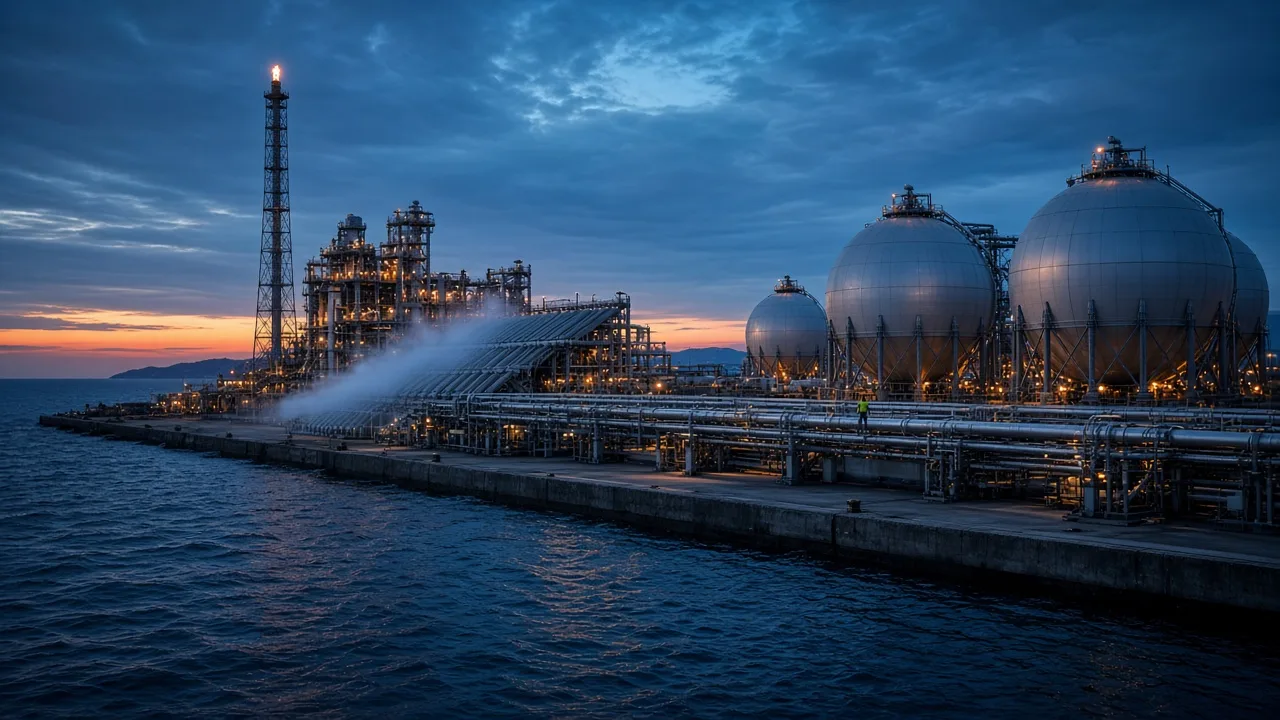
A $15 billion facility that is four percent more efficient but concentrated in one location may become inferior to somewhat less-efficient distributed capacity. Site selection stops being a pure logistics and tax problem. It becomes a question of how many independent failure nodes an adversary — or a copycat with commercial airframes — would need to hit.
Insurance premiums move first, because underwriters already live in the language of interruption and replacement cost. Project-finance spreads follow, because lenders hate assets that cannot be relocated and cannot be quickly rebuilt. Redundancy spending and inventory buffers rise next. Valuation multiples compress last, once markets decide the security premium is structural rather than episodic.
The Moscow Oil Refinery is not unique because it is Russian. It is illustrative because it is exactly the kind of asset capital markets still model as if geography were a sunk cost rather than a live exposure. TSMC’s multi-year fab commitments and every coastal LNG train face a softer version of the same geometry: enormous fixed plant, thin mobility, rising probability that cheap precision can reach them.
The actionable principle is narrow. When you underwrite industrial capital now, ask whether the asset can leave, and if it cannot, whether the model already pays for keeping it standing. If the answer is no, Sunday’s raid is not a distant war story. It is a missing line item.
Continue reading


Sources
AP and wire reporting on Ukraine's Sept. 20–21, 2026 mass drone and missile strike toward Moscow and the Moscow Oil Refinery; Zelenskyy statements on Flamingo, Pelican, and other domestically produced long-range systems; Russian municipal claims on drones downed and refinery damage


