

European officials confirmed in July that China secretly trained roughly 200 Russian troops across PLA facilities in 2025 — including radiological, chemical, and biological warfare and FPV drone operations — under a Belousov decree, with some graduates deployed to Ukraine. Beijing denies neutrality; Brussels is weighing consequences.
On July 1, Reuters published an exclusive that reframes the China-Russia axis from trade corridor to combat classroom. According to two European officials and classified Russian documents they reviewed, China’s covert military training of Russian forces in 2025 was personally approved by Defence Minister Andrei Belousov and directly involved at least four Russian and Chinese generals. Around 200 Russian personnel trained at People’s Liberation Army facilities. Some have since returned to fight in Ukraine.
Beijing and Moscow denied the reporting. European capitals did not. EU foreign policy chief Kaja Kallas said on June 15 that Brussels had confirmed the training through its own channels and was assessing implications. NATO said it was monitoring developments. The gap between denial and verification is where policy will be made.
The Belousov Decree
The paper trail begins in August 2025. A classified Russian document seen by Reuters referred to an internal decree issued by Belousov authorizing a delegation from Russia’s armed forces to travel to China for training exercises at PLA facilities. On July 2 — weeks before that decree — senior officers signed a dual-language Russian-Chinese agreement in Beijing outlining the program.
European officials identified the signatories as Russian Major General Rustam Khusainov and Chinese Senior Colonel Sun Dayun. Colonel General Rustam Muradov, deputy commander-in-chief of Russia’s ground forces, led the Russian delegation according to participant lists in a second military document. Visits by Chinese troops to Russia for training had occurred since at least 2024; Russian personnel training inside China was new, two European intelligence agencies told Reuters.
The asymmetry matters. China was not merely hosting observers. It was schooling an adversary’s army on its own soil — with generals in the room.
Two Curricula
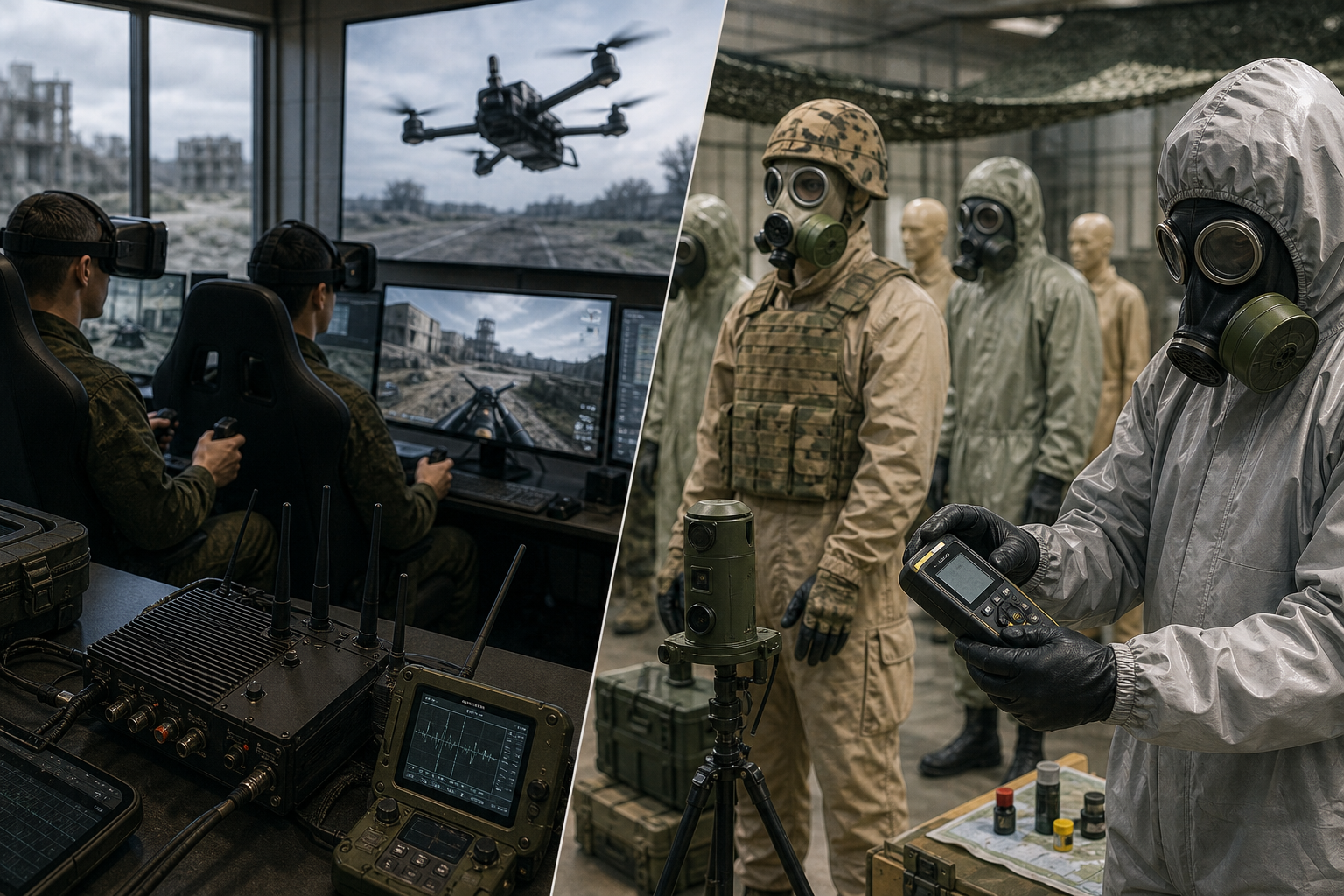
The training split into tracks that together sketch a modern combined-arms syllabus.
One was radiological, chemical, and biological protection — a three-week course at a military facility in Beijing in November 2025. Reports described Russian soldiers lectured by Chinese instructors, examining a model nuclear reactor, and learning chemical reconnaissance, radiation reconnaissance, and ventilation-system decontamination. Chinese Major General Li Jinsun, head of the PLA Military Academy of Radiological, Chemical and Biological Defence, opened one session. Russian Major General Vitaly Gerasimov attended a course in Bengbu. RBC training is not routine officer exchange; it prepares forces for the most constrained battlefield environments imaginable.
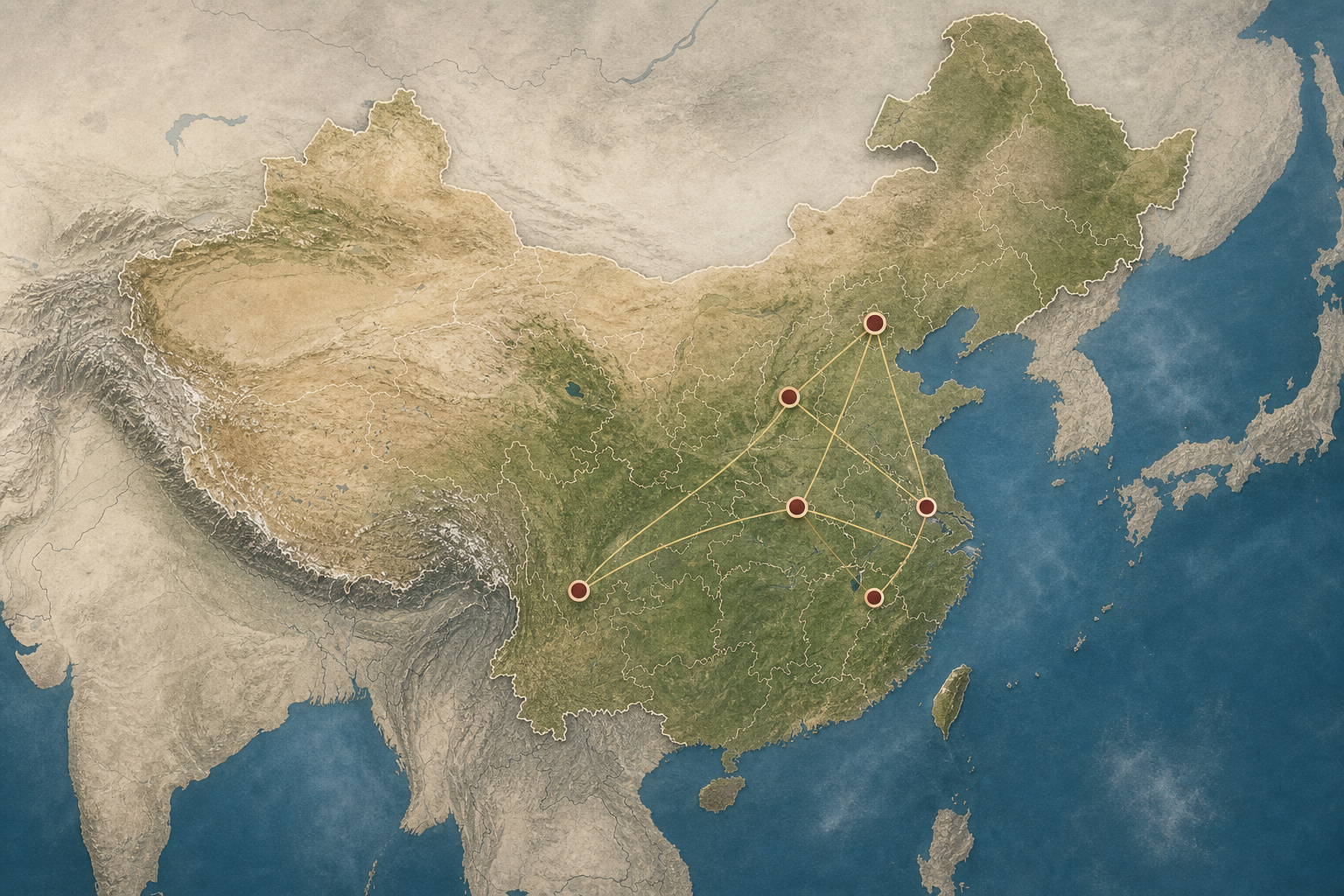
The second track was the war Ukraine is actually fighting. A December 2025 report written by a Russian major described drone training at Yibin’s PLA Training Centre for Military Aviation: flight simulators, multiple FPV drone types, multimedia instruction. Other courses covered electronic warfare rifles and net-throwing counter-drone devices at a facility near Zhengzhou; combined-arms warfare for about 50 personnel at Shijiazhuang, including mortar fire with drones spotting targets; explosives, demining, and IED clearance at Nanjing. One Nanjing assessment praised Chinese simulators and theoretical instruction while noting China’s lack of combat experience — Russia supplies the blood, China the classroom.
From Yibin to Zaporizhzhia
The intelligence finding that moved the story from scandal to strategic threat: deployment.
Three European intelligence agencies told Reuters that around 200 Russians trained in China in late 2025, predominantly on drones. One agency confirmed the identities of a handful who subsequently fought with drones in occupied Crimea and Zaporizhzhia. The pipeline runs from simulator to front line — not through Chinese arms shipments Beijing can disavow, but through skills transferred on PLA bases and applied in Ukrainian oblasts.
Russia brings years of attritional combat experience. China brings industrial-scale drone manufacturing, simulation infrastructure, and electronic warfare curricula built for a military that has not fought a major war in decades. The exchange is complementary — and, from Brussels’ perspective, a circumvention of Beijing’s neutrality narrative more durable than any dual-use export.
Brussels Calculates
Kallas’ June confirmation predated the July Reuters details on Belousov’s approval and general-officer participation, but it established European consensus that the training occurred. What remains open is the response menu: diplomatic demarches, targeted sanctions, linkage to trade negotiations, or quiet pressure through member states with deeper Beijing exposure.
China’s foreign ministry has called similar allegations unfounded or pure slander. The Kremlin dismissed them as false. Denial is costless; verification is not. If European officials are correct, Beijing crossed from “no limits” partnership rhetoric into institutional military education that directly strengthens Russian combat capability in an active war — including RBC disciplines that alarm NATO planners independently of Ukraine.
The Beijing classroom does not require Chinese bullets on the Donbas front. It requires Chinese instructors, Chinese facilities, and Russian graduates who carry the syllabus home. Two hundred soldiers is not a corps. It is a template — and templates scale.
Europe confirmed the lesson plan. The examination is whether neutrality can survive the transcript.
Continue reading


Sources
Reuters exclusive reporting July 1, 2026 citing two European officials and classified Russian military documents; prior Reuters reporting on European intelligence agency assessments; Kaja Kallas June 15 confirmation; Straits Times, News24, Jerusalem Post, Modern Diplomacy on RBC and drone training details; Chinese and Russian government denials via Reuters


