

ADNOC announced at ADIPEC on November 2 a multi-year partnership with OpenAI and G42 to deploy Frontier agent coordination across field planning and barrel valuation, while taking final investment decision on the Ruwais Diyab unconventional gas project. The binding constraint is platform architecture: sovereign inference, proprietary reservoir data, and integrated agents that tie subsurface decisions to commercial outcomes.
Abu Dhabi used ADIPEC to stack two bets: molecules from Ruwais Diyab and decision software from OpenAI Frontier. The Culled read is not "energy goes AI" — it is who owns the agent layer that connects wells, pipelines, and trading desks when Hormuz still taxes every barrel.
Abu Dhabi, Nov. 2 — ADNOC used the opening day of ADIPEC to announce two platform-scale moves: a final investment decision on the Ruwais Diyab unconventional gas development and a multi-year deployment of OpenAI Frontier with G42, making the UAE national oil company the first in the energy sector to run the agent-coordination stack across operations, capital, and commercial decisions, according to company statements and WAM.
Sheikh Khaled bin Mohamed, Crown Prince of Abu Dhabi, met OpenAI chief executive Sam Altman Monday and witnessed signing ceremonies that also linked Mubadala and Inception42 to frontier-model deployments in investment analysis and broader UAE adoption, the Abu Dhabi Media Office reported. The energy leg is the one with hardest industrial data: ADNOC’s existing ENERGYai stack already models reservoirs and assets; Frontier is pitched as the connective tissue so subsurface, facilities, economics, and trading inputs move as one decision rather than a sequence of siloed studies.
The first application targets integrated field master planning — thousands of wells, stacked reservoirs, and hundreds of surface facilities optimized together instead of reservoir-by-reservoir. The second aims to value barrels in the ground by linking production, processing, refining, logistics, and sales intelligence through interconnected agents that forecast supply, demand, prices, and margins before operators commit. Models run on G42 sovereign infrastructure inside the UAE with human oversight on consequential calls, a pattern that mirrors how hyperscalers are externalizing AI risk through corporate guardrails and sector pilots even as capex races ahead of free cash flow in U.S. tech earnings.
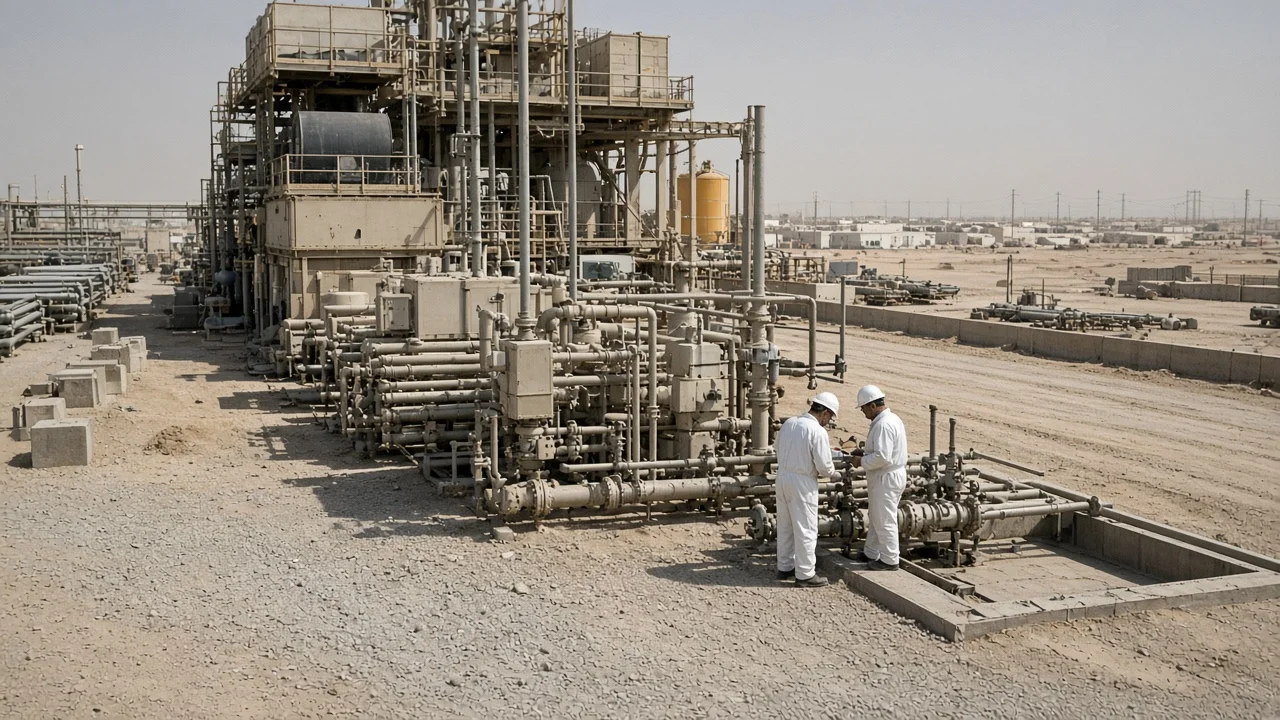
On molecules, Ruwais Diyab is ADNOC’s first large-scale unconventional gas development: 345 million standard cubic feet per day of raw gas from 2029 over 25 years, with potential to reach 1 billion scfd, processed on site and tied into the UAE grid and LNG export ambitions, WAM said. The UAE cites 298 trillion cubic feet of conventional gas and 160 tcf of unconventional resources; the project uses a design-build-operate delivery model after field tests and AI-enabled drilling workflows — the same conference where Dr. Sultan Al Jaber warned that Hormuz disruption has drained nearly a billion barrels from global inventories, a physical stress test Culled tracked in today’s Brent diplomacy piece and the wider energy premium regime.
OpenAI launched Frontier in February as an enterprise agent platform; early adopters included HP, Oracle, and Uber. ADNOC’s deal adds cyber-defense work through OpenAI’s Daybreak Blue initiative for critical infrastructure — relevant when AI datacenter load is itself a gas customer ADNOC names explicitly in its growth narrative, echoing the industrial power-and-compute coupling visible in U.S. supply chains.
Capital links run deep: MGX co-led OpenAI’s $122 billion funding round at an $852 billion post-money valuation, The National noted, tying Abu Dhabi’s sovereign investor stack to the same model family ADNOC will deploy on reservoir data. That is PLATFORM power with STATE sponsorship — not a pilot chatbot on a rig site.
The falsifier is operational: if Frontier remains slide-ware while Ruwais Diyab slips on DBO timelines, Abu Dhabi will have bought branding without throughput. The observable test is whether integrated field plans and barrel-valuation agents show up in disclosed capex efficiency and gas delivery on schedule — while Hormuz still sets the marginal price of every barrel those agents optimize.
Continue reading


Sources
ADNOC and WAM press releases (Nov. 2, 2026); ZAWYA and The National on OpenAI agreements; Abu Dhabi Media Office on Crown Prince meeting; Petroleum Economist ADIPEC context.


