

The Wall Street Journal reported October 27 that surging data-center build-out is lifting demand for industrial outdoor storage yards, often sub-ten-acre parcels that stage generators, steel and truck traffic. CBRE cites national rent growth of 32% since 2021; Alterra IOS puts gains above 110% since 2020 in eight port-linked markets. Brookfield, J.P. Morgan Asset Management and Starwood are buying or lending against yard portfolios — a real-estate leg of AI that is not another powered shell.
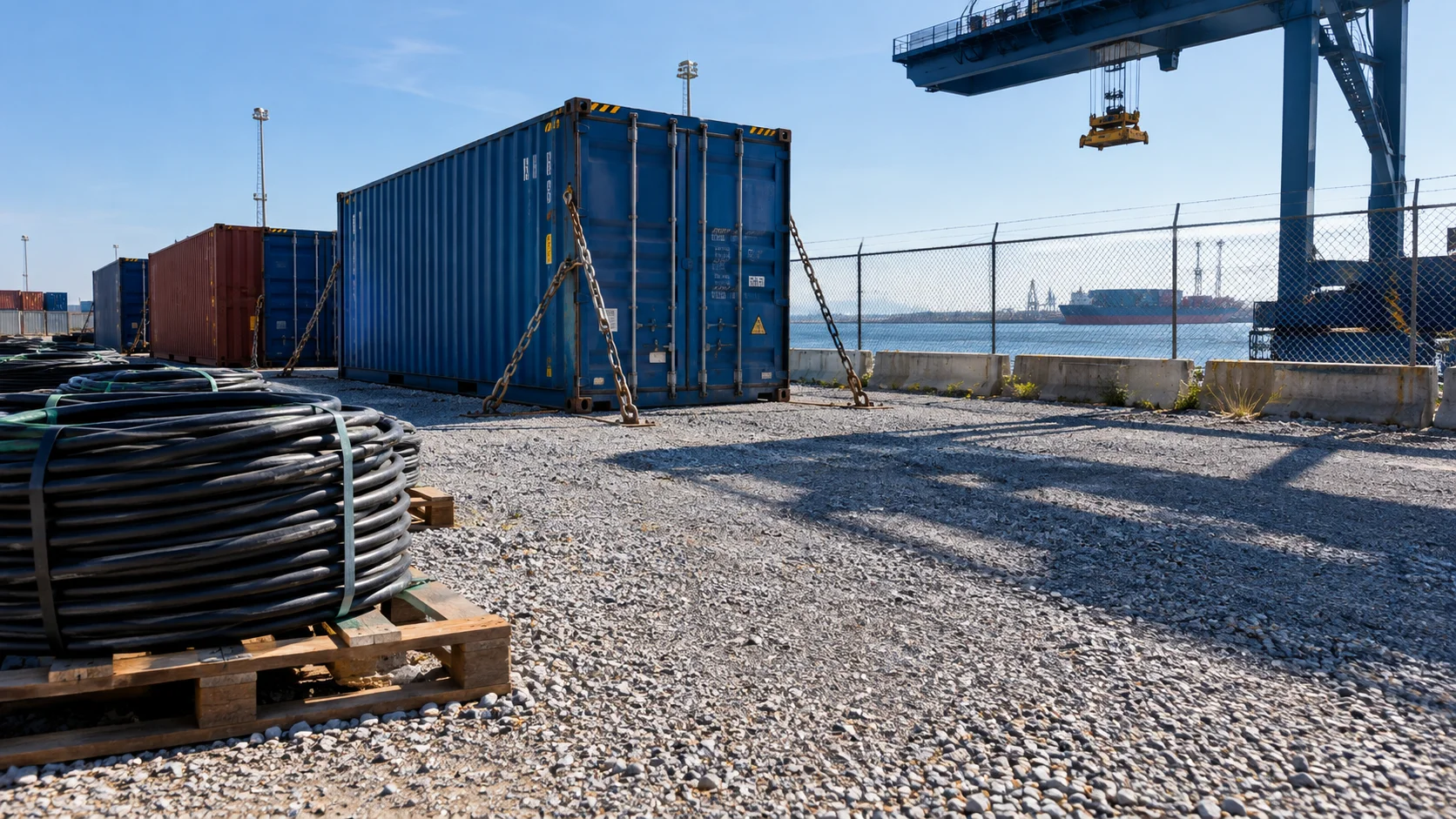
Houston, Oct. 28 — Industrial outdoor storage — fenced gravel yards for excavators, steel bundles and idle flatbeds — has become one of the quietest winners of the AI data-center construction wave, according to Wall Street Journal reporting published October 27. The pads are rarely glamorous; they sit close to highways, ports and rising powered campuses. They are also hard to replace.
National IOS rents rose 32% since 2021, according to CBRE figures cited in follow-on trade coverage. In eight port-heavy markets — including Houston, Savannah and Norfolk — Alterra IOS estimated gains above 110% since 2020. Phoenix and Atlanta, both data-center hubs, show sharp increases as well.
Staging Space, Not Server Halls
Developers need outdoor storage for the messy middle of a build: cranes cannot lift every delivery the day it arrives. Freight analytics firm DAT estimates that each gigawatt of new data-center capacity can generate on the order of 100,000 truck trips carrying steel, concrete, generators and switchgear — loads that sit in yards until crews are ready.
That demand collides with supply constraints. Investors told the Journal that municipalities seldom approve new outdoor storage because of noise, dust and truck traffic. Pasha Johnson of Steel Peak, backed by Tarsadia, said cities are not greenlighting fresh pads. Meanwhile, data centers themselves consume yard land: in Manassas, Virginia, more than 200 acres of outdoor storage are slated to convert to powered campuses — over 20% of local supply, according to Catalyst Investment Partners co-founder Max Heiden.
So the AI boom raises rents on existing gravel while removing some of the remaining inventory — a squeeze that favors owners and roll-up buyers.
Who Owns the Yards — and Who Is Buying
Most IOS remains in fragmented hands: trucking firms, equipment renters, family operators nearing retirement. Institutions need scale. Brookfield agreed this year to acquire Peakstone Realty Trust, an outdoor-storage owner, for about $1.2 billion. J.P. Morgan Asset Management and Zenith IOS are assembling roughly 100 properties across 33 markets, per WSJ-derived summaries. A Starwood Property Trust venture lent $672 million against a 78-property, 830-acre portfolio in August — a record refi that Bisnow flagged as proof of capital-market appetite.
Aggregators such as Alterra IOS, Catalyst Investment Partners and Zenith IOS stitch together small lots into financeable portfolios. Catalyst has reported about $1.4 billion of yard acquisitions over six years; Heiden told trade outlets the investable U.S. IOS universe could approach $300 billion over time if aging owners sell.
Newmark’s Chris Hope told the Journal that yard rent is a small slice of a data-center budget — landlords can push pricing without killing project economics. That durability argument underpins institutional bids even when interest rates slow property sales broadly.
After the Cranes Leave
Construction staging is cyclical; operating data centers still need maintenance equipment, spools of cable and backup generators — but peak yard intensity fades after commissioning. If AI build-out slows, IOS faces re-leasing risk in markets that added supply only through roll-ups, not new dirt.
Electrification trends complicate the picture: some investors pitch power-rich IOS sites as future EV depots or edge-compute land banks. Those option values are speculative compared with today’s data-center staging checks.
The trade is land without a roof — cheap to operate, painful to permit, and temporarily essential while gigawatts move from blueprint to energized hall.
What Would Change the Verdict
Published IOS occupancy and rent rolls by market after major campuses go live would show how much demand sticks. Zoning reversals that allow new yards would loosen pricing power. A pause in hyperscaler capex would hit staging first, before it hits powered shell REITs. Conversion of IOS to data centers, as in Manassas, would keep shrinking local supply even if build schedules slip.
For now, Wall Street is treating gravel pads as an AI-adjacent claim — small tickets per site, but bundled into portfolios that move with the same construction wave driving factory-floor data-center modules and long-haul logistics stress.
Continue reading


Sources
Wall Street Journal (Oct 27, 2026); CRE Daily / Yahoo Finance summaries; Bisnow on institutional IOS capital; Culled data-center coverage.


