

Super Micro Computer flagged preliminary fiscal first-quarter revenue of $18.5 billion to $19.5 billion on Tuesday, sending shares up about nine percent as the Nasdaq gained roughly 1.3% on the same AI-infrastructure tape that rewarded SpaceX's $14.6 billion quarter. The range sits well above the $14.5 billion to $15.5 billion guide management issued in August — and keeps the server assembly line at the center of whether capex orders convert to recognized sales.
Super Micro Computer did not wait for a full earnings deck to move the AI-infrastructure complex. The company said Tuesday that preliminary revenue for its fiscal first quarter, which ended in September, should land between $18.5 billion and $19.5 billion. Shares rose about nine percent into the 4 p.m. close, while the Nasdaq Composite gained roughly 1.3% on a tape that also rewarded SpaceX’s $14.6 billion third quarter and left other megacap stories to fight their own narratives.
The band matters because it is not a rounding error above August’s guide. When Supermicro reported fiscal fourth-quarter 2026 results in August, management forecast first-quarter revenue of $14.5 billion to $15.5 billion — already roughly thirty percent above what analysts had modeled, as Culled noted when NQ futures tested 30,000 on the same earnings stack. A preliminary print centered near $19 billion implies the integrator is still converting GPU backlog into shipped racks faster than the street’s last reset, even as investors demand proof that every dollar of capex eventually becomes someone else’s revenue line.
Integrator economics on a crowded tape
Super Micro’s business model is unglamorous and therefore diagnostic: it buys accelerators, memory, and power delivery from upstream suppliers, then sells finished systems to cloud operators, sovereign AI projects, and enterprise clusters that do not want to run their own integration lines. When preliminary revenue approaches twenty billion dollars in a single quarter, the market is not pricing a PC vendor — it is pricing the chokepoint between Nvidia’s shipment reports and a data hall’s live workload.
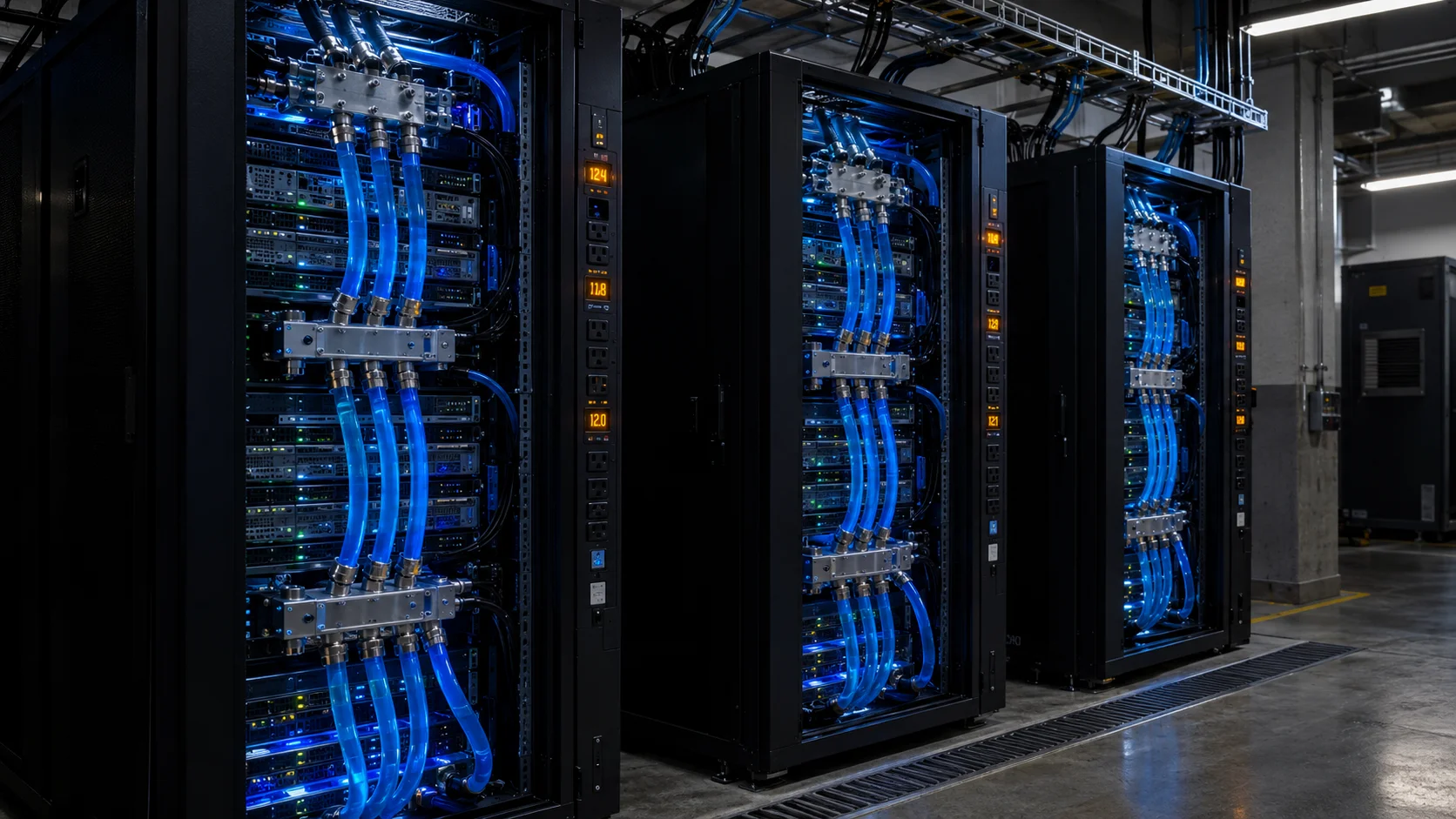
That chokepoint sits in a sector where leadership has splintered. Nvidia can print record quarters and still see shares sold when the question shifts from demand to durability. Custom silicon and efficiency-first challengers tighten the margin narrative on the chip side. Super Micro’s rally says the intermediate layer — rack density, liquid cooling, power capping, and delivery cadence — still earns a scarcity rent while hyperscalers and neoclouds race to energize megawatts.
Governance risk has not disappeared from the name. Taiwan’s criminal probe into diverted GB300 servers tied to Super Micro’s local ecosystem wiped billions from the market cap on enforcement headlines even though the seized hardware was a fraction of quarterly revenue. Tuesday’s bid is a bet that export-control friction is a tax rate, not a ceiling, on U.S. demand — a bet that can reverse quickly if prosecutors or customers treat compliance as binding as thermals.
Earnings night still owns the veto
The Super Micro headline landed in a session that was already an AI-infrastructure barbell. Meta Platforms rose about two percent ahead of its after-hours report, while Netflix slid near five percent as investors digested 2026 revenue framing that did not fit the same capex euphoria. Options desks were still pricing roughly a 6.5% implied move for Meta and 5.5% for Tesla into the after-hours earnings stack — a reminder that single-name volatility can swamp index-level AI trades even when integrators and vertical compute platforms print blowout top lines.
For portfolio construction, the read is layered. Platform power still lives in architectures and power contracts; capital still decides whether multiples expand when utility from AI applications lags the buildout. Super Micro’s preliminary band extends the server bid — it does not settle whether the bid is cyclical infrastructure spend or the opening chapter of a durable replacement cycle. Dot-com history warns against confusing revenue acceleration with terminal value; Tuesday’s tape chose acceleration anyway.
What changes after the preliminary release is the burden of proof on the full filing. Investors will want gross margin by configuration, customer concentration, and whether the $18.5 billion to $19.5 billion range reflects pull-forward from fiscal 2027 backlog or sustained run-rate demand. Until then, the stock remains a high-beta sensor on the same question that has governed AI equities all year: orders are enormous, recognition is lumpy, and the market rewards whichever integrator can ship before the next guide reset.
Continue reading


Sources
Super Micro preliminary fiscal Q1 2027 revenue release (Oct. 21, 2026); contemporaneous U.S. equity tape and sector moves; prior Culled reporting on August FQ4 earnings guidance, GB300 governance risk, and AI capex convertibility; options-market implied-move references from earnings-week desks.


