

Keelung prosecutors detained three executives and raided twelve sites in Taiwan's first criminal AI chip-smuggling case — fifty GB300 servers routed through Japan toward China. The probe widens as U.S. charges against Super Micro co-founder Wally Liaw over $2.5 billion in diverted hardware move toward trial.
On Monday, Keelung prosecutors raided twelve sites across Taiwan — Super Micro Computer’s local office, distributor Albatron Technology, data-center operator Chief Telecom, and six private residences — detaining three executives and expanding a criminal probe that now covers nine suspects. The hardware at the center: fifty artificial-intelligence servers equipped with Nvidia’s GB300 processors, valued at NT$700 million (roughly $22 million), seized in May before they could leave the island.
Taiwan is not a bystander in the U.S.-China compute war. It is the chokepoint where the world’s most advanced silicon is packaged, integrated, and shipped — and where enforcement has, until now, relied on administrative export licensing rather than criminal prosecution. This case changes the posture. Super Micro shares fell more than nine percent on the news, erasing roughly $1.4 billion in market value — a ratio of sixty-three times the seized hardware’s reported value, which tells you markets are pricing governance risk, not inventory loss.
The Japan Route
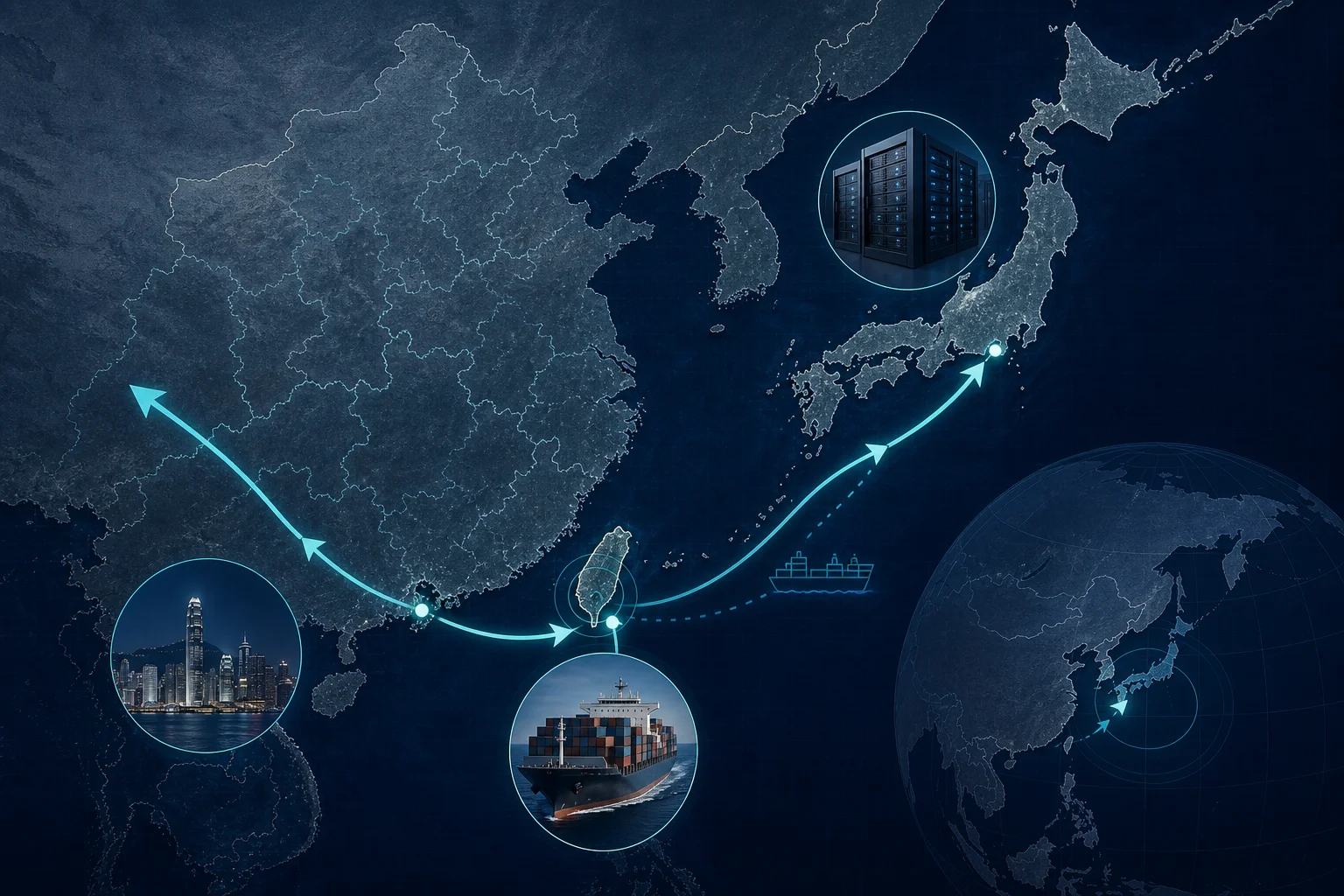
The diversion architecture is familiar to sanctions investigators: mislabel, transship, re-route. Prosecutors allege the May shipment used forged documents to export servers through Japan, with Hong Kong as an intermediate node and mainland China as the suspected terminus. Taiwan customs cleared some units before investigators intercepted the batch — a detail that has renewed legislative calls in Taipei to make unauthorized exports of advanced AI chips to China a distinct criminal offense, not merely a licensing violation.
The GB300 matters because it sits at the frontier of what export controls are designed to deny. Nvidia’s Blackwell-generation platform powers the inference and training clusters that U.S. policy treats as strategic — the same class of hardware Super Micro co-founder Yih-Shyan “Wally” Liaw allegedly pushed a Southeast Asian intermediary to accelerate before a White House export rule took effect, according to text messages cited in the March U.S. indictment.
Albatron vice president Lu, Super Micro managers Wang and Lin, and Chief Telecom personnel were questioned in Monday’s expanded raid. All three companies said they are cooperating with investigators. Prosecutors have not confirmed whether the Taiwan case connects to the U.S. prosecution — and caution is warranted, because the evidentiary threads may converge without being identical.
The Liaw Indictment and Compliance Theater
The U.S. case, unsealed March 19 in Manhattan, operates at a different scale but rhymes with the Taiwan probe. Federal prosecutors charged Liaw, Taiwan-based sales manager Ruei-Tsang “Steven” Chang (a fugitive), and contractor Ting-Wei “Willy” Sun with conspiring to divert approximately $2.5 billion in Super Micro servers containing controlled Nvidia GPUs to China between 2024 and 2025 — including $510 million in a six-week window in spring 2025 alone.
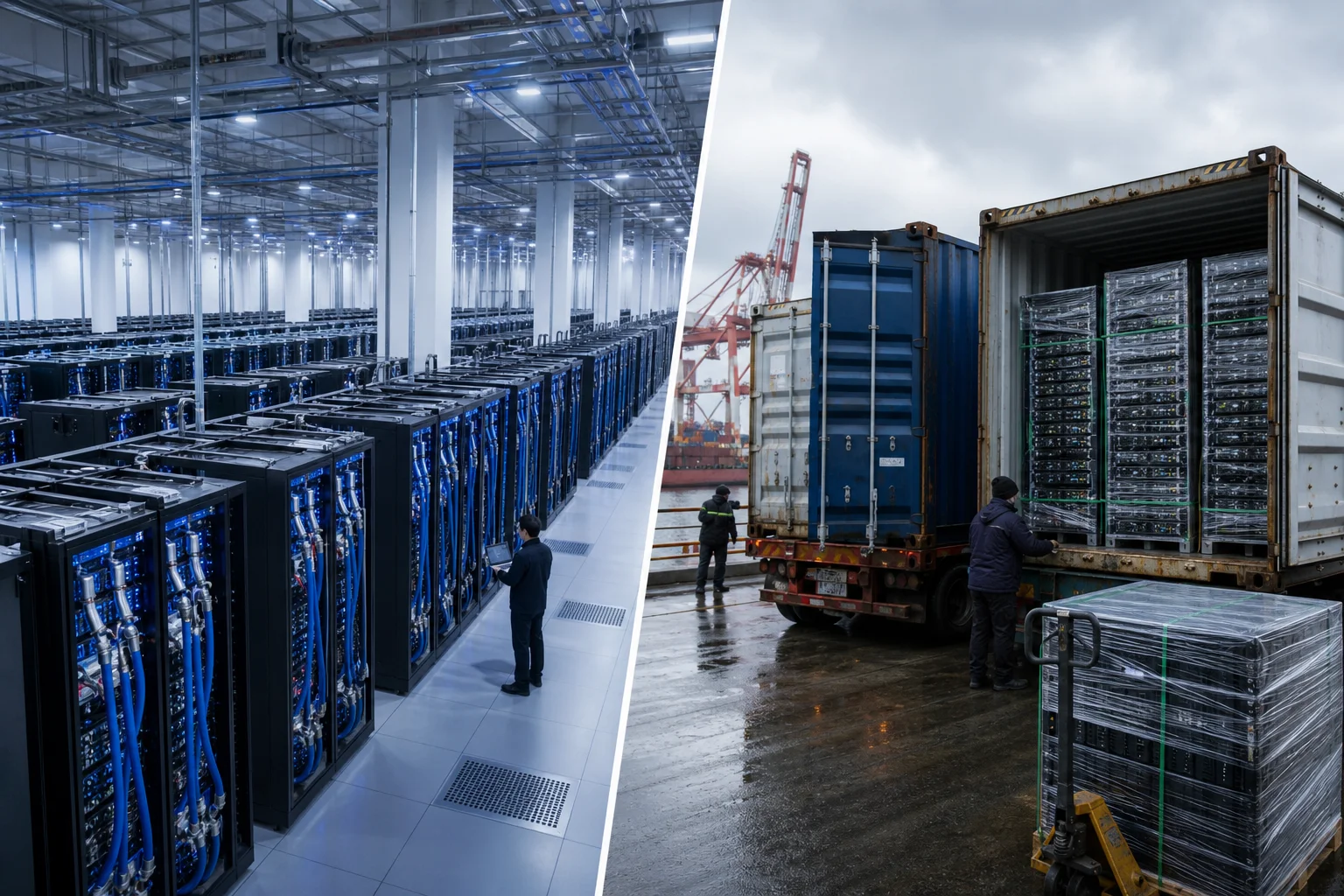
The indictment reads less like espionage than inventory fraud at industrial scale. Prosecutors allege the defendants used a Southeast Asian front company to place orders, shipped real servers to China in unmarked boxes, and staged thousands of non-functional dummy units to satisfy compliance audits. Surveillance footage, according to the DOJ, captured Sun using hair dryers to transfer identification tags and serial numbers from legitimate packaging onto decoy machines — a detail that would be comic if the throughput were not measured in billions.
Super Micro is not a defendant. The company placed Liaw and Chang on leave, terminated Sun’s contract, and said it cooperates with authorities in the U.S., Taiwan, and elsewhere. Liaw has pleaded not guilty; trial is scheduled for November. Chang remains at large.
Around the Controls vs. Through Them
The GB300 diversion lands the same week LineShine debuted atop the TOP500 at 2.198 exaflops — a CPU-only Chinese supercomputer that rejected the Western GPU-hybrid template export controls were designed to enforce. Weaponized interdependence, as we’ve argued elsewhere, assumes throttling access reshapes rival capability downward. LineShine complicates that story: denied frontier GPUs, Beijing scaled domestic processors until CPUs alone crossed two exaflops.
The Taiwan and Liaw cases complicate it from the opposite direction. Export controls are only as durable as the audit trail — and audit trails, it turns out, can be spoofed with heat guns and dummy racks while real GB300 servers move through Japan. Two bifurcation paths run in parallel: sovereign architecture built around denied silicon, and diversion networks built through compliance gaps in the supply chain that still produces that silicon.
Washington optimized controls against the first path. The second path exploits the fact that Taiwan, Japan, Hong Kong, and Southeast Asian intermediaries sit between fabs and end users — each jurisdiction with different enforcement teeth, and each a potential laundering node for fifty-server batches that individually look manageable until they aggregate into billions.
What Enforcement Looks Like Now
Taipei’s criminal turn signals that administrative licensing failed to deter at the margin that matters. Keelung prosecutors are treating chip diversion as fraud and document forgery, not export paperwork — a posture that raises the cost for distributors, integrators, and the Taiwan-listed firms that handle Super Micro’s local sales channel. The U.S. case raises it further: twenty-year felony exposure for export-control conspiracy, with a co-founder in the dock.
For investors, SMCI’s $1.4 billion selloff on a $22 million seizure is the market’s compressed verdict: the revenue at risk is not the intercepted batch but the compliance architecture around a company whose servers are the integration layer between Nvidia’s GPUs and whoever ultimately runs them. For policymakers, the juxtaposition with LineShine is sharper still. You can deny accelerators and watch rivals build CPU-only exascale. You can indict smugglers and watch them route through Japan. Neither path alone closes the loop.
Export controls were never purely technical. They were always a test of whether the jurisdictions that touch the hardware — Taiwan’s prosecutors, America’s DOJ, the transshipment ports in between — could see what the controls claim to block. The GB300 diversion is what it looks like when that test fails in public: fifty servers in a warehouse in May, twelve raids in June, a co-founder awaiting trial in November, and a supercomputer in Shenzhen that won without the chips anyone was smuggling.
The controls bifurcate the stack. Enforcement must bifurcate with it — or the smuggling path and the sovereign path converge on the same destination, from opposite directions.
Continue reading


Sources
Taipei Times, CNA, France24, AFP, Bloomberg via The Next Web, DOJ March 2026 indictment, AP and CNBC on Liaw charges, TS2 on SMCI market impact, LineShine TOP500 context, weaponized-interdependence export-control framework


